Canon EOS R8 Mark II: 7 Key Upgrades Revealed
Canon has officially unveiled the Canon EOS R8 Mark II, bringing a substantial set of changes to its compact full-frame mirrorless camera lineup. The second-generation model keeps the original camera’s 24.2-megapixel full-frame sensor but adds features that address some of the biggest limitations of the first-generation EOS R8.
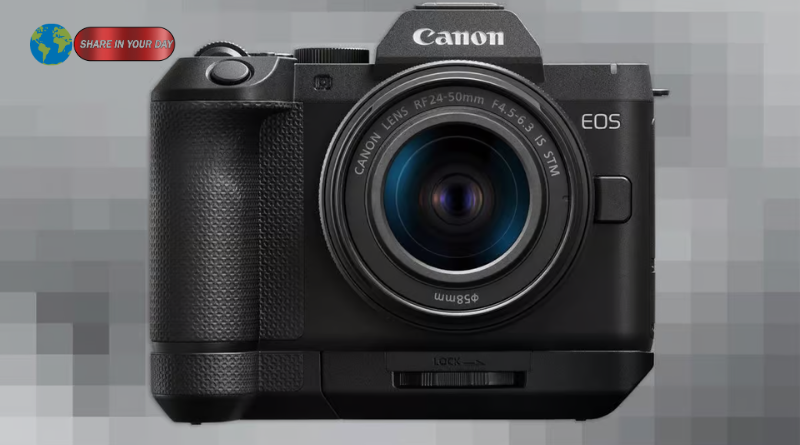
The most notable addition is five-axis in-body image stabilization (IBIS). Canon has also redesigned the body, added a multi-controller joystick, improved autofocus tracking, and retained high-speed electronic shooting at up to 40 frames per second.
The company says the new camera is designed for advanced photographers, hobbyists, creators and people moving into full-frame photography. At approximately 546 grams, it is also positioned as Canon’s smallest and lightest full-frame EOS camera with in-body image stabilization.
The announcement follows weeks of leaks and reports surrounding the camera. Canon Rumors had previously reported that the EOS R8 Mark II would receive a redesigned body and IBIS before Canon made the specifications official.
Canon EOS R8 Mark II Adds the Feature Many Users Wanted
One of the defining upgrades in the Canon EOS R8 Mark II is five-axis IBIS.
The original EOS R8 was notable for combining a full-frame sensor with a relatively lightweight body. However, the camera did not include sensor-based image stabilization. Photographers using lenses without optical stabilization therefore had fewer options for reducing camera shake, particularly when shooting handheld in low-light conditions.
The Mark II changes that.
Canon says its new stabilization system uses Coordinated Control IS with compatible lenses. The system is designed to work together with optical image stabilization while also providing peripheral coordinated control to help suppress blur toward the edges of images when using wide-angle lenses.
Canon’s regional announcement states that the stabilization system can provide up to 7.5 stops of stabilization at the center and 7.0 stops at the peripheral area under specified testing conditions with a compatible RF lens. Actual performance can vary depending on the lens, shooting conditions and other factors.
For travel photographers, street photographers and creators who frequently shoot handheld, this represents a significant change to the camera’s operating envelope.
Canon EOS R8 Mark II Keeps a 24.2MP Full-Frame Sensor
Despite the major body and stabilization changes, Canon has not increased the headline resolution.
The Canon EOS R8 Mark II uses a 24.2-megapixel full-frame CMOS sensor. That is the same basic resolution class as the original EOS R8.
Rather than concentrating on additional megapixels, Canon has focused the Mark II update on handling, stabilization, autofocus, continuous shooting and creative functions.
A full-frame sensor remains one of the camera’s central selling points. Canon says the sensor provides approximately 2.5 times the light-gathering surface of an APS-C sensor, helping users achieve full-frame characteristics such as wider viewing angles at equivalent focal lengths and stronger background separation.
The camera also offers standard ISO sensitivity reaching 102,400, according to Canon’s U.S. announcement.
That combination makes the EOS R8 Mark II particularly relevant to photographers who want full-frame image quality without moving to a considerably larger professional camera body.
A New Design With a More Modern Canon Look
The external design has also changed.
Canon describes the EOS R8 Mark II as a modern interpretation of its classic camera design language. The body combines a more angular appearance with curved elements while maintaining a compact form factor.
The camera measures approximately 131.4 × 90.0 × 79.7mm and weighs about 546 grams, according to Canon’s regional announcement.
That weight remains an important part of the EOS R8 Mark II proposition.
Full-frame cameras with extensive stabilization and controls can become relatively heavy, particularly once a large lens is attached. Canon is instead targeting photographers who want full-frame capability while keeping the body practical for travel and everyday shooting.
The redesigned body also introduces a multi-controller joystick.
Canon EOS R8 Mark II Gets a Joystick
The addition of a multi-controller is another important handling change.
On cameras equipped with a joystick, photographers can move autofocus points without relying entirely on touchscreen controls or directional buttons. This can be especially useful when subjects are moving or when the photographer wants to maintain their eye at the electronic viewfinder.
Canon says the EOS R8 Mark II is the first full-frame EOS R camera in its class to receive this multi-controller feature.
For experienced photographers upgrading from an entry-level body, the change could make the camera feel more familiar to users accustomed to higher-end EOS models.
Canon has also introduced an optional EG-E2 Extension Grip. The accessory is designed to provide a taller grip and additional support when using larger lenses while retaining access to the battery compartment and tripod mounting.
Internal link suggestion: Add a link here to your site’s article about [the best Canon RF lenses for travel photography].
40fps Continuous Shooting Returns
The Canon EOS R8 Mark II maintains an impressive high-speed shooting capability.
With its electronic shutter, the camera can shoot at up to 40 frames per second. Canon also adds an optional pre-continuous shooting function that can capture images before the shutter button is fully pressed. The feature can record up to 20 frames before the photographer completes the shutter press.
That capability is designed for situations where timing is difficult to predict.
Wildlife photographers, sports shooters and people photographing children or fast-moving subjects can sometimes miss an important moment because the shutter is pressed a fraction of a second too late. Pre-continuous shooting is designed to reduce that problem.
Canon also reports improved uninterrupted shooting performance compared with the original EOS R8, with a 58% increase for JPEG images and a 30% increase when recording RAW images under the company’s specified conditions.
Electronic first-curtain shutter shooting is available at up to 6 frames per second.
Autofocus Gets an Important Upgrade
Autofocus is another area where Canon has strengthened the new model.
The Canon EOS R8 Mark II uses Dual Pixel CMOS AF II and provides subject tracking across the frame. Canon says the system can recognize and track people, animals and vehicles, while also offering improved tracking performance compared with the original EOS R8.
The camera also includes Register People Priority.
That feature is aimed at situations where photographers repeatedly work with known people and want the camera to prioritize particular registered subjects.
For family photography, events and travel, the ability to maintain focus on a particular person can be useful when multiple faces appear within the frame.
The combination of improved autofocus, 40fps shooting and pre-continuous capture gives the camera a strong emphasis on capturing decisive moments rather than simply increasing sensor resolution.
Video Features Remain Competitive
The EOS R8 Mark II is not only a still-photography camera.
Canon says it can record uncropped 4K video at 60 frames per second using 6K oversampling. It can also record Full HD footage at up to 180fps for high-frame-rate applications. Slow and Fast modes are supported as well.
The camera also supports audio recording during high-frame-rate Full HD shooting.
For creators, Canon has included wired connectivity through USB-C and HDMI, while wireless streaming is available through compatible Canon applications, including Canon Camera Connect and Live Switcher Mobile. Wi-Fi 6 support is also included for faster wireless transfers to compatible devices and networks.
That makes the EOS R8 Mark II a hybrid camera rather than a body focused exclusively on still photography.
Creative Features Target New Photographers
Canon has also added a selection of simplified creative tools.
The camera includes Scene Intelligent Auto, Creative Assist, Creative Bracketing and Advanced A+ functions. Canon lists 14 different scene modes and 16 color filters, including new Negative Filmtone and Positive Filmtone settings.
These features are designed to make it easier for less experienced photographers to experiment with the appearance of their images without manually adjusting every camera setting.
At the same time, more experienced users can continue to take advantage of manual controls and the camera’s full-frame sensor.
This combination reflects Canon’s attempt to make the EOS R8 Mark II accessible to newcomers without limiting its usefulness as a more advanced photographic tool.
Canon EOS R8 Mark II Price and Release Date
Canon says the Canon EOS R8 Mark II body is expected to become available in late October 2026.
In the United States, Canon lists an estimated retail price of $1,899 for the camera body. A kit combining the camera with the RF24-50mm F4.5-6.3 IS STM lens is expected to cost $2,099.
The company is also introducing the EG-E2 Extension Grip for $99.99 and the Speedlite EL-5 Ver.2 for $379 in the U.S.
Pricing differs by region. Canon Australia, for example, lists the body at an RRP of A$2,529 and the RF24-50mm kit at A$2,859, with availability expected from mid-October.
That means buyers should check local Canon pricing and authorized retailers before making a purchase.
Canon Also Announces a New Speedlite
The EOS R8 Mark II launch is accompanied by another accessory announcement.
Canon has introduced the Speedlite EL-5 Ver.2, a revised flash designed for EOS R System cameras with the Multi-function Shoe. The flash uses the LP-EL lithium-ion battery pack and can recycle to full power in approximately 1.2 seconds, according to Canon.
The updated flash is intended to provide closer integration with Canon’s newer camera bodies.
For photographers building a compact Canon system around the EOS R8 Mark II, the new Speedlite provides another accessory option alongside the Extension Grip.
Canon Introduces Dual Pixel 3D Technology
Perhaps the more unusual announcement accompanying the camera is Canon’s Dual Pixel 3D Converter.
Canon describes the software as a free Windows PC application that uses information from compatible Dual Pixel CMOS sensors to create 3D imagery from photographs.
The software can create a 3D photo with a background, generate a subject-isolated 3D model or produce a 3D video clip. Canon says compatible images can be used to create different perspectives of subjects such as plants, food and objects.
The technology represents a different direction from conventional camera upgrades.
Instead of simply producing higher-resolution photographs, Canon is exploring ways to extract additional visual information from existing image data and turn ordinary photographs into new types of content.
How the EOS R8 Mark II Changes the R8 Formula
The original EOS R8 was built around a simple proposition: deliver full-frame performance in a relatively small and lightweight body.
The EOS R8 Mark II keeps that philosophy but expands the camera’s capabilities.
The biggest difference is clearly the addition of IBIS. The joystick, redesigned body, improved autofocus and expanded shooting features further move the camera toward the handling experience associated with more advanced EOS models.
At the same time, Canon has avoided turning the camera into a large professional body.
That balance appears to be central to the Mark II’s design.
Internal link suggestion: Link this section to your existing article covering [Canon EOS R8 vs other full-frame mirrorless cameras].
What the Canon EOS R8 Mark II Means for Buyers
The Canon EOS R8 Mark II arrives in a competitive full-frame mirrorless market where buyers increasingly expect stabilization, fast autofocus, high-speed shooting and capable video in a single camera.
Canon’s approach is not centered on a dramatic increase in megapixels. Instead, the company has concentrated on practical improvements.
IBIS is likely to be one of the most meaningful changes for existing EOS R8 users. The joystick and redesigned controls could also improve day-to-day operation, while the 40fps electronic shutter and pre-continuous shooting functions expand the camera’s ability to capture fast action.
Meanwhile, 4K 60p video, Full HD 180p recording and wireless connectivity make the camera suitable for hybrid creators.
The result is a second-generation EOS R8 that retains the lightweight full-frame concept while adding several features that were previously associated with more advanced Canon bodies.
Final Takeaway
The Canon EOS R8 Mark II is now officially part of Canon’s EOS R lineup, and its upgrades go well beyond a cosmetic redesign.
The camera combines a 24.2MP full-frame sensor with five-axis IBIS, up to 40fps electronic shooting, improved Dual Pixel CMOS AF II tracking, a multi-controller joystick and enhanced video capabilities. Its approximately 546-gram body also keeps the camera focused on portability.
With U.S. pricing starting at $1,899 for the body and availability expected in late October 2026, Canon is positioning the camera between enthusiast and more advanced full-frame users.
For photographers who value a compact body but want stabilization and stronger handling, the EOS R8 Mark II represents a significant evolution of the original R8.
The camera’s real-world performance, battery life, autofocus behavior and image quality will ultimately require hands-on testing. However, the official specifications already show that Canon has used the second generation to address several important areas while preserving the lightweight full-frame concept that defined the original model.