New Cat Species Bolivia Discovery Reveals a Hidden Branch of the Cat Family
A new cat species Bolivia researchers identified in the country’s cloud-covered Yungas forest is giving scientists an unusual look at how much of the world’s wildlife may still remain hidden in plain sight.
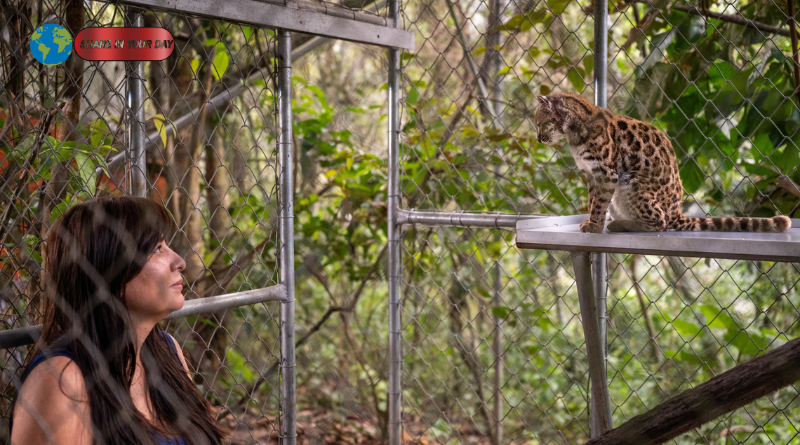
The tiny wild feline, formally named Leopardus tilcayo, is being described as the first new living cat species to be formally identified in more than a century. Scientists confirmed its distinct evolutionary identity through genetic analysis, revealing that the animal is not simply another population of a previously known tiger cat.
The discovery is especially striking because the animal is remarkably small. Researchers say it measures roughly 18 inches, or 46 centimeters, in body length and weighs about 3 pounds, or 1.4 kilograms. That makes it smaller than the average domestic cat.
Despite its size, the animal belongs to a group of wild South American felines known as tiger cats. Its spotted coat gives it a leopard-like appearance, while its compact body makes it easy to overlook in the dense forests of the Andes.
The discovery also raises a much larger question: How many other species remain unidentified in some of the world’s most difficult-to-explore ecosystems?
New Cat Species Bolivia Was Hidden in the Yungas Forest
The new cat species Bolivia researchers have now named Leopardus tilcayo was found in the Yungas forest region on the eastern slopes of the Andes.
The Yungas is a mountainous environment known for high humidity, dense vegetation and forests frequently covered by clouds. Such conditions create a challenging environment for wildlife researchers and make direct observation of small, elusive animals particularly difficult.
Scientists first became interested in the unusual cat years before its species identity was confirmed.
According to National Geographic, a kitten had been found near a road in Bolivia and was taken home by a local man who initially believed it could be a domestic cat. After living with the animal for roughly a year, however, he recognized that it was a wild animal and eventually brought it to a wildlife refuge.
The animal arrived at the Senda Verde wildlife sanctuary, where Bolivian biologist Paola Nogales-Ascarrunz first examined it.
Its appearance immediately stood out.
The cat had a small face, rounded ears and distinctive leopard-like markings. Nogales-Ascarrunz initially believed it was a member of a known tiger cat species. But later comparisons raised questions about whether the animal actually matched other tiger cats found elsewhere in South America.
That question eventually led researchers toward a much bigger discovery.
Genetic Testing Confirmed Leopardus tilcayo
One of the most important parts of the new cat species Bolivia discovery was not what scientists could see with their eyes, but what they could find in the animal’s DNA.
Tiger cats are considered cryptic species. In other words, closely related species can look extremely similar, making it difficult to determine their exact identity from physical characteristics alone.
Modern genomic analysis has changed that.
Researchers analyzed complete genomes from 38 cat samples collected across South and Central America. The material included samples from living animals as well as museum specimens. By comparing their genetic information, scientists were able to reconstruct relationships within the Leopardus group.
The analysis showed that the Bolivian cat represented a distinct evolutionary lineage.
Scientists estimate that the lineage leading to Leopardus tilcayo separated from other tiger cats around 1.4 million years ago. That evolutionary distance provided important evidence that the animal should be recognized at the species level.
The research was published in the journal Current Biology.
The scientific name, Leopardus tilcayo, preserves the local name used for the animal by people in the region. Researchers said local communities had called the cat “tilcayo” for generations, although the word does not appear to have a specific known meaning in Spanish or Quechua.
New Cat Species Bolivia Changes the Tiger Cat Family Tree
The discovery is significant for more than simply adding another name to the world’s list of wild cats.
It changes scientists’ understanding of the tiger cat family tree.
For years, tiger cats were generally treated as one species or as a much smaller number of species. Genetic research over the past decade, however, has increasingly revealed that the group contains several distinct evolutionary lineages.
The latest study concludes that what had broadly been considered the tiger cat group actually consists of five distinct species.
These include Leopardus tigrinus, Leopardus guttulus, Leopardus emiliae, Leopardus pardinoides and the newly named Leopardus tilcayo.
Researchers also identified a previously unrecognized subspecies in Peru, named Leopardus tigrinus antisuyo. Its name refers to Antisuyu, a region associated with the Inca Empire that included part of the animal’s modern range.
This means the discovery is not simply about finding one unusual cat.
It demonstrates how genetic technology can reveal hidden biodiversity that traditional field observations may miss.
Why Scientists Did Not Identify the New Cat Earlier
The fact that a previously unknown feline could remain unidentified until the 21st century may seem surprising.
However, small wild cats present a particular challenge for researchers.
Tiger cats are elusive, often difficult to observe and remarkably similar in appearance. Even photographs from wildlife cameras may not provide enough information to distinguish one species from another.
Physical characteristics can help. Scientists can examine markings, skull structures, teeth, body proportions, fur patterns and other features.
But those clues are not always enough.
Genomic research can reveal differences that are effectively invisible from the outside. That was particularly important in the case of Leopardus tilcayo. The researchers were able to compare its DNA with samples representing other Leopardus populations and determine that its lineage was genetically distinct.
The finding suggests that other small wild cats could also contain previously unrecognized species.
Researchers have already raised questions about the classification of margays, another spotted wild cat found across parts of Central and South America. One scientist cited by National Geographic suggested genetic research could eventually reveal several distinct margay species, although other researchers said additional focused studies are necessary before drawing that conclusion.
What Scientists Know About Leopardus tilcayo
Despite the importance of the discovery, researchers stress that remarkably little is known about the new species.
Scientists have limited information about its population size, geographical range, reproduction, behavior and ecological role.
Evidence collected so far suggests the animal may be active at night. Researchers have also found remains of small rodents in scat samples, indicating that rodents may form part of its diet. However, scientists say much more field research is needed.
Only a small number of live animals have been examined directly.
One known individual is a 10-year-old male that now lives at the Senda Verde Wildlife Sanctuary. Researchers have also relied on a limited number of camera-trap records and biological samples.
That lack of information makes the next stage of research particularly important.
Scientists need to determine how widely Leopardus tilcayo occurs across Bolivia’s Yungas region and whether populations exist beyond the locations where researchers have already found evidence.
The New Cat Species Bolivia Discovery Could Affect Conservation
The discovery could have important consequences for wildlife conservation.
Conservation assessments depend heavily on knowing how many animals exist and how widely they are distributed. If several genetically distinct species are grouped together as one, their individual population sizes can appear larger than they actually are.
For example, a broad assessment of tiger cats across a large portion of South America could make the overall group appear relatively widespread.
But if that population is actually divided among several distinct species, individual species may occupy much smaller ranges and have substantially fewer animals.
Researchers have shared their findings with the International Union for Conservation of Nature, or IUCN, for consideration during future assessments. The organization currently treats certain tiger cat lineages as vulnerable, but the new genetic findings could lead to more detailed assessments of the individual species.
Scientists do not yet know whether Leopardus tilcayo should be classified as endangered.
That determination will require better information about its population, habitat and distribution.
Yungas Forest Faces Growing Environmental Pressure
The habitat of the new cat species Bolivia researchers discovered is also facing environmental challenges.
The Yungas region contains forests that support a wide range of wildlife. However, researchers cited in the Reuters report said the ecosystem faces pressure from deforestation, agricultural expansion, human-caused fires and mining.
For a species that may already have a relatively restricted distribution, habitat loss can create serious problems.
Wildlife populations need suitable areas in which to feed, reproduce and move between habitats. Fragmentation can isolate populations and make it harder for animals to maintain genetic diversity.
That is why researchers say protecting remaining native forest and maintaining connections between habitat areas will be important.
The discovery provides another reminder that conservation is not limited to protecting species that are already famous.
Some species may be declining before scientists even understand that they exist.
A Discovery That Could Lead to More New Species
The scientific importance of Leopardus tilcayo extends beyond Bolivia.
Researchers believe the same genomic methods could help identify additional species in other parts of the world.
Small wild cats in Africa and Asia could be particularly interesting candidates because many are difficult to distinguish through appearance alone.
The growing availability of genetic data is giving scientists a more detailed picture of evolution. Museum specimens are also becoming increasingly valuable because modern technology allows researchers to extract and compare genetic information from material collected decades ago.
That combination of field research, museum collections and genomic analysis is changing how scientists study biodiversity.
Instead of relying exclusively on visible characteristics, researchers can now investigate evolutionary relationships at a much deeper level.
New Cat Species Bolivia Discovery Highlights How Much Remains Unknown
The new cat species Bolivia researchers identified is remarkable partly because scientists have been studying wild cats for centuries.
The last time a new living feline species was formally described was more than 100 years ago, making Leopardus tilcayo an unusually significant addition to the cat family. The pampas cat was the previous example cited in reports, with its description dating to 1923.
Yet the discovery also carries a broader message.
The world’s biodiversity is not completely catalogued.
Remote forests, mountains and other difficult environments continue to contain organisms that scientists have not fully documented. Even familiar groups such as mammals can contain evolutionary surprises.
In the case of the Bolivian tiger cat, the animal was not discovered in an entirely unexplored wilderness. It was living within a known ecosystem and was eventually brought to a wildlife sanctuary.
What scientists lacked was the genetic evidence needed to understand exactly what they were looking at.
That distinction matters.
A species does not necessarily have to be physically invisible to remain scientifically unknown. Sometimes the missing piece is simply the technology, data or comparison needed to recognize its uniqueness.
The discovery of Leopardus tilcayo therefore represents more than a remarkable wildlife story. It shows how modern genetics can reshape scientific understanding, reveal hidden branches on the evolutionary tree and potentially change how conservation priorities are established.
For Bolivia’s Yungas forest, the discovery may also bring greater attention to an ecosystem already under pressure.
And for scientists studying the world’s small wild cats, it could be only the beginning.
As researchers continue examining DNA from museum specimens, camera-trap records and animals in the field, other supposedly familiar species may prove to contain hidden genetic diversity.
The tiny spotted cat from Bolivia has demonstrated one important fact: even among the world’s best-known animal groups, there may still be extraordinary discoveries waiting to be found.