Apple Watch Series 12: 5 Big Upgrades Revealed
The Apple Watch Series 12 may look familiar, but Apple has made significant changes underneath its recognizable design. The new smartwatch keeps the overall appearance, buttons and basic form of previous generations while introducing redesigned health sensors, faster processing and new AI-powered capabilities.
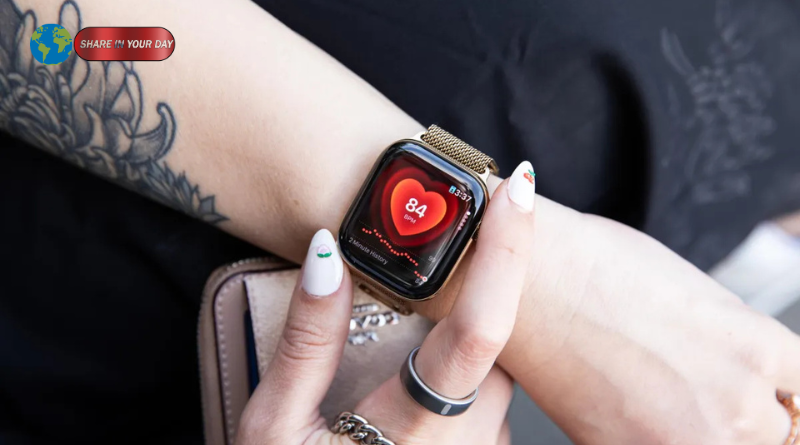
The result is an Apple Watch that appears to be less about changing the physical design and more about changing what the device can understand about its wearer.
The Apple Watch Series 12 starts at $399 and represents a major step in Apple’s wearable strategy. According to The Verge’s review, the biggest changes are found in the internal hardware and the software capabilities that hardware makes possible.
Apple has also positioned the Series 12 around health tracking. One of the most notable upgrades is high-frequency heart-rate monitoring, which allows the watch to measure heart rate every five seconds rather than relying on less frequent background measurements.
At the same time, Apple is expanding its use of artificial intelligence. Siri is becoming more useful on the wrist, while a new collection of Audio Intelligence features is designed to make the watch more aware of sounds and information around its user.
Apple Watch Series 12 Gets a Major Sensor Upgrade
The most important change may be the least visible one.
Apple has redesigned the health-sensing system inside the Apple Watch Series 12. The new arrangement includes larger electrodes for improved skin contact, redesigned photodiodes and larger optical LEDs designed to work more efficiently.
These changes are important because the Apple Watch does not simply need to collect health information. It also needs to do so without draining its relatively small battery.
The redesigned sensor system allows Apple to increase the frequency of background heart-rate measurements while maintaining the company’s expected battery life.
Apple says the Series 12 can monitor heart rate at high frequency throughout the day, with measurements occurring every five seconds. That is a substantial change from previous background monitoring behavior.
For people who pay close attention to their cardiovascular data, the difference could be meaningful.
It also brings Apple’s standard smartwatch closer to the type of continuous monitoring already offered by several competing wearable devices.
Continuous Heart-Rate Tracking Is the Big Health Upgrade
The biggest practical improvement in the Apple Watch Series 12 is arguably continuous heart-rate monitoring.
Previous Apple Watch models typically measured heart rate periodically when the user was not exercising. The Series 12’s redesigned sensor array allows much more frequent monitoring, giving the watch a more complete picture of changes throughout the day.
This could be particularly useful during periods of rest, everyday activity and exercise.
The Verge’s testing compared the Series 12 with a Polar H10 chest strap during several activities. The review found that the Apple Watch remained within about five beats per minute of the chest strap during those tests, although there was some delay compared with the dedicated heart-rate monitor.
That does not mean the Series 12 replaces medical equipment. Instead, the change makes the Apple Watch a more capable consumer health-tracking device.
For users who already rely on their Apple Watch for fitness and wellness information, more frequent measurements could provide a richer record of daily activity.
Apple is also using the additional measurements to power other features.
Apple Watch Series 12 Adds a New Readiness Score
Another important addition is the new readiness score.
Readiness scores have become increasingly common among fitness and health wearables. The basic idea is simple: instead of presenting users with dozens of individual measurements, the device combines different signals into an easier-to-understand indication of recovery.
The Apple Watch Series 12 uses several measurements to calculate readiness, including activity, sleep information and overnight physiological data.
Those measurements include resting heart rate, respiratory rate, wrist temperature and a new recovery heart-rate-variability metric.
The system takes time to learn the user’s patterns. Apple says the readiness score requires seven days of data before it becomes available.
That approach is important because recovery can vary considerably from person to person.
A heart rate that is normal for one individual may be unusual for another. By collecting information over time, the Apple Watch can establish a personal baseline rather than relying solely on generic thresholds.
The feature also illustrates Apple’s changing approach to health data.
Instead of simply collecting measurements, the company increasingly wants its devices to interpret them and present useful information in a simpler form.
Siri Becomes More Important on the Wrist
The Apple Watch Series 12 also benefits from Apple’s new S11 chip.
The processor includes a faster CPU, GPU and Neural Engine, along with a secure processing component designed to handle microphone-related information.
In everyday use, the performance improvement can be seen in Siri.
The Verge’s review found that Siri AI queries were faster on the Series 12 than on the reviewer’s older Apple Watch Ultra 3, although some latency can still occur while Siri processes requests.
That matters because voice interaction is particularly important on a smartwatch.
Typing on a small screen is inconvenient, and even navigating menus can be slower than simply asking the watch to perform an action.
Apple has also introduced additional gesture-based control. A single pinch gesture can help users interact with the interface using one hand, which could be useful when the other hand is occupied.
Together, faster processing and improved interaction make the Series 12 feel more like a small wrist computer rather than simply a companion display for the iPhone.
Audio Intelligence Could Change the Apple Watch
Perhaps the most unusual new feature is Audio Intelligence.
Apple is exploring the use of the Apple Watch microphone to analyze ambient sounds and provide useful information.
The company has outlined several Audio Intelligence capabilities, including features involving sound recognition, Siri Recap, Shazam and Live Rewind.
This is an area where Apple appears to be moving beyond conventional smartwatch functionality.
Instead of simply responding when a user speaks to it, the watch can potentially become more aware of the surrounding environment.
However, this also creates an obvious privacy challenge.
A smartwatch that continuously listens for relevant sounds must convince users that audio data is handled responsibly.
Apple is attempting to address this concern through privacy-focused processing and published documentation. The company says Audio Intelligence features are opt-in rather than automatically enabled.
That distinction could be important for consumers who are uncomfortable with the idea of an always-present microphone becoming more intelligent.
It also explains why Apple’s approach could have broader implications.
If ambient AI works successfully on a familiar device such as the Apple Watch, similar technology could eventually appear in other wearable products.
Battery Life Still Has a Familiar Limitation
Despite the hardware changes, Apple has not transformed the Series 12 into a multi-day smartwatch.
Apple rates the Series 12 for up to 24 hours of normal use and up to 38 hours in Low Power Mode.
That may disappoint users hoping for a dramatic battery-life improvement.
However, Apple has continued to emphasize charging speed instead.
The company says the Series 12 can reach up to 80 percent charge in about 30 minutes. A 15-minute charge can provide up to 12 hours of normal use, while a five-minute charge can provide up to 10 hours of sleep tracking.
The Verge’s testing also found fast charging useful in everyday use.
That means Apple’s solution is not necessarily longer battery life. Instead, the strategy is to make charging short enough that users can easily fit it into their routine.
For example, someone can remove the watch while showering or getting ready in the morning and quickly replenish the battery.
It is a different approach from competitors that prioritize several days of battery life.
The Design Remains Familiar
Visually, the Apple Watch Series 12 does not represent a dramatic redesign.
That could initially make it difficult to distinguish from earlier models.
Apple has kept the familiar smartwatch shape, controls and general design language. The major changes are inside the case.
There are, however, new material and finish options.
Apple offers aluminum, titanium and ceramic versions, including finishes such as Dark Bronze, Light Gold, Black, Space Gray, Radiant Gold, Natural titanium, Pearl White ceramic and Night Blue ceramic.
The Series 12 also features an always-on OLED display and up to 2,000 nits of peak brightness.
Apple lists both 42mm and 46mm sizes, giving buyers options depending on wrist size and personal preference.
The aluminum models also receive Ceramic Shield 2, while titanium and ceramic versions use sapphire front crystal.
Who Should Upgrade to Apple Watch Series 12?
The answer depends heavily on which Apple Watch a person currently owns.
For owners of much older models, the Series 12 represents a substantial collection of improvements.
The Verge specifically identifies Series 6 and earlier models as a more obvious upgrade opportunity.
Owners of Series 7 or Series 8 models have more to consider. Their existing watches can still perform many of the same basic smartwatch and fitness functions, so the value of upgrading depends on how important the newer health and AI capabilities are.
For Series 9 and newer owners, the case is even less straightforward.
The new continuous heart-rate monitoring could be valuable for certain users who have a specific reason to monitor cardiovascular information more frequently. Otherwise, the improvements may not be enough to make an immediate upgrade necessary.
Apple’s continued software support for older models also reduces the pressure to upgrade immediately.
Apple Watch Series 12 Points Toward Apple’s Wearable Future
The most interesting thing about the Apple Watch Series 12 may not be what it does today.
Several of Apple’s more ambitious health and AI capabilities are scheduled for later in 2026.
Apple has previewed a redesigned Health app featuring AI-powered insights and a Health Age feature. The company has also discussed additional health analysis and other capabilities that build on the Series 12’s improved sensors.
That makes the current smartwatch something of a foundation for Apple’s next generation of wearable technology.
The redesigned hardware is capable of collecting information more frequently and efficiently. Apple’s software can then use that information to create new experiences.
This strategy explains why the Series 12 can feel like a bigger upgrade internally than externally.
Apple is not simply trying to make a smartwatch with a brighter display or slightly faster processor.
It is building a platform for more continuous health monitoring, personalized information and artificial intelligence.
Final Verdict on the Apple Watch Series 12
The Apple Watch Series 12 is an unusual upgrade because its biggest changes are largely invisible.
The exterior remains familiar, but the redesigned sensor array, S11 processor and improved background monitoring fundamentally expand what the device can do.
Continuous heart-rate monitoring is the standout health improvement. The new readiness score gives users another way to understand recovery, while faster Siri performance makes voice interaction more practical.
Audio Intelligence is potentially the most ambitious addition, although its long-term usefulness and public acceptance will depend on how well Apple balances convenience with privacy.
Battery life remains at roughly a day, but faster charging makes that limitation easier to manage.
Overall, the Series 12 represents an important transition for Apple’s smartwatch strategy. It is not a revolutionary redesign, but it provides the hardware foundation for a more intelligent and health-focused Apple Watch.
For owners of older Apple Watch models, the upgrade brings several meaningful improvements. For recent-model owners, the decision is more dependent on whether continuous heart-rate tracking and Apple’s emerging AI features are worth the change.
The bigger story, however, is what Apple is preparing for next.
The Series 12 suggests that the future Apple Watch may be less about simply displaying information and more about continuously understanding a user’s health, activity and surroundings — while attempting to keep that information private.