Russia Drone Defense Shifts to Businesses as Ukraine Strikes Deep Inside Russia
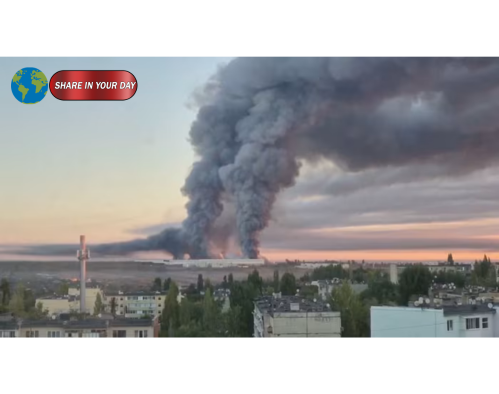
Russia is increasingly pushing responsibility for Russia drone defense onto private businesses as Ukrainian long-range drone attacks put industrial facilities, warehouses and other commercial sites under growing pressure. The shift is changing how companies operate, with some businesses investing directly in air-defense equipment and other protective measures.
The development highlights how the Russia-Ukraine war is extending beyond military installations and the traditional battlefield. Ukrainian drones have repeatedly reached targets deep inside Russian territory, hitting energy facilities, industrial sites, logistics centers and warehouses.
The Wall Street Journal reported that Russian companies are increasingly being expected to protect their own facilities as attacks intensify. One example cited by the newspaper involves steelmaker Severstal, whose owner Alexei Mordashov reportedly brought in an air-defense system to protect a major mill outside Moscow after a Ukrainian drone strike.
The growing burden on private companies also carries an economic cost. Russian businesses have already increased spending on anti-drone protection, while companies operating warehouses and logistics networks have faced repeated disruptions.
Russia Drone Defense Becomes a Corporate Responsibility
Air defense has traditionally been considered a responsibility of the state and military. Russia’s expanding reliance on businesses to protect their own facilities represents a significant change.
Instead of depending entirely on government-operated systems, companies are increasingly being asked to assess threats and invest in protective measures themselves.
That can include physical barriers, surveillance, specialized security personnel and anti-drone equipment. Some companies are also looking at ways to protect large facilities and warehouses from the impact of drones.
The trend was already visible earlier this year.
Data cited by The Moscow Times showed Russian businesses spent 441.3 million rubles, equivalent to about $5.34 million at the time, on anti-drone equipment during the first six months of 2026. That represented a 6.6-fold increase from the same period a year earlier, according to procurement data cited by the publication.
The increase suggests that companies are no longer treating drone attacks as an occasional security concern.
For some industries, the threat has become an operational issue that must be incorporated into business planning.
Ukrainian Drone Attacks Are Reaching Deeper Into Russia
Ukraine has developed a large long-range drone campaign aimed at targets inside Russia.
The attacks have increasingly focused on infrastructure associated with energy production, logistics and military supply chains. Russian authorities have reported intercepting large numbers of drones, although some have reached their intended areas and caused fires or other damage.
The scale of the attacks has become particularly visible in recent months.
The Associated Press reported that Russian Defense Ministry data indicated more than 43,300 Ukrainian drones were intercepted over Russia and Russian-occupied Crimea during June, July and August. The figure reflects Russian claims and includes drones that Moscow said were intercepted before reaching their targets.
Recent attacks have also demonstrated that Ukrainian drones can threaten facilities far from the front line.
In September, Reuters reported that a major Ukrainian drone attack on the Moscow region caused deaths and damage to infrastructure, including an oil refinery. Russian authorities said hundreds of drones were intercepted over Moscow, while additional drones were reported elsewhere in the country.
Another Reuters report said the Moscow oil refinery suspended crude processing following a September 20 drone attack that damaged key processing units. Industry sources told Reuters that repairs could take several weeks.
These incidents illustrate why Russia drone defense has become an increasingly important issue for companies operating critical facilities.
Warehouses Have Become Major Targets
Logistics facilities have been among the most visible examples of the new security environment.
Russian online retailer Wildberries has suffered multiple warehouse attacks during the year. The strikes have disrupted storage and delivery operations and caused significant damage to facilities.
In July, Ukrainian drone attacks hit Wildberries warehouses in Russia, with Russian authorities reporting deaths and injuries among workers. Reuters reported that several warehouses were damaged during a series of attacks, affecting around 10% of the company’s storage capacity at the time.
Other attacks have followed.
Russian businesses have responded with measures intended to reduce the risk of damage. In September, Wildberries reportedly sought bids for hundreds of thousands of square meters of galvanized metal mesh to protect warehouses across several Russian regions.
The Bell, as reported by The Kyiv Independent’s NV, said the tender covered 478,000 square meters of mesh. A source cited by the publication said the material was intended to protect facilities against drone attacks.
The use of protective mesh illustrates a broader point: businesses are now modifying physical infrastructure because of a military threat that previously would have been handled primarily by state authorities.
The Cost of Protecting Russian Businesses Is Rising
The growing demand for anti-drone systems creates another financial burden for Russian companies.
Businesses must now consider not only the cost of damaged buildings, equipment and inventories, but also the cost of preventing future attacks.
That can involve purchasing protective equipment, strengthening buildings, expanding security operations and potentially deploying specialized air-defense capabilities.
The Carnegie Endowment for International Peace described the development in May as an increasing transfer of defense costs onto companies and regional governments. Its analysis said private businesses were effectively absorbing some of the financial burden associated with protecting industrial facilities from aerial attacks.
For companies operating on narrow margins, repeated attacks could therefore create a difficult calculation.
Spending money on protection may reduce the risk of future losses, but the investment can also become substantial when multiple sites must be defended.
Large corporations with facilities spread across several regions face an even greater challenge.
Russia’s Industrial Economy Is Under Pressure
The expansion of drone warfare has consequences beyond individual attacks.
Russia operates a geographically extensive industrial economy, with oil refineries, factories, warehouses, transportation networks and other infrastructure spread across thousands of kilometers.
That geography creates a difficult defense problem.
Protecting every industrial facility with conventional military air-defense systems would require significant resources. As Ukrainian drones become cheaper and more numerous, Russia faces the challenge of defending a large number of potential targets against relatively inexpensive weapons.
That imbalance is one reason businesses are increasingly being drawn into the defensive effort.
Russia has also experienced disruptions to fuel and transportation infrastructure during periods of intense Ukrainian drone attacks.
The Washington Post reported in September that drone attacks had contributed to airport closures, fuel disruptions and damage to warehouses and other infrastructure during a summer marked by repeated strikes.
The consequences can spread well beyond the facility that is directly hit.
A damaged warehouse can delay deliveries. A refinery shutdown can affect fuel supplies. An attack on a major industrial plant can interrupt production and create additional pressure on regional economies.
Moscow Has Also Increased Pressure on Companies
The Kremlin has taken steps that place additional responsibility on owners and operators of vulnerable facilities.
In August, President Vladimir Putin signed a decree allowing the Russian state to take control of certain businesses affected by drone attacks if authorities determine that security requirements were not adequately met, according to Euronews.
The measure covers sectors including energy, transport and logistics and allows state intervention under certain security circumstances. Legal experts cited by Euronews described the policy as potentially creating a mechanism for state control over companies after drone attacks.
The policy adds another dimension to the Russia drone defense issue.
Companies are not simply facing the possibility of physical damage. They may also face greater scrutiny from government authorities over whether their facilities have adequate protection.
That could encourage companies to increase security spending even when the financial return is difficult to measure.
A New Layer of Security Is Emerging
The developments in Russia have parallels elsewhere in the war.
Ukraine has also increasingly turned to private companies and organizations to supplement its air-defense capabilities.
A Le Monde report published earlier this month said Ukraine had authorized dozens of private companies to operate anti-drone defense units. By late August, 51 companies had received approval under a government-supervised program, with the number later increasing further.
That means both sides are adapting their security structures to a conflict in which drones can reach far beyond the front line.
The difference is that Russia’s current approach, as described by the Wall Street Journal and other sources, increasingly involves companies taking responsibility for protecting their own facilities.
In Ukraine, private air-defense initiatives have been developed through a more formalized government framework.
The two approaches reflect the same underlying problem: traditional air-defense systems are being stretched by the sheer number and geographic range of drone threats.
Drone Warfare Is Changing Business Operations
The consequences of the drone campaign are likely to extend beyond military planning.
For Russian businesses, security is increasingly becoming part of everyday operations.
Warehouse managers must consider evacuation procedures. Industrial companies must assess vulnerabilities. Logistics operators may need contingency plans for disrupted facilities. Businesses with multiple sites may have to determine which locations require additional protection.
Workers can also become part of the equation.
The Wall Street Journal reported that the drone threat is affecting job requirements, with security personnel and even postal workers becoming involved in defensive efforts around commercial facilities.
That represents a major change in the relationship between civilian economic activity and the war.
Businesses that once operated largely outside the immediate conflict zone are now being forced to account for military risks as part of normal commercial planning.
The Technology Race Is Accelerating
The pressure on Russia’s businesses is also connected to a broader technological race between Russian and Ukrainian drone programs.
Ukraine has developed long-range strike drones capable of attacking targets far from the front. Russia, meanwhile, has expanded its own drone production and is increasingly using faster systems.
Reuters reported in September that Russia was producing an estimated 3,000 jet-powered drones a month, according to Ukrainian defense intelligence estimates. These faster drones present additional challenges because their speed can make interception more difficult.
As drone technology develops, conventional security measures may become less effective.
Businesses therefore face an evolving threat rather than a fixed one.
A system that provides useful protection against one type of drone may not offer the same level of protection against a faster or differently configured aircraft.
That creates another incentive for companies to continually update their defenses.
What Comes Next for Russia Drone Defense?
The growing role of businesses in Russia drone defense could become a long-term feature of the conflict if attacks continue at their current scale.
Companies may increasingly develop dedicated security teams, invest in specialized equipment and redesign vulnerable facilities.
The economic consequences could also become more significant.
When businesses spend more money on defense, that money cannot be used for other investments. When facilities are damaged, companies face repair costs, lost production and disrupted supply chains.
At the same time, the Russian government must balance the need to protect critical infrastructure with the limited availability of sophisticated air-defense systems.
The result is a complex security environment in which the military, government agencies and private companies increasingly share responsibility for protecting economic infrastructure.
For businesses, the war is therefore becoming not only a geopolitical risk but also an operational and financial one.
Russia Drone Defense Reflects a Broader Transformation of the War
The expanding role of Russian companies in defending themselves against Ukrainian drones is one of the clearest signs that modern warfare is changing the boundaries between military and civilian life.
Drones are relatively inexpensive compared with many traditional weapons, yet they can force governments and businesses to spend heavily on detection, interception and physical protection.
The result is an asymmetric economic challenge.
Ukraine can use long-range drones to threaten facilities deep inside Russia, while Russia must decide how to defend a vast network of industrial and commercial sites.
As the conflict continues, Russia drone defense is likely to remain a growing concern for companies whose facilities are considered strategically or economically important.
The developments also demonstrate how the war is increasingly being fought through logistics, energy, manufacturing and commercial infrastructure—not only through conventional military positions.
For Russian businesses, that means the question of air defense is no longer confined to the military. It has become part of the cost of operating in an economy increasingly exposed to long-range drone warfare.