Herculaneum Scrolls: 2,000-Year Mystery Revealed
For nearly 2,000 years, the Herculaneum scrolls have remained among the most difficult ancient documents to read. Buried and carbonized by the eruption of Mount Vesuvius in AD 79, the fragile papyri survived in a condition so delicate that physically opening many of them could destroy the writing they contain.
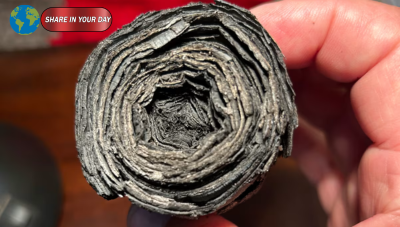
Now, scientists have demonstrated a promising new technique that could help researchers identify and read more of these mysterious texts without unrolling them.
The breakthrough comes from an experiment involving artificially carbonized papyrus, lead-containing ink and X-ray imaging. Researchers created their own damaged scrolls, burned them under controlled conditions and then used X-ray tomography to virtually unroll them. The experiment showed that lead in ink can create enough contrast to make writing easier to distinguish from the surrounding papyrus.
The study, published September 16, 2026, in PLOS ONE, provides a proof of concept rather than a complete solution for the original Herculaneum collection. However, it could give researchers a practical way to identify which unopened scrolls are most likely to contain readable writing.
Why the Herculaneum scrolls are so difficult to read
The Herculaneum scrolls were preserved in an extraordinary but destructive way.
When Mount Vesuvius erupted in AD 79, the ancient Roman town of Herculaneum was overwhelmed by extreme heat, volcanic material and later layers of debris. More than 1,000 papyrus scrolls were carbonized during the disaster.
Instead of simply turning to ash, many of the scrolls were transformed into extremely fragile masses of carbonized papyrus. That unusual preservation means the documents may still contain information about the ancient world, but it also makes conventional reading extremely dangerous.
Researchers therefore face a fundamental problem: opening the scrolls can damage or destroy them.
Modern imaging has offered an alternative. Rather than physically separating the layers, scientists can scan a rolled scroll and reconstruct its internal surfaces digitally. This process is commonly described as virtual unrolling.
The approach has already produced important results, but one major obstacle remains: identifying the ink.
The problem with carbon-based ink
Traditional black ink can be difficult to distinguish from carbonized papyrus using standard X-ray techniques.
Both the writing and the damaged papyrus can contain substantial amounts of carbon. As a result, the visual difference between the ink and the papyrus may be weak in an X-ray scan.
Researchers have previously demonstrated that lead can be present in the writing of Herculaneum papyri. Earlier scientific studies detected lead in fragments of the ancient material, suggesting that the metal could potentially serve as a useful marker for identifying letters.
The 2026 experiment builds on that discovery.
Instead of attempting to immediately solve the problem on priceless ancient artifacts, scientists created modern experimental scrolls that could be tested repeatedly.
That allowed the researchers to control the amount of lead in the ink and determine how well the writing could be detected after the papyrus had been carbonized.
Scientists created their own burned scrolls
The research team used modern Egyptian papyrus to create model scrolls designed to imitate important physical characteristics of the ancient Herculaneum material.
The researchers wrote on the papyrus using black carbon-based ink that had been mixed with different amounts of lead. They then rolled the papyrus and subjected it to high temperatures in a low-oxygen environment.
The objective was not to perfectly recreate the eruption of Mount Vesuvius. Instead, the researchers wanted to produce experimental material that behaved sufficiently like carbonized Herculaneum papyrus to test the imaging technique.
After the scrolls were carbonized, physically unrolling them was still impractical because the material was extremely brittle.
That made the experiment ideal for testing virtual unrolling.
X-rays revealed hidden writing
The carbonized model scrolls were examined using X-ray tomography at the U.S. National Institute of Standards and Technology.
X-ray tomography produces a three-dimensional representation by collecting many images of an object from different perspectives. Computer software can then reconstruct the internal structure of the object.
In this experiment, researchers combined X-ray imaging with custom software capable of virtually separating the layers of the rolled papyrus.
The key difference was the presence of lead.
Because lead is much heavier than the carbon-rich materials surrounding it, it can generate a stronger X-ray signal. That additional contrast can make the locations of written letters easier to identify.
The researchers successfully detected and recovered text from their laboratory-made carbonized scroll without physically opening it.
That result is important because it demonstrates that the approach can work under controlled conditions.
Herculaneum scrolls could be screened before scanning
One of the most practical parts of the new research is not simply the ability to detect lead with sophisticated tomography.
The scientists also tested whether a handheld X-ray fluorescence, or XRF, instrument could identify lead in carbonized material.
The experiment found that the handheld device could detect lead in the model writing after carbonization. That raises the possibility of using XRF as an initial screening method.
The potential workflow is relatively straightforward.
First, researchers could screen unopened scrolls for evidence of lead.
Scrolls showing elevated lead signals could then be prioritized for more advanced X-ray tomography.
The idea could save time by helping researchers determine which objects are most promising before investing in more complicated imaging procedures.
The PLOS ONE study describes this as a potential two-step strategy: first identify lead-containing material and then subject promising scrolls to high-resolution imaging and virtual unrolling.
Why lead matters
The importance of lead comes down to contrast.
The papyrus and carbon-based ink can have similar properties after the scroll has been burned. Lead, however, behaves differently when exposed to X-rays.
That means the metal can potentially provide an identifiable signature for the writing.
The researchers tested several lead concentrations in their model scrolls. According to the study, text could be detected at lead surface concentrations down to 25 micrograms per square centimeter, which was the lowest concentration tested.
The result does not mean that every Herculaneum scroll containing lead will automatically become readable.
Ancient scrolls differ in their composition, preservation, ink chemistry and physical condition. Some may contain little or no lead, while other technical limitations could make their writing difficult to reconstruct.
Instead, the experiment demonstrates that lead provides a useful signal that can be incorporated into future imaging and computer-analysis systems.
The discovery builds on earlier research
The new experiment is not the first time scientists have found lead in Herculaneum writing.
Research published more than a decade ago established evidence that lead was present in the ink of Herculaneum papyrus fragments. Those findings suggested that the metal could potentially improve the visibility of writing during future X-ray experiments.
The 2026 study takes that earlier observation a step further.
Instead of merely detecting lead in surviving fragments, researchers created controlled carbonized scrolls containing known quantities of the metal and demonstrated that the writing could subsequently be identified through X-ray methods.
That distinction matters.
A discovery in an ancient fragment can suggest that a technique might work. A controlled laboratory experiment can test the mechanism directly.
The new research therefore provides experimental evidence supporting the idea of using lead as a contrast agent for virtual reading.
What the technique could mean for ancient history
The Herculaneum collection is potentially one of the most important surviving libraries from the ancient Roman world.
Many of its scrolls remain unread because their physical condition makes conventional opening difficult or impossible.
If imaging technology can reveal writing without damaging the objects, researchers could gain access to texts that have remained hidden for centuries.
The potential value extends beyond simply discovering individual words.
Ancient papyri can contain philosophical works, literature, historical information, scientific ideas, administrative records and other evidence about daily life.
Every readable section could provide additional information about intellectual and cultural life in the ancient Mediterranean.
The Berkeley research team has also emphasized the importance of building experimental datasets. By creating model scrolls with known writing and different ink compositions, scientists can generate training material that could help computer algorithms learn how to identify text in real Herculaneum scans.
That could eventually connect chemistry, X-ray imaging, computer vision and archaeology.
Artificial intelligence could become part of the process
Reading a damaged scroll digitally is not simply a matter of taking a high-resolution photograph.
The interior of a rolled scroll can contain thousands of overlapping layers. Researchers must reconstruct those layers, separate surfaces and identify the locations where ink appears.
Computer algorithms can assist with that process.
The 2026 study specifically describes the laboratory-made scrolls as a source of ground-truth data for developing and validating text-detection algorithms. Because researchers know exactly what text was written on their experimental scrolls, they can compare the computer’s output against the original writing.
That creates a valuable testing environment.
Instead of training algorithms only on uncertain ancient scans, researchers can provide examples where the correct answer is already known.
Over time, that could improve automated detection of faint letters and help researchers process large numbers of ancient scrolls more efficiently.
The breakthrough still has important limitations
Despite the excitement surrounding the research, the experiment should not be interpreted as proof that thousands of unreadable scrolls can immediately be translated.
The researchers worked with modern papyrus rather than the original Herculaneum collection.
The experimental scrolls were designed to reproduce important characteristics of ancient material, but they cannot capture every chemical and physical difference accumulated over nearly two millennia.
The study itself describes the work as a proof of concept. Direct testing of the complete method on original Herculaneum scrolls remains challenging because the ancient objects are exceptionally fragile and high-end synchrotron imaging is expensive and difficult to schedule.
There is also another important issue: not every ancient ink necessarily contains enough lead to produce a strong signal.
Researchers therefore still need to determine which scrolls contain detectable metal and whether the resulting contrast is sufficient for detailed text reconstruction.
A new path toward unopened ancient texts
The significance of the Herculaneum scrolls experiment lies in the combination of several technologies.
Ancient papyrus provides the historical material.
Lead provides a potential chemical marker.
X-ray tomography provides three-dimensional imaging.
Virtual unrolling allows researchers to inspect the interior without physically opening the scroll.
And computer algorithms can help identify the resulting patterns.
Together, these technologies offer a non-destructive pathway for investigating documents that once seemed almost impossible to read.
The next step will be testing how effectively the approach works with authentic Herculaneum material.
Researchers could begin by screening scrolls with XRF to identify those containing measurable lead. Promising candidates could then undergo more advanced X-ray imaging, where lead-sensitive techniques might reveal writing that conventional scans struggle to distinguish.
Why the Herculaneum scrolls still matter today
The story of the Herculaneum scrolls is ultimately a story about technology changing what historians can access.
For centuries, the carbonized papyri were essentially closed books. Their survival was remarkable, but their fragility made them extremely difficult to study.
Modern imaging has changed that equation.
Scientists no longer necessarily have to choose between preserving a fragile artifact and examining its contents. Digital techniques offer the possibility of doing both.
The new lead-ink experiment does not solve every problem, but it adds another tool to the growing scientific effort to recover ancient writing.
If the method proves effective on authentic scrolls, researchers could potentially identify previously inaccessible texts without physically unrolling them.
For a collection buried by the eruption of Mount Vesuvius nearly 2,000 years ago, that would represent a remarkable second life.
The most important discovery may therefore not be a single newly recovered sentence.
It may be the demonstration that chemistry can help guide imaging, imaging can support virtual unrolling, and computer algorithms can help turn hidden patterns into readable ancient text.
For the Herculaneum scrolls, the technology could bring researchers one step closer to opening a library that has remained largely silent since the Roman world of AD 79.
Source note: The underlying 2026 research was published in PLOS ONE on September 16, 2026, with supporting information from NIST, UC Berkeley and scientific reporting from Nature.