
Trump Rejects Iran’s Seven-Day Roadmap to Reopen Strait of Hormuz
US President Donald Trump has rejected an Iranian proposal that would reopen the strategically important Strait of Hormuz within seven days and restart negotiations over Tehran’s nuclear programme, adding another setback to diplomatic efforts aimed at ending the ongoing conflict in the Middle East.
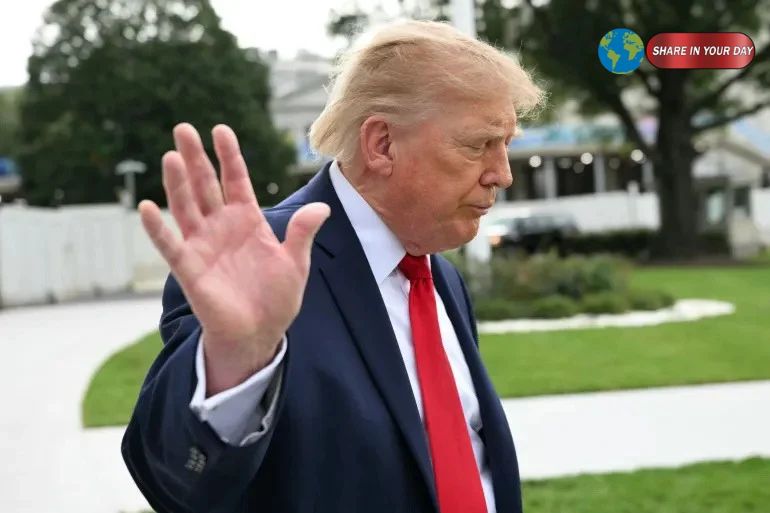
Trump told reporters on Saturday that he had rejected Iran’s proposal, arguing that Tehran was seeking an agreement to reopen the waterway because of mounting economic pressure. His comments came shortly after Iranian Foreign Minister Abbas Araghchi publicly outlined a seven-day roadmap that would link the reopening of the strait to a series of US concessions.
The Strait of Hormuz has become one of the central pressure points in the conflict. The narrow waterway between Iran and Oman is a critical route for international energy shipments, with roughly one-fifth of the world’s traded oil and natural gas passing through the area during normal conditions. Disruptions there have therefore raised concerns well beyond the Middle East, particularly for energy markets and countries dependent on imported fuel.
Iran’s Seven-Day Proposal
Iran presented its proposal through diplomatic channels during the United Nations General Assembly meetings in New York. Araghchi said the plan had been communicated to Washington through Qatar, which has been involved in efforts to mediate between Tehran and the United States.
Under the proposal, Washington would first take several steps demanded by Tehran. These include ending the US naval blockade of Iranian ports, easing sanctions on Iranian oil exports and releasing about $12 billion in frozen Iranian assets. Iran also called for a broader ceasefire covering the region, including Lebanon and Yemen.
Once those conditions were fulfilled, Tehran said the Strait of Hormuz could be reopened. Araghchi said the initial measures would require roughly four or five days, with normal maritime traffic restored around the sixth day. On the seventh day, Iran proposed restarting negotiations with Washington over a broader agreement, including the future of its nuclear programme.
“The choice now rests with the United States,” Araghchi said while presenting the proposal, while also insisting that Iran would not accept what it considers coercion or intimidation.
The proposal closely resembles an earlier memorandum of understanding reached between Washington and Tehran in June. That agreement was intended to provide a framework for reducing hostilities, reopening the Strait of Hormuz and restarting nuclear negotiations. However, disagreements over implementation eventually caused the arrangement to collapse.
Trump Rejects the Plan
Trump’s response was swift. According to reports, the US president rejected the proposal and questioned whether Tehran could be trusted to follow through on its commitments.
Trump has repeatedly demanded that Iran guarantee it will not obtain a nuclear weapon and restore unrestricted passage through the Strait of Hormuz. Tehran, meanwhile, has insisted that discussions about its nuclear programme cannot move forward while US military pressure and sanctions remain in place.
That disagreement has created a significant diplomatic deadlock. Each side has presented conditions that the other considers unacceptable, while intermediaries continue attempting to keep negotiations alive.
Trump has also indicated that Washington believes it has considerable leverage over the situation surrounding Hormuz. On Friday, he posted an image on his social media account showing the waterway labelled “Trump Strait,” a move that highlighted the increasingly confrontational language surrounding control of the strategic passage.
Iran has strongly rejected US claims that Washington has control of the strait.
Diplomacy Remains Open
Despite the rejection, diplomatic channels between the United States and Iran have not completely closed.
Qatar has continued to act as an intermediary, while Pakistan has also been involved in passing messages between Tehran and Washington. Iranian President Masoud Pezeshkian said in an interview that Iran remains open to negotiations but no longer trusts the United States because previous discussions were followed by military action and sanctions.
Pezeshkian said Tehran was prepared to discuss its nuclear programme and other issues but would not accept negotiations conducted under threats.
US officials have also described mediated contacts as continuing. Earlier discussions involving American representatives and Iranian counterparts took place around the United Nations General Assembly, although major differences remain over the conditions for a settlement.
The situation has left both sides attempting to maintain diplomatic options while preparing for the possibility that fighting could resume or intensify.
Strait of Hormuz Remains Central to the Conflict
The dispute over Hormuz carries consequences far beyond the United States and Iran. The waterway is a major artery for global energy supplies, making any prolonged disruption a concern for governments, shipping companies and consumers worldwide.
Saudi Arabia and other regional governments have also expressed concern about the continued disruption of strategic shipping routes. Attacks and tensions involving Iran-aligned groups elsewhere in the region have added another layer of uncertainty to international energy markets.
For Iran, the strait represents an important source of leverage. For Washington, restoring unrestricted shipping has become one of the central demands in negotiations with Tehran.
The rejection of Iran’s seven-day roadmap therefore leaves the central dispute unresolved. Tehran wants sanctions relief, the end of the naval blockade and a ceasefire before moving toward broader negotiations. Washington is demanding guarantees over Iran’s nuclear programme and unrestricted navigation through Hormuz.
With neither side appearing ready to abandon its main conditions, the future of the Strait of Hormuz remains closely tied to the wider US-Iran conflict. Diplomatic contacts may continue through Qatar and other intermediaries, but the rejection of the seven-day proposal demonstrates how difficult it will be to turn those contacts into a lasting agreement.