South Africa Mass Shootings Leave 27 Dead in Attacks
The latest South Africa mass shootings have left at least 27 people dead in two separate attacks that happened only hours apart, deepening concerns about persistent gun violence in the country.
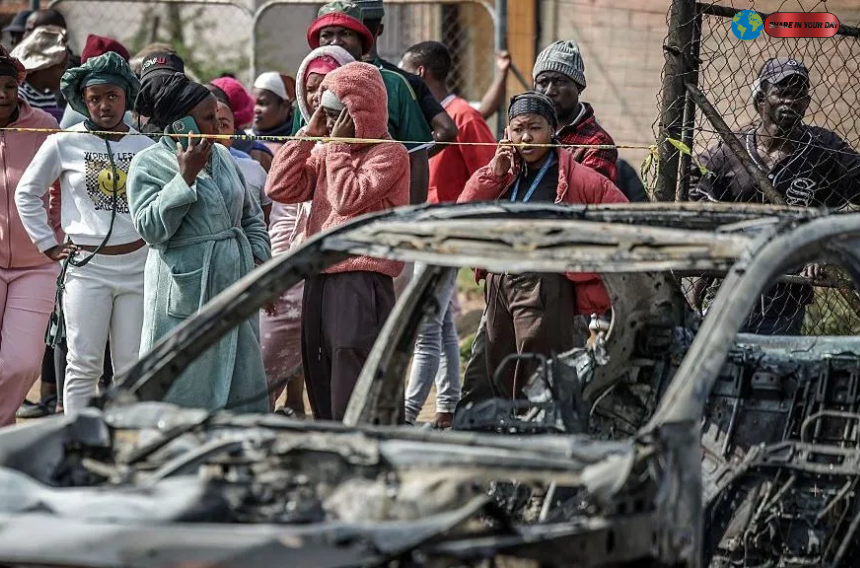
Seventeen people were killed after heavily armed gunmen stormed a bar near Johannesburg on Saturday evening. Fifteen others were injured in the attack.
Hours later, another shooting outside an entertainment venue in a township near Cape Town killed 10 people and injured 11 more.
Police were investigating both attacks, but no arrests had been reported at the time of the latest available information. Authorities had also not established a confirmed motive for either shooting.
South Africa Mass Shootings Hit Two Cities
The first attack took place near Johannesburg, where several gunmen reportedly opened fire on people outside a bar before entering the premises.
Police said eight attackers were involved.
The gunmen reportedly fired at customers before continuing the assault inside the bar. They also set two vehicles on fire as they escaped from the scene.
Thirteen men and four women were killed in the Johannesburg-area attack, according to police.
Fifteen additional people were wounded and required medical attention.
Deputy provincial police commissioner Maj Gen Fred Kekana said investigators had obtained photographs of the suspected attackers. In some cases, police also had names linked to possible suspects.
Authorities were continuing to investigate the circumstances surrounding the attack.
Kekana suggested that the shooting could have been connected to an earlier incident in the area. Last month, one person was killed and another was wounded in an attack that police were examining as a possible link to the latest violence.
Second Shooting Strikes Near Cape Town
A separate shooting occurred in the early hours of Sunday morning outside an entertainment venue in a township near Cape Town.
Ten people died in that attack.
Five victims were pronounced dead at the scene, while five others died later in hospital.
Eleven additional people were injured.
The incident added another layer of concern for South African authorities because it occurred just hours after the deadly shooting near Johannesburg.
Police had not announced arrests in either case in the latest available reports.
Investigators were expected to examine whether the Cape Town-area attack was connected to local criminal activity, although officials had not publicly established a motive.
The two incidents remained separate investigations unless evidence emerged showing a direct connection between them.
Police Face Questions Over Rising Gun Violence
The South Africa mass shootings come against a broader backdrop of serious violent crime.
South Africa has one of the highest murder rates in the world. The country of about 62 million people has experienced persistent problems involving illegal firearms, organised crime and gang violence.
According to the available BBC reporting, roughly 60 murders are recorded across the country on an average day.
The scale of that violence has made gun crime a major challenge for police and government officials.
Mass shootings are particularly alarming because they can kill or injure large numbers of people within minutes. They also frequently expose connections between firearms, organised criminal networks and disputes between rival groups.
In some areas, gangs are involved in drug trafficking and illegal mining, creating additional incentives for violent territorial conflicts.
Recent Attacks Add to Concern
The latest shootings were not isolated from other recent incidents.
Only days earlier, 11 people were killed when gunmen reportedly attacked a house in the KwaMakhutha township in the Durban area.
That attack added to concerns about a series of deadly shootings occurring in different parts of South Africa.
Authorities have been under pressure to address the availability of illegal firearms and the criminal networks that use them.
The repeated attacks have also raised questions about whether existing policing strategies are sufficient to contain violence in areas with high murder rates.
Earlier this year, the South African government deployed military personnel alongside police in some of the country’s most violent areas.
The measure was intended to support law enforcement efforts and reduce armed violence in communities experiencing exceptionally high murder rates.
Organised Crime Remains a Major Challenge
South Africa’s violent-crime problem extends beyond individual shootings.
Police and government officials have increasingly focused on organised crime, including gang activity, drug trafficking and illegal mining.
President Cyril Ramaphosa previously described organised crime as a major threat to South African society and economic development.
The government has faced the difficult task of balancing long-term crime prevention with immediate efforts to respond to heavily armed criminal groups.
Illegal firearms remain widely available despite restrictions on gun ownership.
That availability can make disputes significantly more deadly, particularly in communities where organised gangs operate.
For residents, repeated shootings can also create an atmosphere of insecurity around places that would normally be associated with social activities, including bars and entertainment venues.
Police Investigate Suspects in Johannesburg Attack
The investigation into the Johannesburg-area shooting appeared to have several potential leads.
Police said they had clear images of suspected attackers and, in some cases, names connected to the investigation.
However, identifying suspects is only one stage of a criminal investigation.
Authorities still need to establish the circumstances of the attack, identify those directly responsible and determine whether other people helped plan or carry it out.
Investigators also need to establish a possible motive.
Kekana’s comments about a potential connection to a previous shooting provide one possible line of inquiry, but the available information does not establish that the two incidents were definitively linked.
Police therefore continued to examine the evidence before drawing final conclusions.
Another Death Investigation Underway
The violence also coincided with another disturbing investigation in Ekurhuleni, east of Johannesburg.
Police discovered the body of a tenth woman in the area.
Authorities said they could not rule out the possibility that a serial killer was operating in the area.
Investigators were examining similarities between the deaths.
The case was separate from the mass shootings, but its emergence at the same time highlighted the broader difficulties facing law enforcement agencies dealing with multiple forms of violent crime.
Police would need to determine whether the women’s deaths were connected to one another or whether they represented unrelated incidents.
Why South Africa’s Gun Violence Is So Difficult to Control
The country’s violence has multiple contributing factors.
Organised gangs operate in several communities, while illegal firearms remain a persistent problem. Competition over territory and criminal markets can also lead to deadly confrontations.
Illegal mining has emerged as another concern in some parts of the country.
Criminal groups involved in illicit mining can become involved in disputes over access to mining areas and resources. Drug trafficking can create similar conflicts between rival organisations.
These factors make violent crime difficult to address through policing alone.
Authorities also face broader social and economic challenges that can contribute to criminal activity.
However, the immediate priority following a mass shooting is typically to secure the scene, provide medical assistance, identify suspects and prevent further attacks.
Communities Face Another Wave of Violence
For communities near Johannesburg and Cape Town, the latest shootings have brought renewed attention to public safety.
Bars and entertainment venues are places where large groups of people gather, making attacks particularly dangerous.
The fact that two shootings occurred within hours of each other has intensified concern.
Yet investigators must still determine whether the incidents were connected or simply occurred during the same period.
Police had not publicly confirmed a common motive in the latest available reports.
That distinction is important because early information following a major shooting can change as investigators gather evidence and interview witnesses.
South Africa Mass Shootings Put Focus on Crime Response
The South Africa mass shootings that killed 27 people represent another major challenge for the country’s law enforcement agencies.
Seventeen people died in the attack near Johannesburg, while another 10 were killed in the separate shooting near Cape Town. Dozens more were injured across the two incidents.
The investigations were continuing, with police seeking suspects and working to determine what triggered the attacks.
The shootings also renewed attention on South Africa’s wider struggle with organised crime and illegal firearms.
With recent attacks occurring in multiple communities, the country’s response will involve more than solving individual cases. Police must identify those responsible while authorities continue efforts to reduce the circulation of illegal weapons and disrupt criminal networks.
For the victims and their families, however, the immediate consequences are already clear.
Twenty-seven lives were lost in two separate attacks within a matter of hours.
As investigators continue gathering evidence, authorities face the urgent task of bringing those responsible to justice while addressing the wider conditions that allow deadly gun violence to persist.