Ethiopia Fighting Intensifies: 5 Key Developments
Ethiopia fighting has intensified across the country’s north, raising fresh fears of a wider conflict after renewed clashes between federal forces and fighters linked to the Tigray People’s Liberation Front, or TPLF.
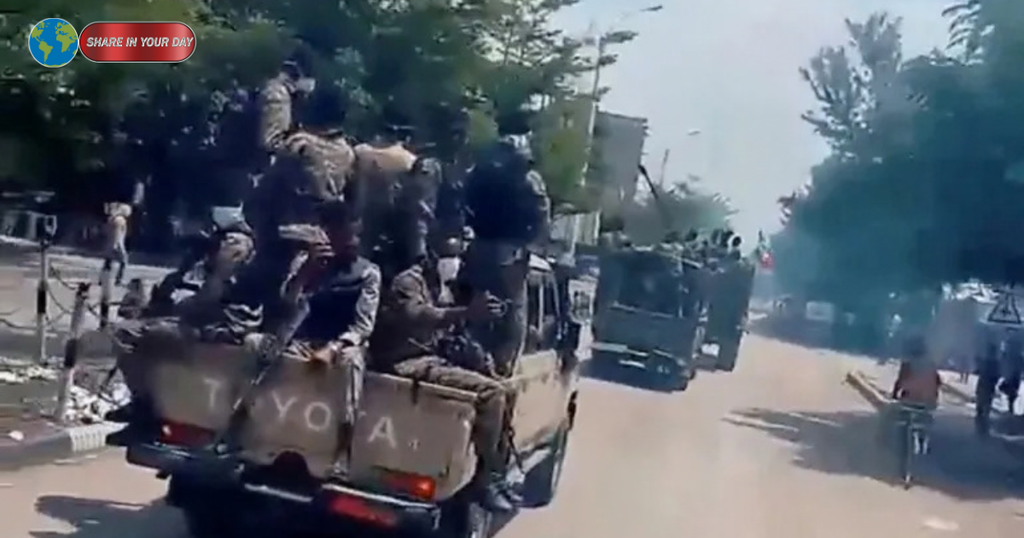
The latest escalation has spread beyond Tigray into neighbouring Afar and Amhara regions. Government forces and allied fighters have claimed advances in several areas, while Tigrayan forces have continued operations in parts of Afar and around strategic routes.
The developments come less than four years after the Pretoria Agreement formally ended the devastating 2020-2022 Tigray war.
The current fighting has already caused new displacement and disrupted communications in parts of northern Ethiopia. Aid organizations and international observers are warning that the humanitarian consequences could become serious if the conflict expands.
Here are five key developments to understand as Ethiopia fighting continues.
1. Ethiopia Fighting Has Spread Beyond Tigray
The latest escalation began in and around Tigray before spreading into neighbouring regions.
Reuters reported that Tigrayan forces launched a major offensive on September 23, while the Tigray side said it was responding defensively to government pressure. Ethiopian authorities have presented a different account, accusing the TPLF of initiating the latest escalation. RReuters
The fighting has since involved multiple fronts.
Al Jazeera reported that clashes spread from Tigray into Afar and Amhara, with several armed groups becoming involved. The escalation followed the formation of an alliance involving seven armed movements that have declared their opposition to Prime Minister Abiy Ahmed’s government. AAl Jazeera
The expansion is significant because it creates the possibility of several interconnected battlefronts rather than a conflict limited to Tigray.
A broader conflict would also make humanitarian access more difficult and could place additional pressure on Ethiopia’s already strained resources.
2. Government Forces Claim Alamata
One of the most important developments came around Alamata, a strategically located town south of Tigray’s regional capital, Mekelle.
Ethiopian government forces and allied fighters claimed they had captured Alamata on September 28. Reuters reported that video showed soldiers moving through the town while carrying Ethiopian flags, and the location was independently verified through visual and satellite analysis. RReuters
The town is roughly 120 kilometres south of Mekelle.
Its location makes Alamata important to the broader military picture because control of the area could potentially provide federal forces with an avenue toward territory controlled by Tigrayan forces.
Al Jazeera’s latest report described the capture as a development that could allow federal forces and their allies to increase pressure toward Mekelle. AAl Jazeera
However, battlefield claims in an active conflict can change quickly.
Communications remain limited in some areas, making independent verification of individual movements and casualty claims difficult. Therefore, reports of territorial control should be understood as developments that may continue to evolve.
3. Tigrayan Forces Have Pushed Into Afar
While federal forces have reported gains around parts of Tigray, Tigrayan fighters have also been active outside the region.
The Tigray People’s Liberation Front and allied forces have operated in Afar, including around Erebti. ACLED’s conflict monitoring reported fighting in Afar and said Tigrayan forces were reported to control the Erebti area near the Tigray-Afar border. AACLED
The fighting in Afar is particularly important because the region contains routes connecting Ethiopia to Djibouti.
Djibouti is a major trade gateway for landlocked Ethiopia. A prolonged conflict affecting routes toward the Djibouti corridor could therefore have consequences beyond the immediate battlefield.
Euronews reported that the TPLF advance toward Afdeera raised concerns about the country’s trade and supply routes. The report cited an ACLED analyst who said the calculation could change if fighting threatened the Semera-Djibouti route. Eeuronews
For Ethiopia, keeping those supply lines operating is economically and strategically important.
Any sustained disruption could affect fuel, food and other imports moving through the country’s principal international trade corridor.
4. Regional Powers Are Being Drawn Into the Dispute
Another major concern is the possibility that Ethiopia’s renewed fighting could develop into a broader regional confrontation.
Ethiopian army chief Field Marshal Berhanu Jula has accused Eritrea, Sudan and Egypt of supporting armed groups fighting the Ethiopian government.
The allegations have been rejected by the countries named.
The Associated Press reported that Jula accused Eritrea of supporting the TPLF and suggested that Sudan and Egypt were also involved. Sudan’s government has rejected accusations that it is backing Tigrayan fighters. AAP News
Eritrea has separately denied Ethiopian accusations that it is funding or supporting armed groups against Addis Ababa. AAl Jazeera
These accusations matter because relations between Ethiopia and Eritrea have already deteriorated.
Ethiopia is landlocked and has repeatedly emphasized the strategic importance of gaining reliable access to the Red Sea. Eritrea, meanwhile, has its own security concerns regarding Ethiopia.
The renewed fighting therefore involves more than a dispute between the Ethiopian federal government and Tigrayan forces.
If neighbouring states become directly involved, the conflict could become considerably more difficult to contain.
5. The Humanitarian Situation Is Already Deteriorating
The most immediate concern for civilians is the humanitarian impact.
The previous Tigray war, fought from 2020 to 2022, caused enormous loss of life and widespread displacement. It also disrupted electricity, telecommunications, banking and humanitarian supplies.
The renewed fighting has raised fears that some of those conditions could return.
Al Jazeera reported that telecommunications and internet services were disrupted in parts of Tigray during the latest escalation. The interruptions have made it harder for civilians and journalists to communicate and have complicated efforts to establish what is happening in areas affected by fighting. AAzure Edge
Humanitarian organizations are also reporting significant displacement.
The Associated Press reported that medical facilities in Korem, Alamata and Suhul had received hundreds of wounded people over a 48-hour period, while an estimated 150,000 people had been displaced in Afar. AAP News
Those figures underline the speed at which a military escalation can become a humanitarian emergency.
People living near active front lines may have little time to leave. Roads can become inaccessible, communications can fail and medical facilities can quickly become overwhelmed.
Why Is Ethiopia Fighting Again?
The immediate causes of the latest escalation are disputed.
The TPLF and its supporters say federal forces and allied groups have been responsible for escalating pressure against Tigray. The federal government and officials aligned with Prime Minister Abiy Ahmed have accused the TPLF of launching attacks.
Reuters reported that Tigrayan leaders described their actions as a defensive war, while Ethiopian officials said the TPLF initiated the latest offensive. RReuters
The dispute is rooted in unresolved issues from the previous war.
The 2020-2022 conflict ended with the Pretoria Agreement, which established a cessation of hostilities. But several political, territorial and security issues remained unresolved.
Questions involving disputed territories, the future of Tigray’s armed forces and the relationship between regional and federal authorities have continued to create tension.
Those unresolved issues have now intersected with wider political instability in Ethiopia.
The New Armed Alliance
The current crisis is also different from the previous Tigray war because several armed groups have reportedly joined forces.
Seven movements announced the formation of the Ethiopian Peoples’ Forces Alliance for Survival.
The alliance includes the TPLF as well as groups from other parts of Ethiopia. According to Al Jazeera, the alliance has declared its objective of removing Abiy Ahmed’s government. AAl Jazeera
The coalition is significant because the groups involved have not always shared the same political interests.
Some have previously fought on opposing sides.
That creates both opportunities and challenges for the alliance.
A common opponent can encourage cooperation, but disagreements over territory, political authority and military command could complicate the alliance’s ability to operate as a unified force.
Reuters has reported that analysts see internal divisions as a potential weakness for the anti-government coalition. RReuters
What Is Happening Around Mekelle?
Mekelle, the capital of Tigray, remains central to the conflict.
The city has previously been the political and military centre of the Tigray conflict. The latest federal advance around Alamata has increased attention on the possibility of further fighting in southern Tigray.
However, reports should not be interpreted as evidence that an attack on Mekelle is imminent.
The battlefield remains fluid, and the parties involved have provided conflicting accounts of military movements.
The Tigrayan side has also demonstrated its ability to operate beyond the immediate Mekelle area, particularly in Afar.
The strategic question is therefore not simply whether federal forces can advance toward Mekelle. It is also whether Tigrayan forces can maintain pressure on multiple fronts and threaten important transportation routes.
Communications Are Becoming a Major Concern
The communications situation could have a major impact on the next phase of the crisis.
During the previous Tigray war, the region experienced prolonged communications restrictions. The latest conflict has again been accompanied by reports of disruptions to internet and telephone services.
Al Jazeera reported that telecom networks were disrupted in northern Ethiopia as fighting intensified, raising fears of a repeat of the information blackout experienced during the previous war. AAzure Edge
A communications blackout has consequences beyond journalism.
Families may be unable to contact relatives. Humanitarian organizations can struggle to determine where assistance is needed. Hospitals may find it harder to coordinate medical transfers.
It can also make independent verification of military claims much more difficult.
That is particularly important during an active conflict, when casualty figures and territorial claims can change rapidly.
Why the Djibouti Corridor Matters
One of the most important strategic issues is Ethiopia’s access to international trade.
Because Ethiopia is landlocked, much of its international cargo passes through Djibouti.
The route connecting Ethiopia’s interior with Djibouti therefore has major economic importance.
If fighting in Afar were to threaten that corridor, the consequences could extend well beyond the communities immediately involved in the conflict.
Fuel and other essential imports could face additional risks, while businesses and humanitarian agencies could experience higher transportation costs and delays.
For this reason, developments around Afar deserve close attention even when the main political focus remains on Tigray.
Could Ethiopia Return to a Full-Scale Civil War?
The latest developments have revived comparisons with the 2020-2022 conflict.
However, it is too early to determine whether the current escalation will develop into a conflict on the same scale.
The military and political circumstances are different.
The federal government has greater experience from the previous war, while the TPLF is operating alongside several other armed movements. Regional powers are also watching the situation closely.
At the same time, the humanitarian consequences could become severe even if the fighting remains geographically limited.
ACLED’s latest monitoring shows multiple active fronts across Tigray, Amhara and Afar, demonstrating that the crisis has already extended beyond a single localized confrontation. AACLED
The key question is whether the parties can prevent the fighting from expanding further.
What Happens Next?
Several developments will be important to watch.
First, the situation around Alamata could determine whether federal forces continue moving northward or consolidate their position.
Second, fighting around Afar could affect Ethiopia’s trade corridor to Djibouti.
Third, the level of involvement by neighbouring countries could influence the scale and duration of the conflict.
Fourth, humanitarian access will become increasingly important if displacement continues to rise.
Finally, political negotiations could determine whether the current fighting becomes a prolonged conflict or is contained before it develops further.
At present, there is no clear indication that the situation has stabilized.
Ethiopia Fighting Enters a Dangerous New Phase
The latest Ethiopia fighting represents the country’s most serious escalation in northern Ethiopia since the 2020-2022 Tigray war.
Federal forces and their allies have claimed important territorial gains, including Alamata, while Tigrayan forces have continued operations in Afar and other areas.
The conflict has also drawn accusations involving Eritrea, Sudan and Egypt, although the governments named have rejected the allegations.
For civilians, the immediate concerns are displacement, access to food and medicine, communications disruptions and the possibility of renewed blockades.
For Ethiopia’s government and its opponents, the military contest is unfolding across multiple fronts.
And for the wider Horn of Africa, the stakes are even broader.
The coming days will show whether the latest clashes remain a concentrated confrontation in northern Ethiopia or develop into a wider regional crisis.
For now, the most important facts are that fighting is continuing, territorial control remains contested in several areas, and humanitarian concerns are growing.
Sources and Further Reading
- Al Jazeera — Fighting in Ethiopia intensifies: What’s the latest?
- Reuters — Ethiopian pro-government forces claim capture of strategic Tigray town
- Associated Press — Ethiopia’s army chief accuses Eritrea, Sudan and Egypt of supporting Tigray rebels
- ACLED — Ethiopia Conflict Live
Image recommendation: Use a properly licensed Reuters/AP/AFP or other editorial photograph showing the conflict area, civilians displaced by the fighting, or Ethiopian forces. Do not use an image copied from Al Jazeera without the appropriate rights.
Internal links: I haven’t invented internal URLs because you still haven’t supplied the target website/domain. Once you provide it, I can add relevant internal-link placements without fabricating pages.