I Play Rocky Biopic Gets a Surprising Reaction From Sylvester Stallone
The I Play Rocky biopic has received an unexpected reaction from the very man whose early Hollywood struggle inspired the film: Sylvester Stallone. The actor and filmmaker recently reflected on seeing his life story recreated on screen and joked that Hollywood may have started telling his story a little too soon.
The upcoming movie, directed by Peter Farrelly, focuses on the extraordinary period when Stallone was a struggling actor and aspiring screenwriter trying to turn his script for Rocky into a feature film. Anthony Ippolito plays the young Stallone, while the story follows the difficult path that eventually led to the 1976 boxing classic.
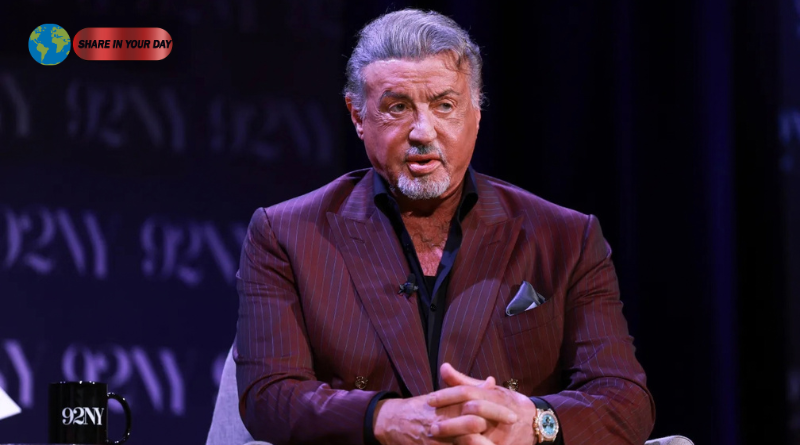
During a conversation at 92NY connected to the release of his new memoir, The Steps, Stallone addressed the movie and acknowledged that his first reaction was complicated.
He joked that he was thinking, “I’m not dead yet. Aren’t we jumping the gun?” according to The Hollywood Reporter.
The comment reflects the unusual situation surrounding the project. Unlike many traditional biographical films, I Play Rocky tells the story of a living actor who remains active in Hollywood while watching another performer portray his younger self.
What Is the I Play Rocky Biopic About?
The I Play Rocky biopic is not a conventional movie covering Stallone’s entire life. Instead, it concentrates on one of the most important chapters of his career: the creation of Rocky.
The story takes place before Stallone became an international star. At the time, he was an actor struggling to establish himself while writing scripts and looking for an opportunity that could change his career.
The movie dramatizes Stallone’s determination to play Rocky Balboa himself rather than simply sell his screenplay.
That decision became central to the history of the film.
According to coverage of the movie, Stallone repeatedly resisted offers to sell the script unless he was allowed to play the lead character. Producers Irwin Winkler and Robert Chartoff eventually moved forward with Stallone in the starring role, helping launch one of Hollywood’s most enduring franchises.
That underdog story is essentially the real-life counterpart to Rocky Balboa’s fictional journey.
Sylvester Stallone Was Initially Unsure About the Movie
Stallone’s reaction to the I Play Rocky biopic appears to have been shaped partly by the unusual experience of seeing his younger self portrayed by another actor.
At 92NY, he explained that he was initially “kind of mixed” about the idea because he remains alive and active. His joke about Hollywood “jumping the gun” captured the strange feeling of watching a biographical story unfold while its central figure is still writing his own career.
However, Stallone also appeared intrigued by Anthony Ippolito’s performance.
Ippolito reportedly impressed Stallone enough that the actor briefly thought he was watching himself when he saw footage of the younger version portrayed in the film. That resemblance has become one of the most discussed elements of I Play Rocky.
The performance has also attracted attention from critics following the film’s Toronto International Film Festival premiere. Variety described Ippolito’s portrayal as remarkably close to Stallone in both appearance and voice.
Anthony Ippolito Plays Young Sylvester Stallone
Anthony Ippolito takes on one of the film’s biggest challenges by portraying Stallone during the period immediately before Rocky transformed his career.
The role requires Ippolito to recreate more than Stallone’s physical appearance. He also has to capture the actor’s distinctive voice, mannerisms and determination during a period when Stallone was still trying to break through.
That combination has been a major part of the attention surrounding the film.
The movie’s premise creates an unusual cinematic situation: audiences are watching an actor play Sylvester Stallone while Stallone’s most famous character, Rocky Balboa, remains one of the central symbols of his career.
The film therefore operates on two levels. It is a story about the making of Rocky, but it is also a story about the young man who fought to make himself the star of that movie.
Peter Farrelly Directed the Rocky Origin Story
Peter Farrelly directed I Play Rocky, bringing a different perspective to one of the best-known stories in American movie history.
Farrelly has previously discussed the importance of receiving Stallone’s approval for the project. In an interview with Entertainment Weekly, he said Stallone had seen the film and loved it. Farrelly recalled being nervous about Stallone’s reaction because the actor watched the movie alone at his home rather than with an audience.
According to Farrelly, Stallone called shortly after watching it.
The director also said he wanted Stallone’s approval before making the movie. That support became an important part of the project’s development.
Stallone has also publicly supported the film. In a July social-media post, he congratulated the cast and crew and encouraged them to keep moving forward with the project.
That makes his latest comments particularly interesting. His jokes about the timing of the biopic do not appear to represent a rejection of the film itself.
Instead, they highlight the strange experience of seeing a major chapter of one’s life dramatized while still being present to discuss it.
The Real Story Behind Rocky Remains Powerful
The appeal of the I Play Rocky biopic comes from the fact that Stallone’s real-life struggle already resembles the structure of a classic Hollywood underdog movie.
Before Rocky, Stallone was not an established superstar.
He had written a screenplay about an unknown boxer who gets an unexpected chance to compete for the world heavyweight championship. But the script alone was not enough for Stallone. He wanted to play Rocky.
That insistence created a major obstacle.
Producers could have chosen a more established actor for the role. Instead, Stallone continued pushing for himself to play the character. His decision became a defining moment in his career.
The eventual result was Rocky, released in 1976.
The film became a major cultural success, won the Academy Award for Best Picture and turned Stallone into a global star. Its success also established Rocky Balboa as one of the most recognizable characters in American cinema.
The new film revisits the difficult period before any of that success was guaranteed.
Stallone’s New Memoir Adds Another Layer
The timing of I Play Rocky is particularly notable because Stallone is also discussing the same period in his new memoir, The Steps.
The book offers Stallone’s own perspective on his early career and the circumstances surrounding his determination to make Rocky. Recent coverage of the memoir has highlighted how personally important the project was to him and why he was unwilling to give up the opportunity to portray Rocky.
That means audiences now have two different versions of the story arriving around the same time.
One comes directly from Stallone through his memoir.
The other comes through a dramatic interpretation from Farrelly and Ippolito.
The distinction is important. I Play Rocky is a dramatization, while The Steps provides Stallone’s own account of his experiences.
Together, however, they offer audiences an opportunity to revisit one of Hollywood’s most famous breakthrough stories from different perspectives.
The Movie Arrives Nearly 50 Years After Rocky
The release of I Play Rocky also coincides with a significant anniversary for the original movie.
Rocky was released in 1976, meaning its 50th anniversary arrives in 2026.
That milestone gives the new film additional relevance.
For audiences who grew up with Rocky Balboa, the story is already familiar. However, I Play Rocky shifts the focus away from the fictional boxer and toward the real person who created him.
Instead of asking whether Rocky can survive one more round, the movie asks whether Stallone can convince Hollywood to give him the opportunity he needs.
That distinction gives the film a different kind of tension.
The outcome is already known. Viewers know that Rocky will eventually be made. They know Stallone will play the lead. They know the movie will become a phenomenon.
The drama comes from watching how close the project came to failing before it ever reached theaters.
What Stallone Thinks About Anthony Ippolito’s Performance
One of the most intriguing parts of Stallone’s response concerns Ippolito’s resemblance to him.
The actor reportedly said that he initially thought footage of Ippolito was actually footage of himself. That reaction demonstrates how closely the production has attempted to recreate Stallone’s younger appearance and personality.
For Ippolito, the responsibility is substantial.
He is not simply portraying an ordinary historical figure. He is portraying one of the most recognizable actors in Hollywood while also recreating the period in which that actor created one of cinema’s most recognizable characters.
Critics who have seen the film have already commented on the resemblance.
Variety’s review specifically highlighted Ippolito’s ability to reproduce Stallone’s appearance and distinctive voice while still giving the character a personality of his own.
That combination may be especially important because audiences already know what Stallone looked and sounded like during the Rocky era.
I Play Rocky Is More Than a Rocky Prequel
It would be easy to describe I Play Rocky simply as another movie connected to the Rocky franchise.
But that description misses the central idea.
The film is not primarily about Rocky Balboa’s next fight. It is about Sylvester Stallone’s fight to make Rocky Balboa exist.
That difference gives the project its identity.
The story explores the period when Stallone was still trying to prove that he belonged in Hollywood. His greatest asset was not his established fame because he did not yet have that. Instead, he had a screenplay, a specific vision and an unwillingness to surrender the lead role.
That makes the film a behind-the-scenes origin story rather than a conventional sequel.
It also explains why the project can appeal to viewers who may already know the Rocky movies.
The audience knows the destination, but the journey provides a fresh perspective.
Why Stallone’s Reaction Has Attracted Attention
Stallone’s comments have naturally generated attention because biographical movies about living people can create an unusual dynamic.
The subject can respond directly.
In this case, Stallone has not simply remained silent while another actor portrays him. He has watched the movie, discussed the performance and publicly supported the production.
At the same time, his joke that he is “not dead yet” highlights the unusual nature of the project.
His reaction also adds another layer to the film’s marketing.
Rather than presenting I Play Rocky as a story made without Stallone’s involvement or awareness, the project can now be discussed alongside the real actor’s own response.
That does not turn the movie into a documentary. It remains a dramatized feature film. But Stallone’s comments provide an unusual connection between the historical figure and the actor portraying him.
The Rocky Legacy Continues
Nearly five decades after Rocky first reached theaters, Stallone’s most famous creation continues to generate new stories.
The original film produced multiple sequels and eventually expanded into the Creed franchise. Rocky Balboa remains one of the defining roles of Stallone’s career.
Now, I Play Rocky goes back to the beginning.
Rather than continuing Rocky’s fictional boxing career, it examines the real-life struggle behind the character’s creation.
That makes the project particularly relevant during the original movie’s 50th-anniversary year.
For Stallone, however, the experience is clearly more personal.
He is watching someone else portray the younger version of the man who once struggled to get Rocky made. And despite joking that Hollywood may have started the story too early, his public comments indicate that he has engaged with the project rather than simply distancing himself from it.
I Play Rocky Gives Hollywood’s Underdog Story a New Perspective
The I Play Rocky biopic ultimately returns to the same theme that made the original Rocky so enduring: persistence in the face of overwhelming odds.
But this time, the underdog is not a fictional Philadelphia boxer.
It is a young Sylvester Stallone trying to convince Hollywood that he should be given a chance.
Anthony Ippolito now carries the responsibility of portraying that version of Stallone, while Peter Farrelly directs the story of how Rocky moved from an ambitious screenplay to a landmark film.
Stallone’s humorous reaction adds an unexpected final twist. He may find it strange to see his life dramatized while he is still here to tell the story himself, but he has also watched the film and publicly supported the people who made it.
With Rocky approaching its 50th anniversary, I Play Rocky arrives at a moment when audiences are already looking back at the franchise’s history.
The new film offers a chance to see that history from another angle — not through Rocky Balboa’s eyes, but through the eyes of the actor and writer who fought to bring him to life.
And for Stallone, the most remarkable part may be that the underdog story he once wrote about a boxer has now become the story of his own career.