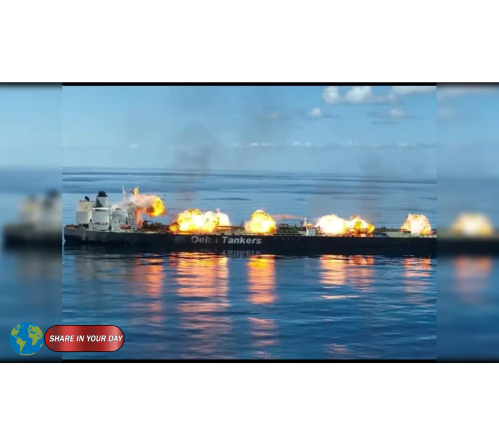
US-Iran War Intensifies as Oil and Shipping Risks Grow
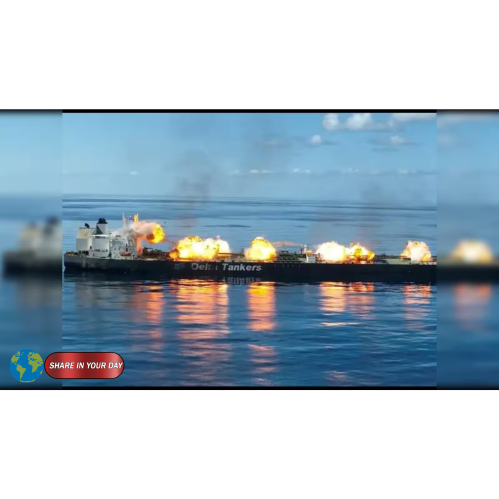
The US-Iran war continues to place pressure on global energy markets as military tensions, threats against commercial shipping, and uncertainty surrounding the Strait of Hormuz raise concerns about the future of international oil supplies.
Developments reported on October 14, 2026, highlight the growing risks facing one of the world’s most important maritime trade routes. Iran has reportedly adopted new tactics against vessels navigating the region, while Washington continues to exert military and economic pressure on Tehran.
The situation has consequences far beyond the Middle East. The Strait of Hormuz connects the Persian Gulf with the Gulf of Oman and the wider Arabian Sea. Before the conflict, roughly one-fifth of global oil and liquefied natural gas trade passed through the waterway.
Any prolonged disruption could affect shipping costs, energy prices, business confidence, and household expenses around the world.
Meanwhile, President Donald Trump’s warnings about Iran’s nuclear ambitions and the possibility of further military action have added another layer of uncertainty to an already volatile situation.
Although the precise direction of the conflict remains unclear, seven developments are particularly important for understanding the current crisis.
1. US-Iran War Raises New Concerns About the Strait of Hormuz
The Strait of Hormuz remains a central focus of the conflict because of its importance to international energy transportation.
The narrow waterway is a critical route for oil exports from several Gulf producers. Tankers passing through it supply markets across Asia and other regions, making safe navigation essential for global energy security.
Reuters reported on October 14 that Iranian officials described changes in the country’s tactics against ships operating near the strait. The officials said Tehran had increased pressure on vessels it considered to be violating its restrictions.
Iran has also reportedly expanded its threats beyond the immediate strait, including waters near Qatar and the United Arab Emirates.
These developments raise concerns that commercial vessels could face risks even when attempting to avoid the most heavily contested shipping areas.
For shipping companies, the challenge involves more than the possibility of a direct attack. Operators must also assess insurance costs, crew safety, navigation restrictions, and the likelihood of delays.
Some companies may decide to postpone voyages or change their routes when the risks become too high.
However, alternative routes cannot fully replace the Strait of Hormuz’s importance. A significant and sustained reduction in traffic could create bottlenecks across the international energy supply chain.
The immediate priority for shipping operators and governments is therefore to determine whether vessels can continue to navigate the region safely.
2. Oil Prices Remain Vulnerable to Further Escalation
The US-Iran war has become a major source of uncertainty for global oil markets.
Energy prices respond not only to actual supply shortages but also to expectations about future disruptions. When traders believe that exports could decline, oil prices may rise before a physical shortage becomes apparent.
Recent market reporting illustrates this sensitivity.
The Wall Street Journal reported on October 14 that oil prices rose as traders assessed the risks associated with the Middle East conflict, shipping disruptions, and an attack on a Saudi Aramco administrative building in Dhahran.
The report put December Brent crude futures at $105.86 per barrel and West Texas Intermediate futures at $94.36 per barrel during the reported trading session. These figures are time-specific market observations rather than guaranteed current prices.
Further escalation could increase concerns about the availability of crude oil and refined petroleum products.
Nevertheless, prices are influenced by multiple factors, including production decisions, commercial inventories, global demand, currency movements, and expectations about economic growth.
This means that an increase in geopolitical risk does not automatically produce a sustained rise in oil prices.
For consumers, however, a prolonged period of elevated energy costs could eventually affect gasoline prices, transportation expenses, manufacturing, and the cost of delivering goods.
Businesses that rely heavily on fuel may face higher operating costs, potentially putting additional pressure on prices across the economy.
3. Iran Signals a Tougher Approach to Commercial Shipping
One of the most significant developments is the reported shift in Iran’s approach to maritime operations.
Reuters reported that Iranian officials described new tactics intended to increase pressure on vessels that Tehran considers to be violating its restrictions.
The officials also indicated that Iran wanted to maintain leverage over the waterway and prevent oil prices from falling too quickly.
According to the report, Iranian officials suggested that attacks and threats could extend to vessels operating beyond the Strait of Hormuz itself.
Such statements matter because shipping depends on predictable navigation conditions.
When commercial operators cannot determine whether a route is safe, they may delay departures, seek additional security measures, or avoid the region entirely.
Even a limited number of incidents can influence commercial decisions when the potential consequences include damage to expensive vessels, environmental contamination, and risks to crew members.
The uncertainty can also increase maritime insurance premiums and freight rates.
Higher transportation costs may eventually be passed on to importers and consumers, depending on market conditions and the length of the disruption.
At the same time, official statements about military intentions do not necessarily reveal the full extent of operational capabilities. Claims from parties involved in a conflict should therefore be assessed alongside independently verified reporting.
For now, the reported shift in tactics underscores the difficulty of restoring confidence in commercial shipping while military tensions remain high.
4. Trump’s Iran Policy Keeps the Nuclear Issue at the Center of the Crisis
President Donald Trump has repeatedly framed Iran’s nuclear ambitions as a central justification for US military pressure.
The nuclear issue remains politically and strategically significant because Washington has long argued that Iran must not obtain a nuclear weapon.
However, the dispute involves competing assessments of Iran’s capabilities, intentions, and nuclear infrastructure.
Trump’s public statements about the speed with which Iran could develop a nuclear weapon have also attracted scrutiny.
A Guardian report published on October 14 noted that Trump repeated his claim that Iran had been close to acquiring a nuclear weapon. The report contrasted that claim with US intelligence assessments that Iran had suspended its nuclear weapons program in 2003.
These distinctions are important. A country’s nuclear program, its capacity to enrich uranium, and a demonstrated decision to build a nuclear weapon are not interchangeable concepts.
Assessing the situation requires reliable intelligence, technical evidence, and careful examination of what nuclear facilities are capable of producing.
The conflict also raises questions about whether military action can permanently eliminate nuclear-related risks or whether it could encourage further escalation.
Even if strikes damage important facilities, questions about monitoring, verification, and future political arrangements may remain unresolved.
Diplomatic negotiations could eventually play a role in determining the next phase of the crisis. However, the prospects for negotiations depend on the positions taken by Washington, Tehran, and other governments involved in regional security.
5. Regional Security Risks Extend Beyond Iran and the United States
The conflict is also affecting neighboring countries and regional security arrangements.
Recent reporting has described attacks and military activity involving Saudi Arabia, Yemen’s Houthi movement, and commercial shipping in the Gulf.
The Associated Press reported on October 14 that Iran said a cargo ship had sunk after striking a naval mine in the Strait of Hormuz. The available report provided limited information about the vessel’s crew and the circumstances surrounding the incident.
Separately, the same report described developments involving Houthi attacks and damage at a Saudi Aramco facility.
These incidents illustrate how the broader conflict can involve multiple actors and overlapping security concerns.
For Gulf countries, threats to maritime transportation create economic as well as military challenges. Energy exports are important sources of government revenue, while ports and shipping routes support broader trade.
An escalation could also complicate diplomatic relationships between countries seeking to maintain regional stability and those supporting competing military objectives.
The possibility of incidents involving multiple armed groups makes the situation more difficult to manage.
A local attack could prompt retaliation, while a response intended to deter further incidents could create additional risks for commercial traffic or neighboring states.
This is why diplomatic communication and clear maritime safety procedures remain important even when political relations are severely strained.
6. Global Energy Markets Face Risks Beyond Crude Oil
Although crude oil receives much of the attention, the consequences of the US-Iran war extend to a wider range of energy products.
The Strait of Hormuz is also important for liquefied natural gas shipments and other commodities.
Disruptions can affect shipping schedules, tanker availability, insurance costs, and the timing of deliveries to importing countries.
These effects may differ across regions.
Countries that rely heavily on energy imports transported through the Gulf could be more exposed to prolonged shipping problems. Other countries may have alternative suppliers, domestic production, strategic reserves, or different transportation options.
However, switching suppliers can be expensive and time-consuming.
Energy companies may need to secure alternative cargoes, arrange different shipping routes, or adjust refinery operations. These changes can create additional costs even if global production remains relatively stable.
Oil prices also influence the cost of producing and transporting many everyday goods.
Higher fuel prices can raise expenses for trucking companies, airlines, shipping operators, agricultural producers, and manufacturers.
If these costs persist, some businesses may increase prices or reduce spending elsewhere.
The eventual economic impact will depend on the severity and duration of the disruption.
A short-lived crisis could produce temporary volatility. A prolonged interruption affecting substantial volumes of energy trade would present a more serious challenge for governments, businesses, and households.
7. What Happens Next Will Depend on Military Decisions and Diplomacy
The next phase of the US-Iran war will depend on decisions made by political leaders, military commanders, and regional governments.
Washington must weigh its security objectives against the risks of a broader conflict and further disruption to global energy markets.
Tehran, meanwhile, faces its own strategic calculations concerning military pressure, economic sanctions, maritime restrictions, and the potential costs of continued confrontation.
Neither side can fully control the economic consequences of prolonged instability.
Even countries that are not directly involved in the fighting may face higher transportation costs, more expensive energy imports, and uncertainty affecting investment decisions.
Diplomatic efforts could help reduce these risks if the parties identify terms they consider acceptable. Potential areas of discussion could include maritime safety, nuclear monitoring, sanctions, and arrangements to prevent further attacks.
However, a durable agreement would likely require more than temporary reductions in military activity.
It would also need mechanisms for verification, communication, and addressing disputes before they trigger renewed escalation.
In the meantime, governments and energy companies are likely to monitor shipping activity, oil prices, and security developments closely.
The central question is whether the parties can prevent further escalation while protecting commercial navigation through one of the world’s most strategically important waterways.
How the US-Iran War Could Affect Ordinary Consumers
The consequences of the conflict may eventually be felt far from the Middle East.
For households, the most visible effect could be changes in gasoline and transportation costs.
If oil prices remain elevated, businesses that depend on fuel may face higher expenses. Depending on the country and market conditions, those costs can contribute to increases in consumer prices.
Airlines, logistics companies, and shipping operators may also adjust fares or surcharges to reflect changing fuel and insurance costs.
Food prices can be affected indirectly through transportation, refrigeration, fertilizer production, and agricultural operations.
However, these effects are neither automatic nor uniform. Government policies, fuel subsidies, domestic production, exchange rates, and competition can influence how much of an energy-price increase reaches consumers.
Investors may also respond to uncertainty by reassessing exposure to energy companies, transportation businesses, and markets vulnerable to geopolitical shocks.
For households and businesses, the practical response is to monitor reliable information rather than assume that every military development will produce a lasting change in prices.
Conclusion: The Strait of Hormuz Remains a Critical Pressure Point
The US-Iran war continues to threaten stability across the Middle East, with the Strait of Hormuz emerging as one of the most important pressure points.
Reported changes in Iran’s maritime tactics, uncertainty about commercial shipping, renewed nuclear rhetoric, and attacks affecting regional infrastructure have increased concerns about the security of international energy supplies.
Oil markets remain sensitive to these developments, although prices will continue to depend on a range of economic and geopolitical factors.
The consequences could extend to transportation, manufacturing, food distribution, and household budgets if disruptions persist.
At the same time, claims from governments and military organizations require careful verification, particularly when information is incomplete or independently unconfirmed.
Ultimately, the duration and severity of the crisis will depend on whether military escalation continues or diplomatic efforts can establish a more stable arrangement.
For the international community, protecting civilian lives, maintaining safe commercial navigation, and reducing the risk of a wider regional conflict remain essential priorities.
As developments continue, the Strait of Hormuz will remain a key indicator of whether the crisis is moving toward greater instability or a possible reduction in tensions.