J.J. Hardy Trade Tree: 5 Moves That Built the Brewers
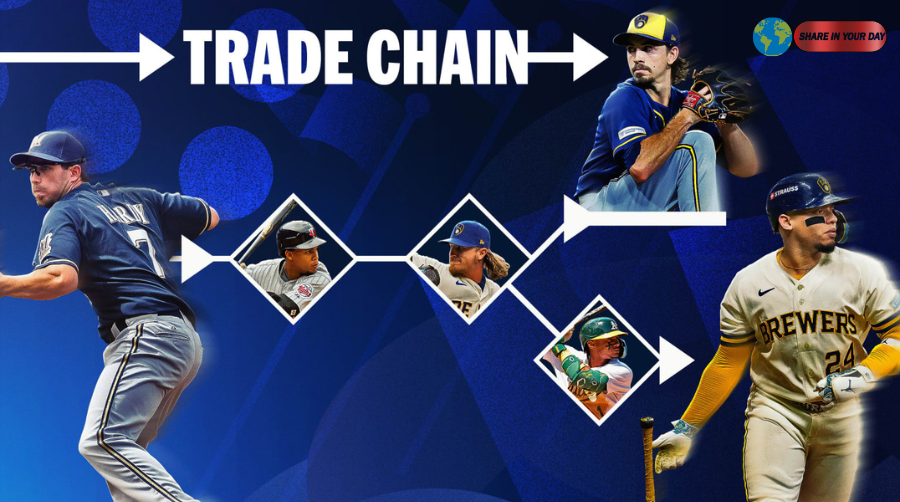
The J.J. Hardy trade tree has become an extraordinary example of how one baseball transaction can shape a franchise years after the original deal. What began with the Milwaukee Brewers trading their former All-Star shortstop in 2009 eventually helped bring together left-handed pitcher Robert Gasser and All-Star catcher William Contreras, the battery Milwaukee is counting on during the 2026 National League Championship Series.
Hardy was not involved in the later transactions that directly acquired either player. Instead, his departure set off a chain of roster moves that passed through center fielder Carlos Gómez and relief pitcher Josh Hader before producing assets that Milwaukee eventually turned into its current talent.
The connections are especially striking because the Brewers’ latest postseason run has been built on a familiar organizational philosophy: develop players, trade established stars when the timing makes sense, and use the returns to strengthen the roster over the long term.
According to MLB.com’s account of the trade history, Milwaukee’s decisions helped create a path from Hardy’s 2009 departure to the team’s current postseason roster. The story also illustrates how trades that initially appear painful can become important building blocks for future success.
How the J.J. Hardy Trade Tree Began
2001: Milwaukee drafts J.J. Hardy
The story starts on June 5, 2001, when the Brewers selected Hardy in the second round of the amateur draft out of Sabino High School in Tucson, Arizona.
Milwaukee viewed Hardy as a gifted athlete with the potential to become a major-league shortstop. After working through a difficult rookie season in 2005 and an injury-shortened 2006 campaign, he began to establish himself as an important part of the team’s future.
Hardy broke out in 2007, earning the first of his two All-Star selections with Milwaukee. He followed that performance with another strong season in 2008, recording a career-best .821 on-base-plus-slugging percentage and helping the Brewers reach the postseason for the first time in 26 years.
His combination of power and defense made him a valuable player during a period when Milwaukee was trying to establish itself as a competitive National League club.
However, Hardy struggled in 2009 and was sent to the Minor Leagues. With highly regarded prospect Alcides Escobar approaching the major leagues, the Brewers decided that a change at shortstop made sense.
November 2009: Hardy is traded for Carlos Gómez
On Nov. 6, 2009, Milwaukee traded Hardy to the Minnesota Twins in exchange for outfielder Carlos Gómez.
At the time, the deal gave the Brewers an opportunity to reshape their roster around a dynamic center fielder. Gómez possessed exceptional speed, defensive range and athleticism, although his offensive consistency remained a question during the early stages of his career.
In Milwaukee, he eventually developed into one of the most exciting players in baseball.
The turning point came during the 2012 season, when manager Ron Roenicke encouraged Gómez to attack more aggressively at the plate. His performance improved, and he became an All-Star in both 2013 and 2014.
Gómez brought more than offensive production. His speed, defensive ability and energy made him a recognizable figure in Milwaukee, while his all-around contributions illustrated why teams increasingly valued players beyond traditional batting statistics.
Yet his greatest impact on the Brewers’ future may have come after his time with the team.
The Carlos Gómez Trade Changed Milwaukee’s Future
July 2015: Gómez becomes the centerpiece of a major deal
As Milwaukee entered a rebuilding phase in 2015, Gómez became a valuable trade asset. The Brewers initially negotiated a possible deal with the New York Mets involving pitcher Zack Wheeler and infielder Wilmer Flores, but that transaction fell apart.
Milwaukee subsequently reached an agreement with the Houston Astros.
On July 30, 2015, the Brewers traded Gómez, pitcher Mike Fiers and cash to Houston. In return, they received four players: left-handed reliever Josh Hader, pitcher Adrian Houser, outfielder Brett Phillips and outfielder Domingo Santana.
The deal gave Milwaukee several potential contributors, but Hader ultimately became the most significant piece.
At the time, he was a promising left-handed pitcher who had yet to establish himself as one of baseball’s elite relievers. His development into a dominant late-inning weapon would make the trade one of the most consequential transactions in recent Brewers history.
Houser provided pitching depth, while Phillips and Santana offered additional possibilities in the outfield. Nevertheless, Hader’s eventual impact on the bullpen—and the value Milwaukee later recovered by trading him—made the deal particularly important.
The original Hardy transaction had now produced Gómez, and Gómez’s departure had brought Hader into the organization.
The trade tree was beginning to reach well beyond its starting point.
Josh Hader Became the Key Link in the Trade Tree
From promising reliever to Milwaukee star
Hader developed into one of the most effective relievers in the major leagues during his time with the Brewers.
His high-velocity fastball and deceptive delivery made him difficult for opposing hitters to handle. He became a fixture in high-leverage situations and eventually took over as Milwaukee’s closer.
Hader recorded 125 saves for the Brewers, moving close to the franchise record of 133 held by Dan Plesac.
His success helped Milwaukee remain competitive, but maintaining an elite reliever can become complicated when contract timelines, salary expectations and future free agency enter the picture.
By 2022, the Brewers were considering whether to trade Hader while his value remained substantial. The decision was controversial because he had become one of the team’s most recognizable players.
However, Milwaukee’s front office believed that converting a veteran star into multiple assets could benefit the organization over a longer period.
August 2022: Hader is traded to San Diego
On Aug. 1, 2022, Milwaukee traded Hader to the San Diego Padres.
The Brewers received left-hander Robert Gasser, pitchers Dinelson Lamet and Taylor Rogers, and outfielder Esteury Ruiz.
The immediate results were mixed. Lamet was designated for assignment, while Rogers struggled, posting a 5.48 ERA. The Brewers also experienced a disappointing second half and missed the postseason in 2022.
For fans, the departure of Hader represented a difficult moment. Milwaukee was giving up an established closer without receiving an immediate replacement who could reproduce his production.
Nevertheless, the trade’s long-term value became clearer in subsequent seasons.
Gasser remained an important part of the return, although his development was delayed by Tommy John surgery in 2024. Ruiz also became an asset that Milwaukee could use in another transaction.
These outcomes demonstrate the uncertainty involved in evaluating a trade immediately after it happens. Some acquisitions provide instant results, while others require patience or become valuable through additional deals.
Robert Gasser and William Contreras Complete the Connection
One of the most surprising elements of the J.J. Hardy trade tree is that its influence eventually reached two players who now occupy critical positions for Milwaukee.
Gasser arrived directly from San Diego as part of the Hader trade. Contreras, however, reached the Brewers through a later transaction involving Ruiz.
December 2022: Ruiz helps Milwaukee acquire Contreras
On Dec. 12, 2022, Milwaukee traded Ruiz and catcher Manny Piña as part of a three-team transaction involving the Oakland Athletics and Atlanta Braves.
The Brewers received reliever Joel Payamps, pitcher Justin Yeager and catcher William Contreras.
Contreras was already an All-Star and was approaching his 25th birthday. He initially struggled with the idea of leaving Atlanta, but he gradually established himself as a central figure in Milwaukee’s lineup.
Since joining the Brewers, Contreras has become a key offensive contributor behind the plate. He recorded at least 141 games in each of his first four regular seasons with the club and earned two additional All-Star selections.
His combination of offensive production, durability and competitiveness has made him an important part of Milwaukee’s identity.
The connection to Hardy is indirect but significant: Hardy’s trade led to Gómez, Gómez’s trade brought Hader, Hader’s trade brought Ruiz, and Ruiz became part of the transaction that delivered Contreras.
Meanwhile, the Hader trade brought Gasser directly to Milwaukee.
Together, those two branches of the same trade tree helped supply the pitcher and catcher featured in the Brewers’ current postseason story.
Why the Trade Tree Matters During the 2026 NLCS
Milwaukee’s connection to Hardy has gained renewed attention because Gasser is scheduled to start Game 3 of the National League Championship Series against the Los Angeles Dodgers, with Contreras behind the plate.
Gasser’s journey to this point has not been straightforward. His recovery from Tommy John surgery delayed his progress, but he eventually returned to make an impact at the major-league level.
His performance down the stretch in 2026 and his contribution during the National League Division Series helped establish him as an important part of the Brewers’ postseason plans.
Contreras, meanwhile, has become one of the club’s most dependable players. His production during the NLCS has reinforced the value of the 2022 transaction that brought him to Milwaukee.
The timing makes the Hardy trade tree particularly compelling. More than a decade after the original shortstop deal, its consequences are still visible in the players Milwaukee sends onto the field.
That does not mean the entire chain was planned in advance. Baseball front offices make individual decisions based on the information, needs and opportunities available at the time.
Rather, the story shows how a series of separate transactions can produce an outcome that would have been difficult to predict when the first trade occurred.
The Brewers’ Rebuilding Strategy Has Delivered Results
The Hardy trade tree also reflects Milwaukee’s broader approach to roster construction.
The Brewers have repeatedly demonstrated a willingness to move established players when they believe the return can help sustain competitiveness over multiple seasons.
After the Hader trade, Milwaukee continued making difficult decisions involving high-profile talent. The club later traded Corbin Burnes before the 2024 season, Devin Williams ahead of 2025 and Freddy Peralta ahead of 2026.
Each transaction carried risks. Losing established stars can weaken a roster in the short term, particularly when those players have played major roles in the team’s success.
However, Milwaukee continued to assemble competitive teams through player development and additional trades.
The Brewers won four consecutive National League Central titles from 2023 through 2026, increasing their regular-season win total each year: 92 wins in 2023, 93 in 2024, 97 in 2025 and a franchise-record 103 in 2026.
Those results illustrate the organization’s ability to maintain success while reshaping its roster.
The strategy is not without drawbacks. Some prospects fail to develop, some acquired players struggle, and trades involving popular stars can damage fan confidence when the immediate return is disappointing.
Nevertheless, Milwaukee’s results provide a strong example of how disciplined asset management can support long-term competitiveness.
J.J. Hardy’s Lasting Place in Brewers History
Hardy himself was an accomplished major-league player long before the current trade tree attracted attention.
He earned two All-Star selections with Milwaukee and went on to win three Gold Glove Awards during his 13-season career in the majors. His defensive excellence and power made him an important shortstop for the Brewers before he later played for the Minnesota Twins and Baltimore Orioles.
His connection to Milwaukee’s turnaround is also personal. Hardy and Rickie Weeks were among the young players who helped the franchise move beyond a prolonged period without postseason baseball.
The Brewers reached the playoffs in 2008, giving their fans a meaningful breakthrough after years of frustration.
Hardy has since returned to Milwaukee for appearances and remains connected to the club as a supporter. He has expressed belief in the current team and its ability to compete for a championship.
The fact that his departure helped trigger a sequence of transactions that still affects the roster adds another layer to his legacy.
Players are often remembered for statistics, awards and memorable performances. Yet Hardy’s influence on Milwaukee’s history extends beyond what he accomplished on the field.
What the J.J. Hardy Trade Tree Teaches About Baseball
The most important lesson from the J.J. Hardy trade tree is that a transaction’s value cannot always be measured immediately.
The 2009 trade brought Gómez to Milwaukee. Gómez’s subsequent departure produced Hader, whose own trade generated assets that helped the Brewers acquire Gasser and Contreras through separate paths.
At each stage, the organization faced different priorities and risks. The value of the original trade became apparent only after later decisions built upon the assets acquired.
This is one reason trade analysis can be complicated. A deal that appears unbalanced at first may eventually deliver considerable value through a player’s performance or a later transaction. Conversely, a promising acquisition can fail to produce the expected results.
For Milwaukee, the chain of moves has become a powerful example of organizational continuity. The front office has repeatedly turned current assets into opportunities to strengthen the roster, even when the process required giving up popular players.
That approach does not guarantee a championship. Postseason baseball remains unpredictable, and even the strongest teams can be eliminated by a few difficult games.
However, the Brewers have positioned themselves to compete year after year, and the Hardy trade tree provides a clear illustration of how that sustained success can develop.
Final Takeaway
The J.J. Hardy trade tree is more than an interesting piece of Brewers history. It shows how a 2009 trade eventually helped Milwaukee acquire players who now play important roles in its 2026 postseason run.
Hardy’s departure brought Carlos Gómez to Milwaukee. Gómez’s trade delivered Josh Hader, and Hader’s eventual departure produced Robert Gasser and Esteury Ruiz. Ruiz later became part of the transaction that brought William Contreras to the Brewers.
More than a decade after the original deal, the chain has come full circle in an unexpected way, connecting Hardy’s era to the current team through two key contributors.
For Milwaukee, the story reinforces the value of patience, player development and strategic roster management. For baseball fans, it is a reminder that one trade can leave a legacy far beyond the players who initially change teams.