How 2025 Transformed the U.S.–China Rivalry: Trade, Tech and Geopolitics
In 2025, the strategic competition between the United States and China evolved into a multifaceted struggle shaping global economics, technology and security. What began as a familiar cycle of tariff escalations and export curbs deepened into a broader rivalry that pushed both superpowers to rethink economic interdependence and geopolitical risk.
Trade and Rare Earths: Weaponizing Supply Chains
A central flashpoint this year was China’s use of rare earth export controls to gain leverage in trade negotiations. Beijing expanded restrictions on key elements essential for high-tech manufacturing — including permanent magnets, gallium, germanium and graphite — tightening supply for U.S. defense and semiconductor industries. This move underscored China’s dominant position in these materials and the vulnerability of Western supply chains.
The Trump administration responded with threats of additional tariffs and bargaining pressure, framing rare earth access as a national security priority. While both sides eventually agreed to ease some export limits, significant constraints on critical inputs endured — particularly for U.S. producers seeking to build domestic magnet and advanced material capacity.
Tech Competition: AI and Strategic Industries
Beyond minerals, technology competition became a defining feature of the U.S.–China rivalry. Both governments tightened rules governing AI and semiconductor exports, even as they sought to protect domestic innovation hubs. Washington pursued new investment screening measures to limit Chinese access to strategic sectors — part of a broader push to safeguard intellectual property and AI-driven industries.
This dynamic reflected a deeper structural challenge: efforts to balance cooperation in global research ecosystems with the perceived need to constraint adversarial technological gains. The tension shaped corporate strategies and policy debates on both sides of the Pacific. (Analysis based on broader context)
Diplomacy and Summit Outcomes
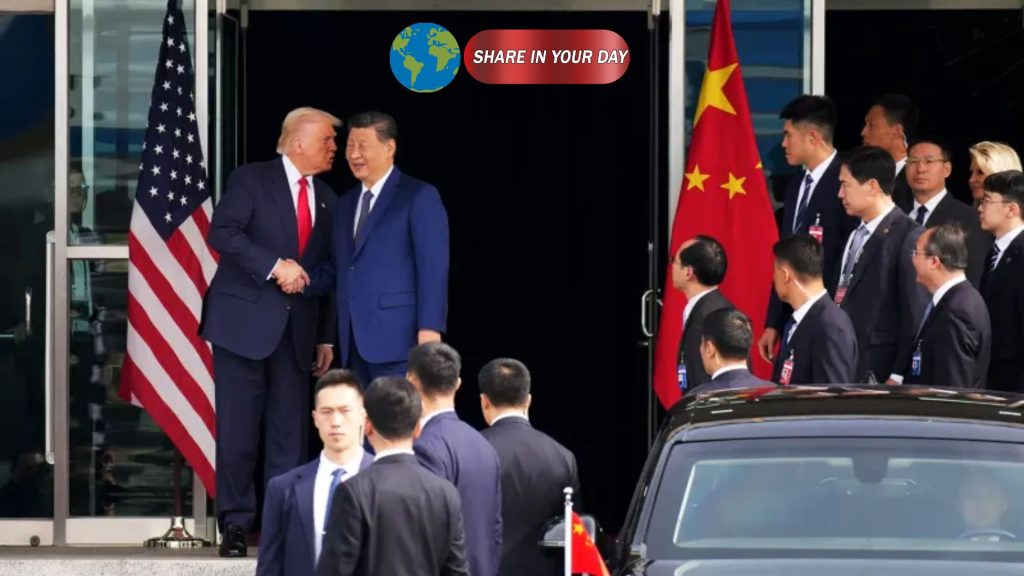
In October, Presidents Donald Trump and Xi Jinping met in South Korea in a high-stakes encounter aimed at stabilizing bilateral ties. While both leaders publicly described the talks as constructive, observers cautioned that the accord represented a temporary truce rather than a resolution of core disputes.
Agreements included a scaled-back enforcement of export restrictions and modest tariff reductions, but fundamental issues — from industrial subsidies to human rights concerns — remained unresolved. Analysts noted that the summit’s strategic value might lie in reducing acute tensions, even as Washington and Beijing continue long-term rivalry.
Taiwan and Geopolitical Risk
Although economic negotiations dominated headlines, Taiwan’s security and status loomed in the background. Beijing pressed for concessions from Washington on Taiwan policy as part of broader diplomatic bargaining, signaling that economic détente would be difficult without addressing geopolitical fault lines. (Synthesis with reported diplomatic pressure)
The interplay between economic negotiations and strategic confrontation has raised alarm in capitals across Asia and Europe, where policymakers watch for signs that trade incentives could reshape long-standing security commitments. (Regional geopolitical context)
What Comes Next
As 2025 closes, the U.S.–China relationship stands at a complex crossroads. Temporary agreements on trade and resource flows have reduced immediate friction, but deeper structural competition over technology leadership, supply chain security and geopolitical influence persists. The trajectory of this rivalry will likely define global economic and political trends well into 2026 and beyond