
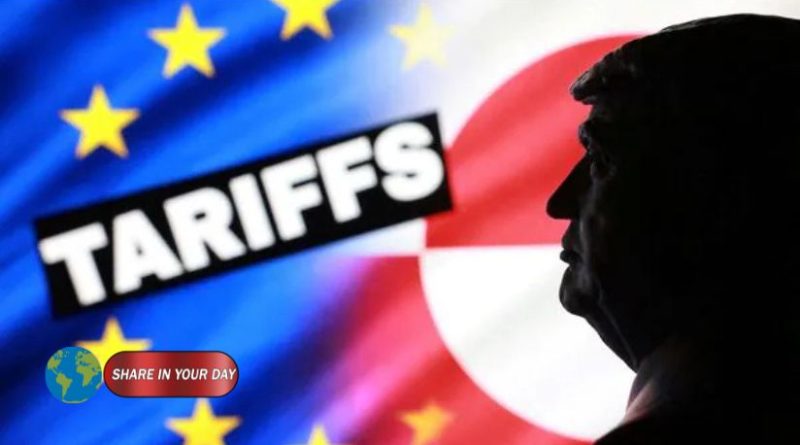
Donald Trump’s Greenland Tariffs Are No Great Blow to Europe — For Now
President Donald Trump’s threat to impose tariffs linked to his push for control over Greenland has unsettled European capitals, but economists and trade experts say the immediate economic impact on Europe would be limited. The greater concern lies not in the tariffs themselves, but in the risk that they could trigger a broader and far more damaging trade confrontation.
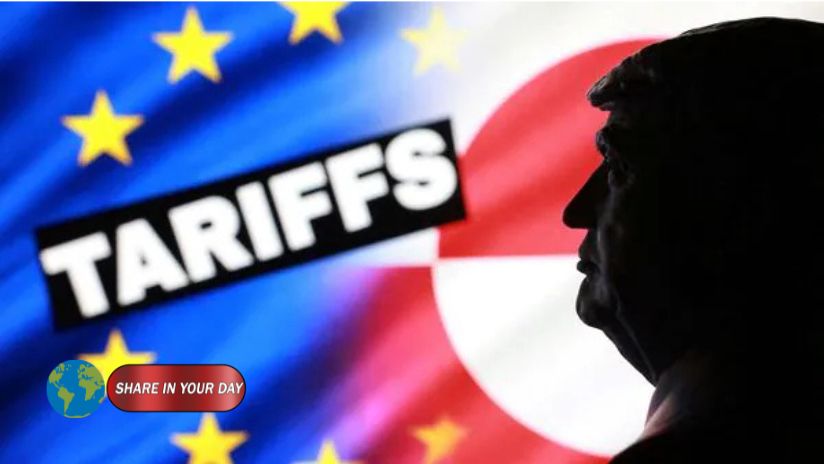
Trump has floated the idea of using tariffs as leverage against Denmark, which governs Greenland as part of its kingdom, after Copenhagen again rejected any suggestion that the Arctic territory could be sold. While the rhetoric has been sharp, Europe’s exposure to Greenland-related trade is modest, and Denmark’s economy is unlikely to suffer significant harm from targeted U.S. measures alone.
“On a purely economic level, this is not a major pressure point,” said one European trade official, speaking on condition of anonymity. “The danger is political escalation, not immediate losses.”
Limited Trade Exposure
Greenland’s economy is small, heavily reliant on fishing, and only marginally integrated into global trade flows. Denmark’s exports to the United States are far more diversified, spanning pharmaceuticals, industrial machinery, and renewable energy technology. Any narrowly targeted tariffs connected to Greenland would affect only a thin slice of that trade.
Even if Washington were to broaden tariffs to include Danish goods more generally, analysts say Europe’s single market would help absorb the shock. Danish companies could redirect exports within the European Union, while EU trade defense mechanisms would likely be triggered to respond in a coordinated way.
“Europe is not economically vulnerable here,” said an economist at a Brussels-based think tank. “The asymmetry is political, not financial.”
Political Signaling More Than Trade Policy
Trump’s tariff threats are widely viewed in Europe as an extension of his negotiating style rather than a carefully calibrated trade strategy. During his previous term, Trump frequently used tariffs or the threat of them to force concessions, even from close allies.
This time, however, the issue is not trade balances or market access, but sovereignty. Denmark has repeatedly stressed that it has no legal authority to sell Greenland, which is self-governing and whose population overwhelmingly opposes joining the United States.
European diplomats say this limits the effectiveness of economic pressure. “You cannot tariff your way into acquiring territory,” said one senior EU official. “There is simply nothing to negotiate.”
Why Escalation Would Change the Picture
While the current tariff threats pose little economic danger, a broader trade war would be a different matter. If the dispute were to spill over into wider U.S.-EU trade relations, the consequences could be significant on both sides of the Atlantic.
The United States and the European Union remain each other’s largest trading partners. Previous trade disputes — including those over steel, aluminum, and aircraft subsidies — have shown how quickly tit-for-tat tariffs can escalate, disrupting supply chains and raising costs for consumers.
European officials worry that Greenland could become another flashpoint in an already strained transatlantic relationship, alongside disagreements over defense spending, industrial subsidies, and climate policy.
“A symbolic conflict can turn systemic if it’s allowed to spiral,” said a former EU trade negotiator. “That’s the real risk.”
Denmark Seeks to Avoid Confrontation
Copenhagen has taken a measured approach, avoiding direct retaliation while emphasizing dialogue and international law. Danish officials have privately expressed frustration at being drawn into a dispute driven largely by U.S. domestic politics, but they remain cautious about inflaming tensions.
Greenland, meanwhile, has sought to assert its own voice. Local leaders have rejected Trump’s claims that U.S. control would enhance global security, arguing instead that stability comes from respecting sovereignty and cooperation.
Recent protests in Nuuk, Greenland’s capital, underscored public opposition to any U.S. takeover, reinforcing Denmark’s argument that tariffs cannot override democratic will.
Europe’s Calculated Calm
For now, Europe appears determined not to overreact. EU officials describe Trump’s tariff threats as manageable and stress that contingency plans are in place should the situation worsen.
Behind the scenes, European leaders are also coordinating diplomatic outreach to Washington, aiming to keep the Greenland issue compartmentalized and prevent it from contaminating broader trade relations.
“The strategy is de-escalation,” said one European diplomat. “No one wants Greenland to become the next steel tariffs.”
A Test of Transatlantic Resilience
Trump’s Greenland tariffs may be economically minor, but they represent another test of the transatlantic relationship’s resilience. If both sides keep the dispute contained, Europe is likely to weather it with little damage.
If not, the costs could extend far beyond the Arctic.
For now, European leaders are betting that restraint — and the limited leverage of tariffs in a sovereignty dispute — will keep the conflict from spiraling into something far more serious.