Inside Manchester United After the Derby: New Faces, Old Songs and Flickers of Hope
By mid-morning on derby day, the Old Nag’s Head off Deansgate was already overflowing. Red shirts packed shoulder to shoulder beneath walls plastered with Manchester United memorabilia, the hum of anticipation growing by the hour.
“By 10am we’d already had 200 in,” said landlord Sean Brett. “By kick-off, it was closer to 400 and we had to shut the doors.”
The pub stayed full long after the final whistle. So did much of Manchester city centre, as United supporters spilled out of Old Trafford and into familiar watering holes, savouring a 2-0 derby win that felt heavier with meaning than points alone.
“It was bouncing,” Brett said simply.
On social media, one fan captured the scene perfectly, joking that Deansgate looked like “Dawn of the Dead — if all the zombies could say was, ‘IT’S CARRICK, YOU KNOOOOW.’”
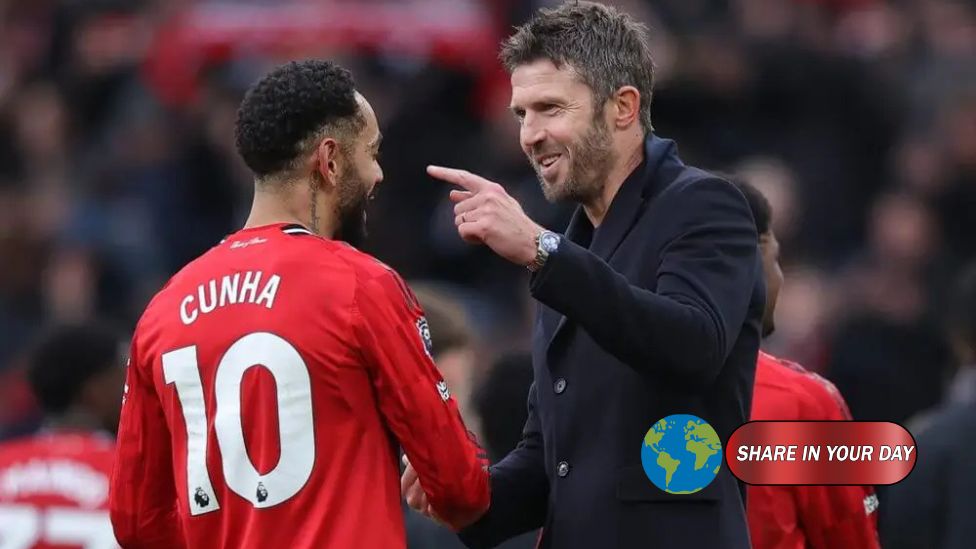
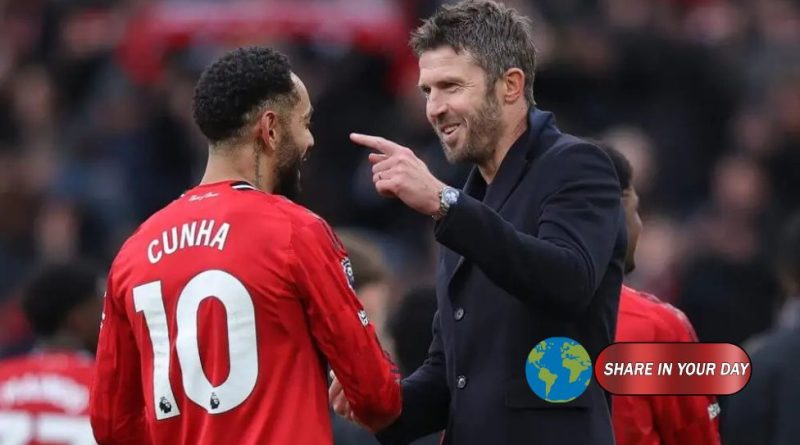
The chant, resurrected from a different era, tells its own story. Michael Carrick — United’s new interim head coach — has barely had time to settle into the job, yet the old songs are already back in circulation. Nostalgia, at Manchester United, has always been close to the surface.
Calm amid the noise
Carrick’s touchline demeanour was measured, almost understated. He absorbed the chaos around him with quiet authority — until the goals arrived. Then, briefly, the restraint gave way, as he bounced in celebration, wrapped in a winter coat from club sponsor Paul Smith.
It did not go unnoticed. United managers and their coats have become a strange barometer of popularity. Carrick’s predecessor, Ruben Amorim, once wore a similar Paul Smith design that sold out in club stores and earned the nickname “The Ruben.” Time will tell whether Carrick’s version becomes part of United folklore.
What is already clear is that Carrick represents a deliberate contrast. Where Amorim was expressive, emotional and often too candid, Carrick is guarded. He shields his players. He reveals little. At United, after months of turbulence, that restraint feels intentional.
A performance that felt familiar
This was more than a single win. United played as supporters expect United to play — assertive, aggressive, front-footed. Old Trafford responded accordingly, with 70,000 voices urging the team forward in primal unison.
Home form had been a concern. Just one win in the previous six league matches at Old Trafford, dropped points against struggling opposition, and too many collapses from winning positions. None of that surfaced here.
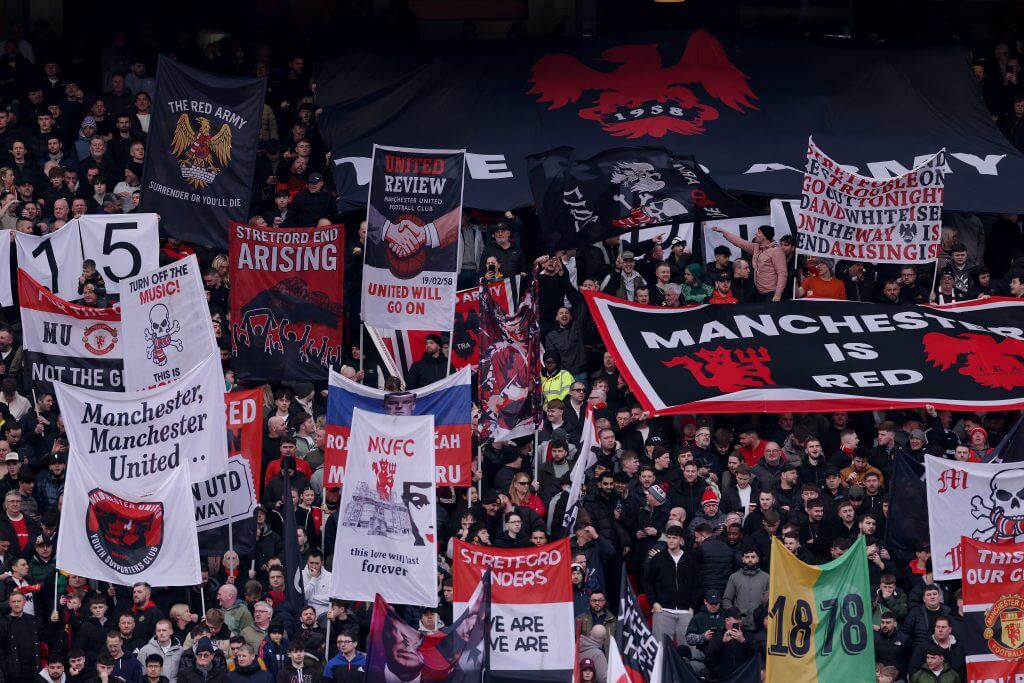
United defended compactly, attacked with width and intent, and controlled the derby from start to finish. Two excellent goals, both struck toward the Stretford End in the second half — a choice Carrick made deliberately — lifted United briefly into the top four.
In the main stand, Sir Alex Ferguson watched alongside former captain Nemanja Vidić, flat cap pulled low. “Fantastic performance,” Vidić said afterward. “At times, it felt like the old days.”
Structurally, it was simple: a disciplined 4-4-2 out of possession, expanding quickly with the ball. The twist was personnel. Bruno Fernandes and Bryan Mbeumo operated as a mobile front pair rather than traditional forwards — a bold call that paid off.
Carrick made others too. Benjamin Šeško and Matheus Cunha were left out. There was no hesitation.
A lifted dressing room
Behind the scenes, the mood has shifted. Training sessions have been shorter, sharper. Amorim’s response to setbacks was to train more, to double down on detail. Carrick’s approach has been different — lighter, more focused, with occasional days off used as reward rather than risk.
The coaching staff reflects continuity rather than upheaval. Steve Holland, a lifelong United supporter, leads on the training pitch. Travis Binnion bridges the gap between academy and first team. Craig Mawson oversees goalkeepers, while Jonny Evans and Jonny Woodgate bring defensive experience and familiarity with Carrick’s methods.
According to club sources, there remains some regret that Ruud van Nistelrooy was not retained in a role after his own interim spell. But the overriding aim this time was stability — an interim who knew the club, not another cultural reset.
Jason Wilcox’s football department remains intact, reinforcing United’s post-Ferguson lesson: change the coach, not the structure.
Limits, but belief
Carrick inherits constraints. With no European football, finances are tight. Recruitment will depend on outgoings. Mid-season marquee signings remain unlikely unless an unexpected opportunity emerges.
What he does have is returning players from injury and international duty — and a rejuvenated Casemiro, whose commanding display in the derby earned man-of-the-match honours.
Carrick is under no illusions. One performance proves nothing. “It’s a start,” he has told staff privately. The standard must repeat. Again and again.
Still, belief matters. So does momentum. With no midweek distractions, the glow of the derby win will carry United into Sunday’s meeting with league leaders Arsenal.
United played well against Arsenal on opening day. They lost.
This time, the mood feels different. The songs are back. The pub doors are open. And for the first time in a while, optimism — cautious but unmistakable — has returned to Manchester United.