Tesla Reports First-Ever Annual Revenue Decline as It Shifts Focus to AI and Robotics
Austin, Texas — In a historic financial milestone, Tesla, Inc. announced its first-ever decline in annual revenue for the full year 2025, underscoring mounting challenges in the global electric-vehicle (EV) market and signaling a strategic pivot under CEO Elon Musk.
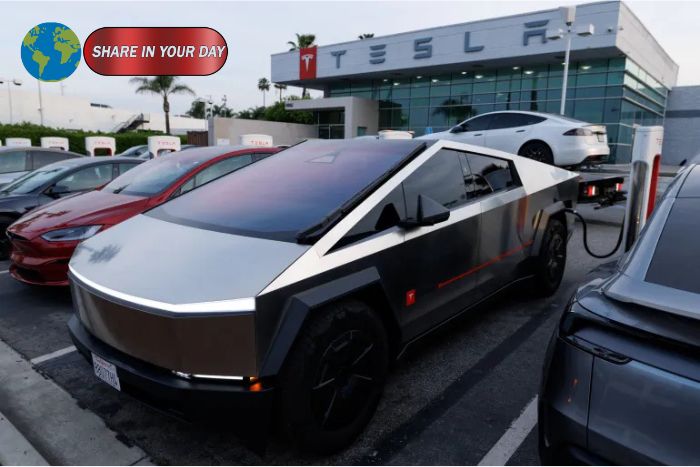
According to the company’s earnings release, total revenue for 2025 reached $94.8 billion, down roughly 3% from $97.7 billion in 2024, marking the first year-on-year contraction since Tesla’s founding. In the final quarter alone, revenue declined to $24.9 billion, a modest drop from the prior year but enough to push the annual figures into negative territory.
Profitability Squeezed Amid Softer Demand
Beyond the revenue slide, Tesla’s profitability also took a hit. Net income for the year plunged to approximately $3.8 billion, from about $7.1 billion in 2024, marking a sharp contraction in earnings as operating pressures intensified. In the fourth quarter, net profit fell nearly 61% to $840 million, reflecting weaker demand and tightening margins.
Analysts attribute the downturn to a mix of factors, including heightened competition in key markets like China and Europe, the expiration of certain federal EV tax incentives late last year, and broader shifts in consumer appetite for EVs. At the same time, Tesla’s vehicle deliveries fell year-on-year, adding pressure to its core automotive business.
Strategic Shift Toward AI and Robotics
In the earnings announcement, Tesla also revealed a decisive strategic shift away from reliance solely on vehicle sales. The company said it has agreed to invest $2 billion in xAI, the artificial intelligence startup founded by Musk behind the Grok chatbot, as part of a broader effort to expand into AI-driven technology.
Tesla’s leadership framed the investment as part of its evolution into what Musk recently described as a “physical AI” company, integrating advanced software and robotics with its existing hardware platforms. Industry coverage indicates that Tesla plans to accelerate production of its humanoid Optimus robots and advance autonomous vehicle technologies, including robotaxi development.
The strategic pivot aims to diversify revenue streams and reduce dependence on traditional car sales, especially as rival automakers and EV startups gain ground. In fact, Chinese EV manufacturer BYD surpassed Tesla in annual vehicle sales in 2025, highlighting the intensifying competition that the U.S. EV pioneer now faces worldwide.
Market Reaction and Future Prospects
Despite the revenue contraction, Tesla’s stock reacted positively in after-hours trading, with shares rising on hopes that the company’s broader ambitions could spark a new growth cycle. Some investors also pointed to the company’s energy storage and software businesses — which continue to expand — as potential bright spots that could help stabilize earnings over the long term.
However, the downturn in core sales and profits raises questions about the pace of consumer adoption of EVs, pricing pressures in a more crowded market, and how quickly Tesla’s new ventures — from AI services to robotics — can contribute materially to its top-line growth.
A Turning Point in Tesla’s Story
Tesla’s 2025 results reflect a pivotal moment for the company. After years of rapid growth driven by electric vehicles, the first annual revenue decline in its history signals both the challenges of sustaining momentum in a maturing market and the boldness of Musk’s next chapter for the brand. Whether Tesla’s redefined focus will unlock new opportunities or introduce fresh risks remains a key story to watch in 2026 and beyond.