Trump Border Czar Signals Possible Minnesota Drawdown — If Officials Cooperate
MINNEAPOLIS — The Trump administration may consider reducing the number of federal immigration officers operating in Minnesota, but only if state and local officials demonstrate greater cooperation and protests subside, the president’s border czar said Thursday.
Tom Homan, a longtime architect of the administration’s hardline immigration strategy, made the comments during his first public remarks since being dispatched to Minneapolis following a fatal weekend shooting involving federal officers. It marked a tentative signal of flexibility amid rising political pressure, public outrage, and mounting protests across the Twin Cities.
Still, Homan struck a defiant tone, warning that the administration has “zero tolerance” for demonstrators who assault officers or interfere with immigration operations.
Tensions After Fatal Shooting
Homan’s visit follows the killing of Alex Pretti, 37, who was shot during a scuffle with Border Patrol agents over the weekend. It was the second fatal shooting this month tied to federal immigration enforcement in the region. Earlier in January, Renee Good, also 37, was shot while sitting in her vehicle by an Immigration and Customs Enforcement officer.
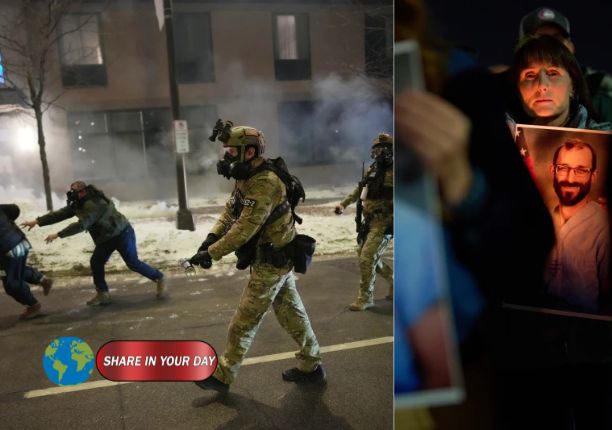
Homan declined to discuss either incident, saying investigations were ongoing. But he acknowledged that the operation — which has involved roughly 3,000 federal personnel — has not been flawless.
“I do not want to hear that everything that’s been done here has been perfect,” Homan said. “Nothing’s ever perfect.”
His remarks came as President Donald Trump appeared to soften his tone toward Minnesota leaders earlier this week, suggesting they were on a “similar wavelength.” The administration has also ended its so-called “enhanced operations” in Maine, fueling speculation that a similar pullback could occur in Minnesota.
Conditional Drawdown
Homan said any reduction in federal forces would depend on cooperation from state and local governments — and an end to what he described as hostile rhetoric and interference from protesters.
“The drawdown is going to happen based on these agreements,” he said. “But the drawdown can happen even more if the hateful rhetoric and the impediment and interference will stop.”
He offered few details on what such agreements would entail, but said he would personally oversee internal changes to federal immigration enforcement operations in Minnesota.
“No agency organization is perfect,” Homan said. “President Trump and I have recognized that certain improvements could and should be made.”
Despite the rhetoric, there has been little visible change on the ground. On Thursday, protesters once again gathered outside a federal facility serving as the operation’s hub, even as frigid temperatures gripped the city. The Justice Department also announced charges against a man accused of squirting vinegar on Democratic Rep. Ilhan Omar during a recent demonstration.
Local Leaders Urge De-Escalation
Minneapolis Mayor Jacob Frey said he was cautiously optimistic that federal forces would eventually scale back.
“We’ll do our job,” Frey told reporters in Washington, “but we’re not going to do somebody else’s job.”
State and city leaders have repeatedly argued that the heavy federal presence has inflamed tensions rather than improved public safety, particularly after the recent shootings sparked nightly protests and vigils.
Volunteer observers have also been patrolling south Minneapolis neighborhoods, watching for signs of immigration enforcement activity and providing information to residents.
Dispute Over Cooperation
Homan renewed his criticism of so-called “sanctuary jurisdictions,” arguing that local jails should more consistently alert ICE when inmates are eligible for deportation. He said cooperation would reduce the need for officers to conduct arrests in communities.
“Give us access to illegal aliens, public safety threats in the safety and security of a jail,” Homan said.
Minnesota officials strongly dispute the administration’s claims.
Paul Schnell, head of the Minnesota Department of Corrections, said state prisons always honor federal immigration detainers — requests to hold inmates for ICE pickup.
“This occurs every time without exception,” Schnell said last week, adding that most county sheriffs in Minnesota also cooperate with federal authorities.
Some counties, including Hennepin and Ramsey — home to Minneapolis and St. Paul — limit cooperation unless ICE presents a judicial warrant. Local officials argue those policies comply with state law and constitutional protections.
“At best, DHS fundamentally misunderstands Minnesota’s correctional system,” Schnell said. “At worst, it is pure propaganda.”
Shift Toward ‘Targeted’ Arrests?
Homan also hinted at a renewed emphasis on what ICE calls “targeted strategic enforcement operations,” focusing on immigrants with criminal records or who pose public safety threats.
The Trump administration has long argued that its operations are targeted rather than indiscriminate, though immigrant advocates say that claim does not match reality.
Sameera Hafiz, policy director at the Immigrant Legal Resource Center, said Homan’s remarks suggest the administration is reacting to growing public backlash.
“His comments are still based on the false premise that deportation makes communities safer,” Hafiz said. “The evidence shows deportations destabilize families, tear communities apart, and harm the economy.”
ICE officials acknowledge that while operations may focus on specific individuals, agents are authorized to arrest anyone found to be in the country illegally.
No Timeline for Exit
Homan did not say how long he plans to remain in Minnesota, offering only a blunt answer when asked.
“I’m staying until the problem’s gone,” he said.
He added that he has met with community leaders, law enforcement officials, and elected representatives in recent days and suggested that some progress has been made — though tensions in Minneapolis and St. Paul remain high.