Trump Pressure Spurs Western Allies to Recalibrate China Relations Amid Greenland Tensions
WASHINGTON — As President Donald Trump doubles down on an assertive foreign policy that targets both China and Europe, key U.S. allies are quietly—but deliberately—strengthening their diplomatic and economic ties with Beijing, signaling a potential shift in the global balance of influence.
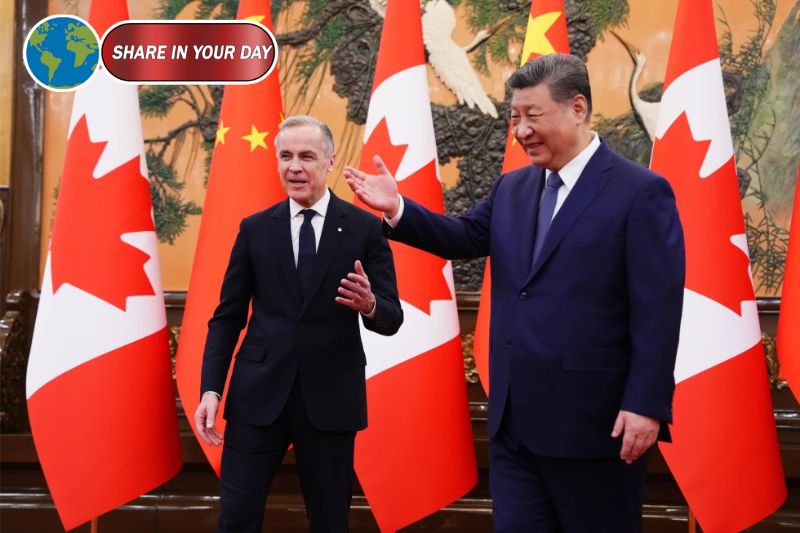
In recent weeks, leaders from Canada, the United Kingdom and several northern European nations have traveled to China to reset relations with President Xi Jinping’s government, even as tensions over trade and territorial ambitions simmer between Washington and its traditional partners.
Western Leaders Seek Closer Ties With Beijing
British Prime Minister Keir Starmer landed in Beijing this week, the first trip by a British leader in eight years, in a bid to mend a fraught bilateral relationship. Starmer and Xi agreed to a raft of business initiatives, including reduced tariffs on Scotch whisky and visa-free travel for short stays, reflecting a deepening economic engagement.
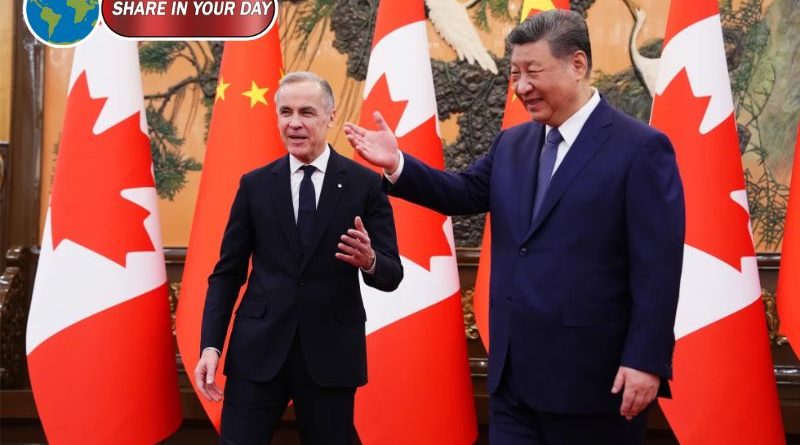
Finland’s Prime Minister Petteri Orpo and Canada’s Mark Carney have also held talks in Beijing, securing cooperative agreements spanning sustainable construction, energy and agriculture. Carney described the emerging Canada-China trade dynamics as “more predictable,” a pointed contrast to Trump’s hard-edged rhetoric on trade barriers.
Germany’s new Chancellor Friedrich Merz, known for his more measured stance on China than his predecessors, is also preparing to visit as Berlin seeks to address both economic ties and concerns about over-dependence on Chinese supply chains.
Trump’s Push on China and Greenland Raises Strategic Questions
The renewed engagement with Beijing comes against the backdrop of rising tensions between the United States and its European partners.
Trump has repeatedly framed China as a strategic rival, pressing allies to adopt tougher positions on trade and security. But his relations with Europe have simultaneously been strained over issues like tariffs and territorial ambitions in the Arctic.
Earlier this month, Trump threatened a 10% tariff on imports from eight European nations—including Denmark, Norway, Sweden, France, Germany, the U.K., the Netherlands and Finland—over their opposition to U.S. efforts to assert control over Greenland, an autonomous territory of Denmark. He signaled that the tariff could rise to 25% unless Europe agreed to American strategic objectives regarding the island.
That move provoked strong pushback from European leaders, who denounced the tariff threat as damaging to transatlantic relations and warned it could trigger a downward spiral in diplomatic cooperation.
A Broader Strategic Realignment
Analysts say the flurry of visits to Beijing reflects evolving priorities among middle powers who are balancing economic opportunities with geopolitical pressures. “Everyone goes to Beijing, including the guy who doesn’t want us to go to China,” said Joerg Wuttke, a former president of the EU Chamber of Commerce in China, highlighting the pragmatic considerations driving Western engagement with China.
Although European diplomats continue to voice concerns about trade imbalances and human rights issues, many emphasize cooperation on global challenges such as climate change and economic stability.
Some analysts warn this multipolar pivot risks complicating efforts to present a unified Western front against Chinese influence. “It will be impossible for the U.S. and Western countries to unite to, as appropriate, either isolate China or set and enforce conditions for connectivity and cooperation,” said Scott Kennedy, senior adviser at the Center for Strategic and International Studies.
Greenland: A Flashpoint With Lasting Impact
Trump’s aggressive stance on Greenland has become a flashpoint in transatlantic relations, raising questions about U.S. commitment to traditional alliances. While the White House has backed off on some threats—such as using military force—the episode has prompted protests in Denmark and Greenland and sparked wider debate about allied cohesion and strategic autonomy.
European leaders, including French President Emmanuel Macron, have described the episode as a wake-up call, urging greater European independence in defense and trade policy while still valuing NATO cooperation in the face of broader security challenges.
Navigating a Complex Global Landscape
As Western nations recalibrate their approach to China, Trump’s unconventional methods continue to generate debate within allied capitals. For many in Europe and North America, the challenge will be balancing economic interests with long-standing security commitments—a task made more complex by shifting global power dynamics and domestic political pressures.
With diplomatic engagements ongoing and strategic policy debates intensifying, the coming months could redefine the contours of Western unity in an era marked by multipolar competition and economic interdependence.