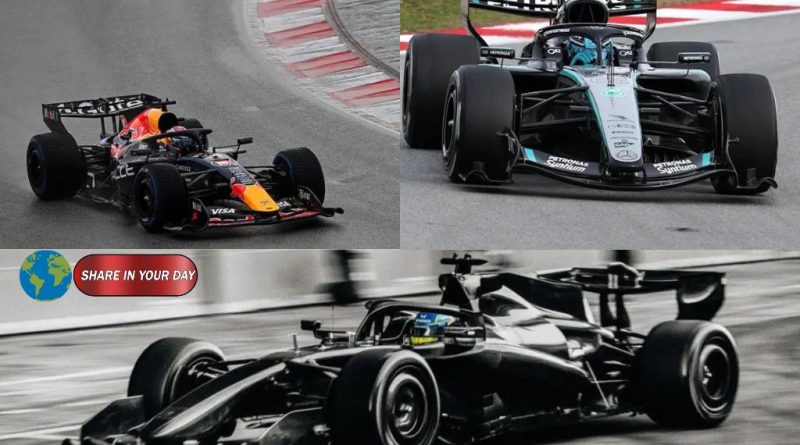
Barcelona ‘Shakedown’ Offers First Clues to Formula 1’s 2026 Order
Mercedes entered Formula 1’s 2026 regulation era as early favourites, and nothing from this week’s private “shakedown” test in Barcelona did much to dent that perception.
Although outright lap times from the five-day test mean little in isolation, Mercedes completed the most mileage, ran reliably and left rivals quietly impressed by the maturity of its new car and power unit.
The fastest time of the week technically belonged to Lewis Hamilton, who set a 1m16.348s lap late on the final day in Ferrari machinery. But his effort was just 0.097 seconds quicker than George Russell’s Mercedes benchmark from the previous day, reinforcing the sense that the Silver Arrows are well positioned heading into the new era.
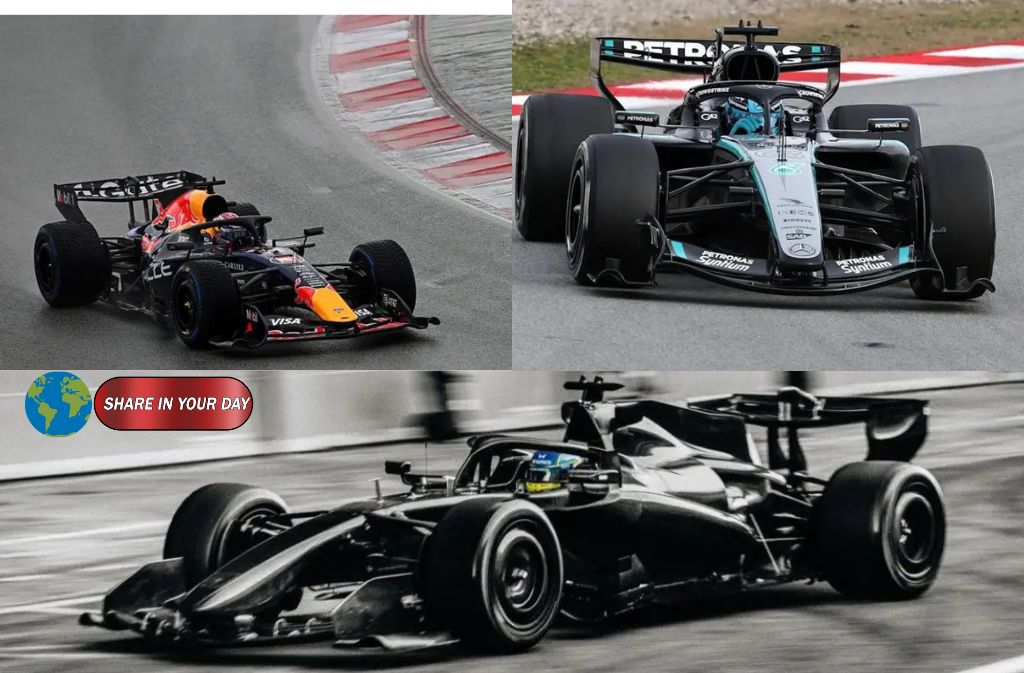
World champion Lando Norris ended the test third overall in the McLaren, 0.246 seconds adrift, although teams caution strongly against reading too much into the times.
A Test Shrouded in Secrecy
Judging performance was particularly difficult given the unusual nature of the test. Running was conducted entirely behind closed doors, with no independent media access, no official timing released and only a handful of team-approved photographs emerging.
The event was exactly what teams described it as: a shakedown. In motorsport terms, that means ensuring fundamental systems work rather than chasing lap time — especially important given that every major component was new.
Cars, engines, tyres and fuel were all making their first collective appearance following what is widely regarded as the biggest technical overhaul in Formula 1 history.
Learning the New Power Units
The primary focus in Barcelona was understanding the all-new power units. Teams were acutely aware of what happened in 2014, when the last major engine regulation change triggered widespread reliability failures.
This time, fears proved largely unfounded. Standards across Formula 1 have risen significantly, and while the regulations are radical, the engine technology is in some respects simpler.
The new hybrid units now generate 50% of their power electrically, placing unprecedented emphasis on energy management. The MGU-H has been removed, leaving a single, more powerful hybrid element that produces roughly three times the output of its predecessor.
Optimising energy recovery and deployment will be central to performance in 2026 — and teams are only just beginning to understand how best to exploit it.
Fully sustainable fuels, derived from waste biomass or synthetic processes, have added another layer of complexity, burning differently from traditional fossil fuels.
Smaller Cars, New Challenges
On the chassis side, the cars are smaller and narrower than their predecessors, with less overall downforce but higher straight-line speed. That speed is enhanced by moveable front and rear wings, designed to promote overtaking.
“There is a lot of excitement, not only in Ferrari but across the paddock,” said Charles Leclerc. “We have to adapt as drivers and teams, especially with the energy management, which is so much more significant than before.”
Russell also spoke positively about the new cars, describing them as intuitive once drivers adjust.
“From a fan perspective, there’s an opportunity for more exciting racing,” he said. “And I’m really glad the cars are smaller now — they just look cool.”
Red Bull and Ferrari Impress, McLaren Recover
Ferrari ran smoothly throughout the test, while Red Bull’s reliability stood out given the scale of its challenge. The team is entering 2026 with its first in-house engine, developed alongside new partner Ford.
Russell publicly praised Red Bull’s trouble-free running, noting the complexity of producing a competitive power unit from scratch.
Red Bull’s biggest setback was self-inflicted. New driver Isack Hadjar crashed in wet conditions after switching tyres, damaging the car badly enough to curtail further running until repairs were completed.
McLaren, the reigning world champions, arrived late, with their car only ready on Wednesday. The team said the delay was intentional, allowing more development time. Norris immediately impressed, but a fuel-system issue later reduced their available running.
A Tentative Competitive Picture
While teams publicly played down conclusions, insiders suggest a familiar pattern may be emerging. Mercedes appear strongest, with Ferrari, McLaren and Red Bull operating within what engineers describe as “the noise of the data”.
Alpine, last in 2025, seem to have taken a meaningful step forward after switching to Mercedes customer engines, placing them in the midfield alongside Racing Bulls and Haas.
Audi’s new works team struggled early with reliability, while all-new Cadillac are widely expected to begin their F1 journey at the back.
Williams face a tougher task after missing the Barcelona test entirely, leaving them effectively two weeks behind rivals heading into the remaining Bahrain sessions.
Aston Martin Turns Heads
Perhaps the most intriguing car in Barcelona was Aston Martin’s. Running was minimal — the car appeared late, stopped on track early and completed effectively one full day of testing.
But the design drew immediate attention. It is the first Aston Martin conceived under Adrian Newey’s leadership, featuring a wide-nosed concept, unconventional front suspension and tightly packaged bodywork.
The team has also produced its own gearbox for the first time in years and begun a new engine partnership with Honda, alongside new technical leadership and infrastructure.
Fernando Alonso ended the test near the bottom of the timesheets but completed more than 60 laps, gathering vital data.
“It was our very first day,” Alonso said. “Sixty-plus laps and the car is responding well. There’s more to come.”
Early Days, Familiar Patterns
With two further tests scheduled in Bahrain, teams stress that any conclusions remain provisional. But one lesson from Barcelona was clear: running the new cars accelerates understanding rapidly.
That may explain why the factory teams — Mercedes, Ferrari and Red Bull — looked most comfortable. Experience, resources and institutional knowledge remain powerful advantages in Formula 1’s brave new era.
The real answers will come later. But in Barcelona, the first hints of 2026 have already begun to surface.