Our Favorite 60 Stats Entering Super Bowl 60: How Philip Rivers, Cam Little and Chaos Defined the 2025 NFL Season
If it feels like we say this every year, it’s only because the NFL keeps finding new ways to outdo itself. But the 2025 season truly lived in its own category — unpredictable, chaotic, and often unbelievable, right up to the doorstep of Super Bowl 60.
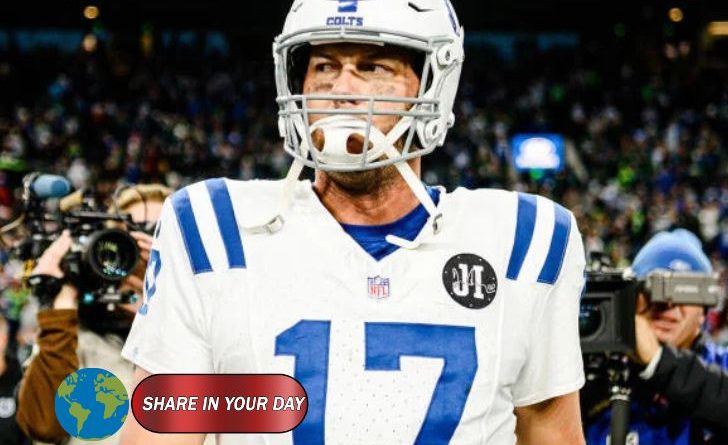
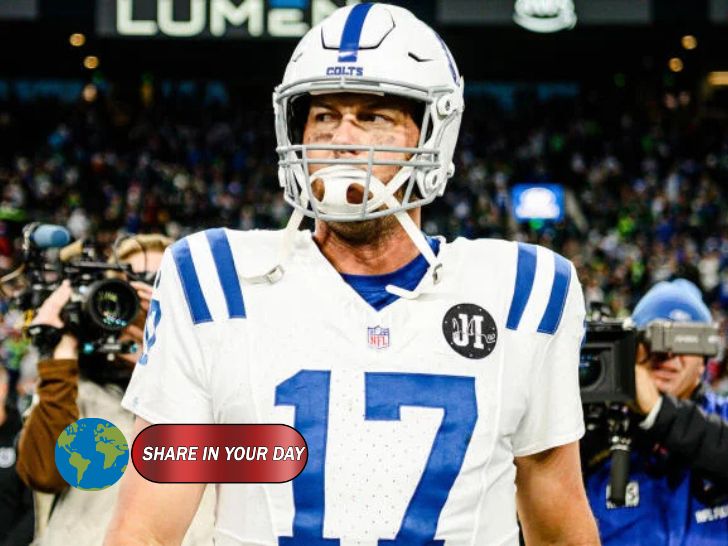
This was the year Philip Rivers came out of retirement at age 44, as a grandfather, and played an NFL game for the first time in nearly five years. The year the Bears, Jaguars and Panthers reached the playoffs while the Chiefs, Bengals and Ravens watched from home. The year comebacks became routine, kicking turned historic, and the Super Bowl matchup itself felt like something pulled from an alternate football universe.
As the league prepares for a Super Bowl featuring starting quarterbacks Drake Maye and Sam Darnold — a sentence that would have sounded absurd just months ago — the numbers tell the story better than any single moment. These are the 60 stats that explain how the 2025 NFL season turned into one of the most entertaining rides in league history.
It starts with Rivers, whose return was easily the most shocking development of the year. Playing his first game in 1,800 days, Rivers became the oldest quarterback to start a game in the modern era, adding another bizarre chapter to a season already overflowing with surprises.
The chaos extended well beyond individual storylines. For the first time since 2008, none of the top seven teams in preseason Super Bowl odds even reached a conference championship game. Five playoff teams came off seasons with 11 or more losses — an NFL record — highlighting just how volatile the league had become.
Comebacks defined the year. Teams recorded a league-record seven wins when trailing by at least 15 points in the fourth quarter, including the postseason. The Broncos alone piled up 12 comeback victories, while the Bears authored some of the most dramatic late-game finishes the league has ever seen, winning seven games when trailing in the final two minutes.
Even the postseason felt like an adrenaline rush. NFL records for fourth-quarter lead changes and late comeback wins were shattered before the Wild Card round was even complete.
At quarterback, the MVP race mirrored the season’s unpredictability. Drake Maye and Matthew Stafford both produced seasons historically comparable to Tom Brady’s legendary 2007 campaign — a comparison rarely made lightly. Stafford also set an NFL record by throwing 28 consecutive touchdown passes without an interception, while Maye transformed his deep passing from league-worst to league-best in a single year.
Sam Darnold’s journey was just as improbable. After changing teams, he became only the second quarterback in NFL history — joining Brady — to win 14 games in back-to-back seasons. Despite leading the league in turnovers, Darnold still guided his team to the Super Bowl, echoing Eli Manning’s unlikely 2007 run.
Defensively, Seattle emerged as a model of modern innovation. The Seahawks finished with the league’s top scoring defense while barely using base personnel, allowing the fewest yards per rush in the NFL. Their dominance helped propel a Super Bowl run few predicted.
Offensively, Jaxon Smith-Njigba delivered one of the most efficient receiving seasons ever, leading the league in yards despite Seattle ranking among the NFL’s least pass-heavy teams. His production per team pass attempt was the highest by any receiver in the Super Bowl era.
The kicking game reached heights previously unimaginable. A record 12 field goals of 60 yards or longer were made during the season. Rookie kicker Cam Little rewrote the record books, drilling 67- and 68-yard field goals — the two longest in NFL history — while becoming the only player ever to go 2-for-2 from beyond 67 yards.
Across the league, records fell in every corner. Myles Garrett set a new single-season sack record. Derrick Henry delivered another historic rushing campaign in his 30s. Christian McCaffrey logged one of the heaviest workloads seen in decades. Even long-standing statistical oddities — from overtime futility to December collapses — found new chapters.
And then there were the quirks only the NFL can provide: the Jets going an entire season without an interception, the final unbeaten teams once again failing to win the Super Bowl, and the Seahawks reaching the big game during the same year a new pope was elected — a trend that somehow continues to hold.
Put together, the numbers form a season that defied logic and expectation. It was a year where nothing felt safe, no lead was secure, and no outcome could be assumed.
As Super Bowl 60 approaches, the lesson of the 2025 NFL season is simple: expect the unexpected — and trust the chaos.
Players
- Philip Rivers
- Drake Maye
- Sam Darnold
- Matthew Stafford
- Caleb Williams
- Josh Allen
- Joe Burrow
- Derrick Henry
- Christian McCaffrey
- Jahmyr Gibbs
- Bijan Robinson
- De’Von Achane
- Brock Purdy
- Myles Garrett
- Jaxon Smith-Njigba
- Cooper Kupp
- Puka Nacua
- Calvin Johnson
- A.J. Brown
- Ja’Marr Chase
- Justin Jefferson
- Amon-Ra St. Brown
- CeeDee Lamb
- George Pickens
- Garrett Wilson
- Trey McBride
- Mike Evans
- Alec Pierce
- Michael Wilson
- Chimere Dike
- James Cook
- Quinnen Williams
- Nick Bosa
- Brandon Aiyuk
- Trent Williams
- Fred Warner
- George Kittle
- Micah Parsons
- Zach Allen
- Cam Little
- Joe Flacco
- Kyler Murray
- Tua Tagovailoa
- Shedeur Sanders
Coaches / Executives
- Bill Belichick
- Mike Vrabel
- Liam Coen
- Mike Macdonald
- Mike McDaniel
Teams
- Seattle Seahawks
- New England Patriots
- Chicago Bears
- Jacksonville Jaguars
- Carolina Panthers
- Kansas City Chiefs
- Cincinnati Bengals
- Baltimore Ravens
- Denver Broncos
- New York Giants
- Buffalo Bills
- Philadelphia Eagles
- San Francisco 49ers
- Cleveland Browns
- New York Jets
- Pittsburgh Steelers
- Houston Texans
- Indianapolis Colts
- Detroit Lions
- Green Bay Packers
- Dallas Cowboys
- Miami Dolphins