India and Arab League Set Ambitious $500 Billion Trade Target by 2030
By [Your Name] — Published February 2, 2026
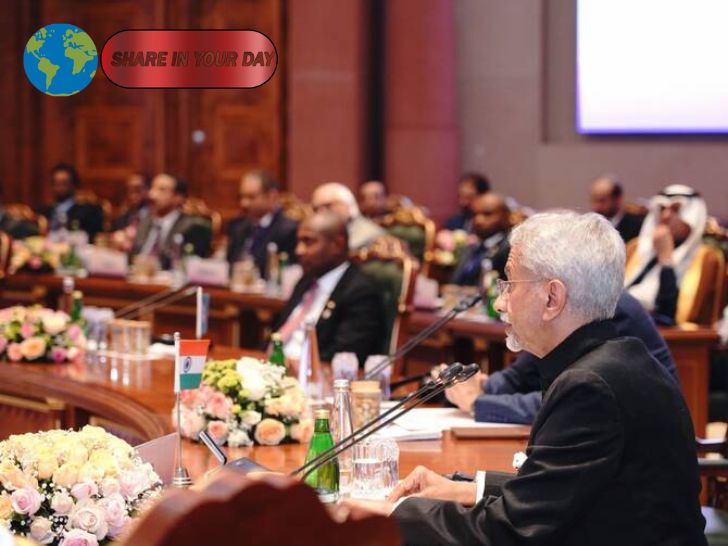
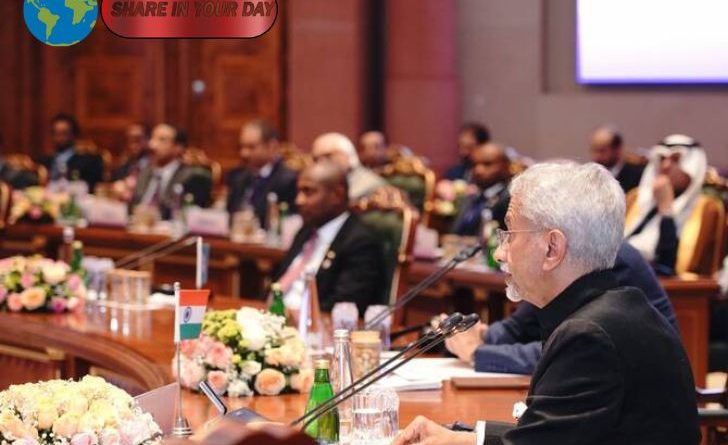
New Delhi — India and the League of Arab States announced a major expansion of their economic partnership on Monday, setting a target to boost bilateral trade to $500 billion by 2030. The pledge came during the India–Arab Foreign Ministers’ Meeting, a high‑level diplomatic forum aimed at strengthening economic and strategic ties between New Delhi and the 22‑nation Arab bloc.
The agreement underscores a shared commitment to deepen cooperation across trade, energy, investment and technology sectors, reflecting decades of evolving diplomatic engagement between India and the Arab world.
Strategic Economic Partnership Takes Center Stage
The India–Arab Foreign Ministers’ Meeting — the premier institutional platform guiding bilateral relations — brought together top diplomats from New Delhi and capitals across the Middle East and North Africa. Since its creation in March 2002, the forum has served as the cornerstone for sustained dialogue on political, economic and cultural cooperation.
Indian officials described the $500 billion trade target as an “ambitious yet achievable milestone” in light of robust economic ties already in place. Historically, energy — particularly oil and liquefied natural gas imports from Gulf states — has been a central driver of the partnership. However, both sides signalled a desire to diversify economic engagement into sectors such as renewable energy, technology transfer, infrastructure, agriculture and digital commerce.
Foreign ministers from both sides underscored the importance of building resilient supply chains, enhancing investment flows and expanding market access, particularly for small and medium enterprises. They also highlighted opportunities to collaborate on climate action and regional stability, themes increasingly prioritized across global diplomatic agendas.
Regional and Global Context
The strategic pact arrives against a backdrop of shifting geopolitical dynamics. India has been steadily expanding its diplomatic footprint in the Middle East, balancing ties with Gulf Cooperation Council (GCC) members, Egypt and other Arab League states. Meanwhile, Arab economies are pursuing diversification under long‑term development plans, such as Saudi Vision 2030 and the UAE’s Innovation Strategy, aimed at reducing reliance on hydrocarbons and fostering innovation‑led growth.
Enhanced India–Arab economic engagement is expected to have ripple effects across global markets, particularly at a time when economic competition, trade realignment, and energy transitions are reshaping international relationships. Analysts say the framework could help both sides navigate global challenges — including inflation pressures, supply chain disruptions, and geopolitical uncertainties — by leveraging complementary strengths in technology, capital and human resources.
Looking Ahead
The $500 billion trade objective sets a clear benchmark for intensified cooperation, but it also presents a complex implementation pathway. Achieving the goal will likely require policy coordination, structural reforms and sustained investment in joint projects. Experts note that the next few years will be critical in transforming diplomatic commitments into tangible economic outcomes.
As India and Arab League members prepare to build on this announcement, stakeholders on both sides emphasise the wider strategic value of the partnership — one they say transcends traditional trade metrics and promises deeper integration in an era of global economic transition.