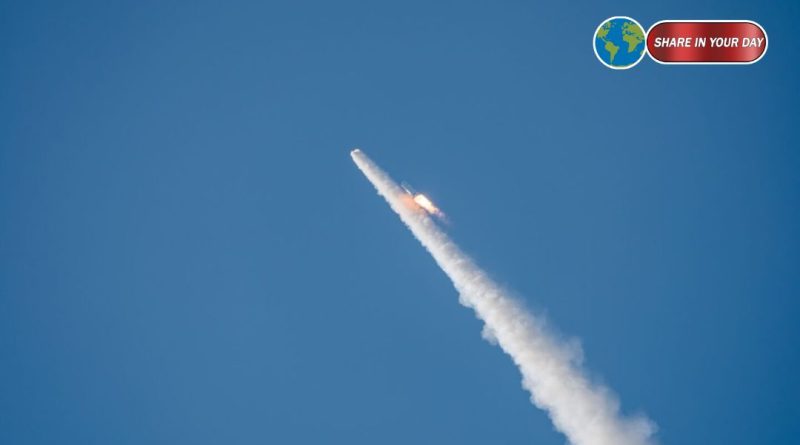
China Demonstrates New Moon Ship and Reusable Rocket in Breakthrough Test
By [Your Name] | Published: February 12, 2026
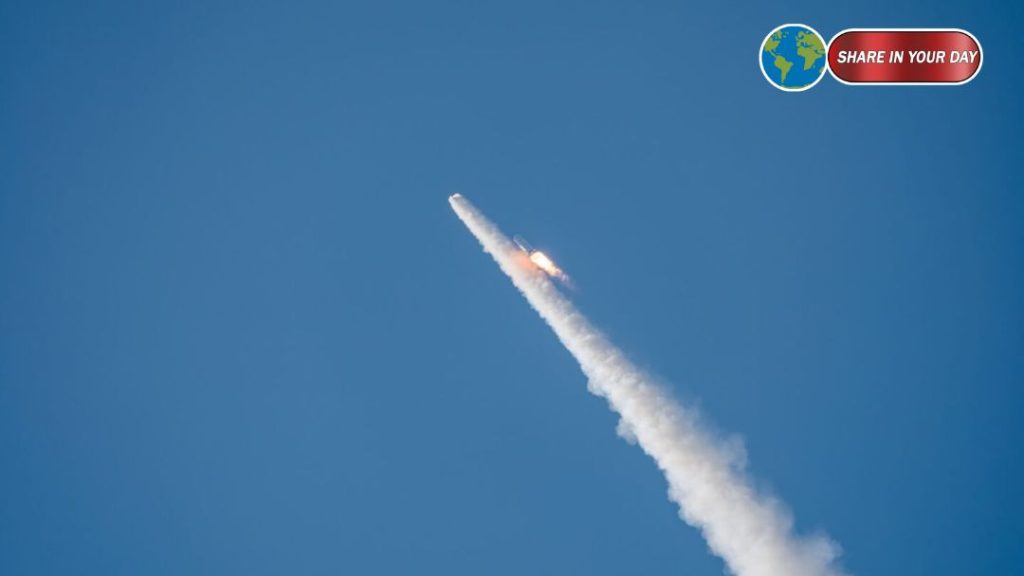
China’s ambitious space program reached a significant milestone on Wednesday, February 11, with the successful flight test of a new crewed lunar spacecraft and the country’s first reusable heavy-lift booster prototype, signaling a major advance toward its goal of sending astronauts to the Moon by the end of the decade.
The test took place at the Wenchang Spacecraft Launch Site on Hainan Island, where a prototype of the Long March-10 rocket launched carrying China’s next-generation crew capsule, Mengzhou (“Dream Vessel”). The mission’s key objectives included validating emergency escape procedures for astronauts and demonstrating landing and recovery techniques for both spacecraft and booster technologies.
A Milestone in Lunar Mission Preparation
The Long March-10 launch at 11:00 a.m. Beijing Time marked the first time China has demonstrated such an integrated rocket and capsule system in flight. After liftoff, the vehicle quickly ascended through the atmosphere, reaching the point of maximum dynamic pressure, a demanding phase when aerodynamic stress on the rocket is at its peak. At this critical juncture, the Mengzhou capsule successfully separated and initiated its abort sequence, deploying parachutes and splashing down safely in a predetermined ocean zone.
In parallel, the reusable first stage of the Long March-10 booster also completed a controlled descent and splashdown, underscoring Beijing’s efforts to master reusable rocket technology — a capability so far dominated by the United States.
The China Manned Space Agency (CMSA) confirmed that the maritime recovery team later retrieved the spacecraft’s return capsule, providing valuable operational experience for future crewed missions to low-Earth orbit and the Moon.
What This Means for China’s Moon Plans
The Long March-10 rocket family and the Mengzhou spacecraft are central to China’s 2030 crewed lunar landing vision. The Long March-10 itself is a heavy-lift vehicle designed to carry significant payloads — including crew and landers — on deep-space missions. The technology demonstrated in this test will feed directly into development of future variants intended for lunar orbit and surface missions.
Mengzhou, which is being developed to replace the long-serving Shenzhou crew spacecraft series, is built with an escape tower and parachute recovery system vital for astronaut safety in the early stages of flight. Its successful separation and splashdown in this test further supports CMSA’s planning for a safe, reliable crewed flight system.
Reusability is another critical component of China’s space strategy. By recovering and reusing rocket stages, China aims to reduce mission costs and increase launch frequency, a trend already emerging globally with reusable systems like SpaceX’s Falcon rockets. Although still in the early phases, China’s progress suggests it is closing the technical gap in this capability.
International Context and Future Outlook
China’s achievement comes amid renewed global interest in lunar exploration, with NASA’s Artemis program and other international initiatives planning crewed operations near the Moon. Experts say Beijing’s steady testing and hardware development place it among the few countries capable of launching astronauts on lunar missions in the next decade.
The Wenchang flight also served as a testbed for a new launch pad and maritime recovery techniques, both of which will be critical as China expands its human spaceflight ambitions. CMSA noted the data and engineering experience gained will inform follow-on integrated missions and accelerated development of landing and orbital rendezvous systems.
As China continues to refine its launcher and spacecraft designs, observers worldwide are watching closely to see how quickly Beijing moves from uncrewed validation tests toward its first crewed lunar mission — a potentially historic moment in the evolving era of international space exploration.