Europe Moves to Strengthen Its Own Defenses Amid Uncertainty Over U.S. Support
Brussels / Munich — With questions rising over Washington’s long-term security commitments, European governments are accelerating moves to bolster their own defense capabilities and reduce reliance on the United States, officials and analysts say. The push for greater military autonomy, highlighted at recent political and security gatherings, reflects broader concerns about shifting global priorities and the evolving nature of the trans-Atlantic alliance.
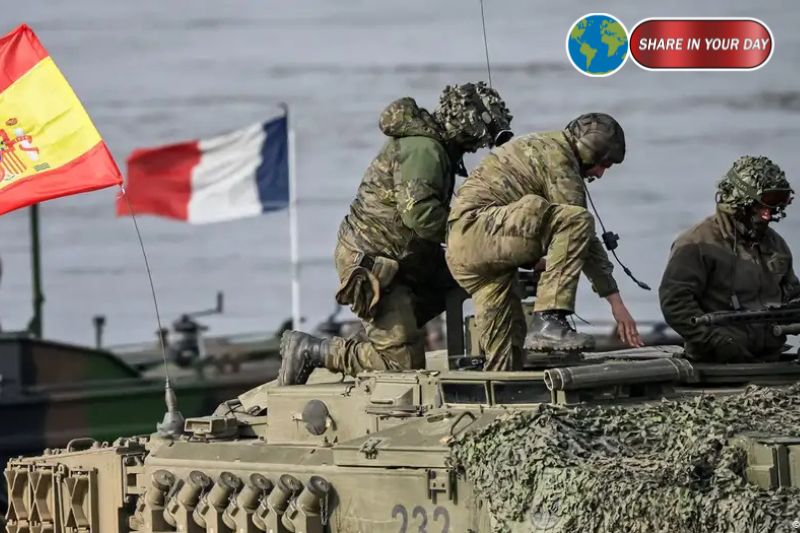
While NATO’s trans-Atlantic partnership remains central to European security, leaders across the continent have stressed that Europe must play a more assertive role in its own defense — from increased spending to deeper cooperation in procurement, intelligence, and joint military capability development.
Strategic Autonomy on the Agenda
At the annual Munich Security Conference, European Commission High Representative Kaja Kallas called on EU members to “take the lead” in defending the continent against emerging threats, particularly from Russia. She argued that dependence on external support limits Europe’s ability to act independently in a world where U.S. foreign policy priorities could shift.
Kallas noted that European defense spending has risen sharply in recent years, fueled in part by the war in Ukraine and pressure from the Trump administration for allies to “pull their weight.” European Union member states collectively boosted defense budgets in 2025, with total European defense expenditure exceeding €380 billion — up significantly from previous years.
European Commission President Ursula von der Leyen described these investments as essential not just to meet alliance targets but to build a more integrated defense market capable of producing advanced capabilities — such as air and missile defense systems, military drones, and enhanced mobility assets.
From NATO Dependence to European Defense Initiatives
Despite calls for autonomy, leading European policymakers emphasized that foundational frameworks like NATO remain vital. At the same conference, NATO Secretary-General Mark Rutte reiterated that Europe cannot realistically defend itself without American support, underscoring the continued importance of the alliance even amid autonomy discussions.
Still, EU officials and member states are pursuing a range of measures aimed at strengthening Europe’s capacity to act collectively:
- Strategic capability development: EU Defense Commissioner Andrius Kubilius told lawmakers that Europe must develop its own “strategic enablers” — such as space-based intelligence and air-to-air refueling — to reduce reliance on U.S. systems and enhance collective responses to crises.
- Joint procurement and industry integration: European defense cooperation efforts are focused on harmonizing standards and joint acquisition to lower costs and improve interoperability among national forces.
- Enhanced spending commitments: European capitals are considering ambitious plans to increase defense budgets and align procurement to build shared military capabilities rather than duplicating efforts.
These initiatives echo earlier strategic plans such as the Readiness 2030 program, an EU defense package aimed at mobilizing hundreds of billions of euros to build up contingency planning, joint assets, and industrial capacity in response to geopolitical uncertainty and the possibility of reduced U.S. military presence.
Political and Strategic Drivers
Concerns over U.S. commitment have been shaped by political developments in Washington and broader shifts in U.S. global strategy. European leaders have been grappling with the realization that long-standing assumptions about unwavering American support may no longer hold, particularly as U.S. focus turns increasingly toward the Indo-Pacific and domestic priorities.
This perception has reinforced calls from capitals such as Berlin and Paris to make Europe a credible security actor in its own right. Germany’s foreign leadership has emphasized the need for cohesion and capability development to counter perceived Russian threats and ensure that Europe can contribute meaningfully to its own defense.
France has been particularly vocal about the need for a robust European defense framework, periodically advocating shared funding mechanisms and integrated planning to ensure that the EU can act independently when necessary.
A Dual Track Ahead
Even as debates over autonomy sharpen, most European officials recognize that ultimate security still benefits from a strong trans-Atlantic partnership. The challenge now is to balance enhanced European defense capacity with sustained cooperation through NATO and allied frameworks.
Most observers argue that this dual approach — combining investment in Europe’s own capabilities with continued alliance commitments — is likely to shape security policy in the years ahead. Whether Europe can achieve meaningful autonomy without weakening collective deterrence remains a central question in Europe’s strategic evolution.