Tarique Rahman Sworn In as Bangladesh Prime Minister After Landslide Election Victory
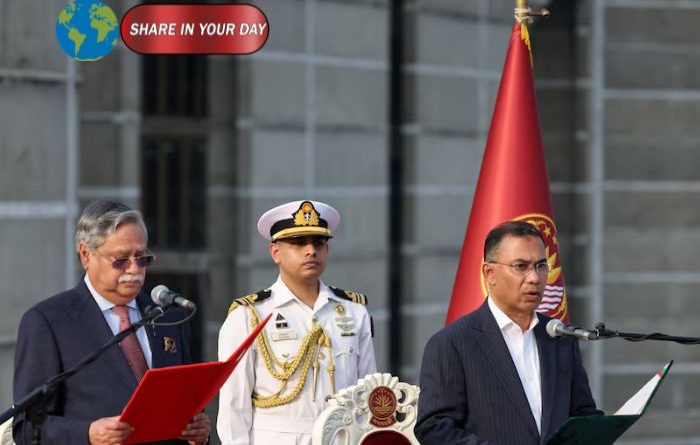
DHAKA — Tarique Rahman was sworn in as Bangladesh’s prime minister on Tuesday, sealing a dramatic political comeback for the Bangladesh Nationalist Party (BNP) and ushering in a new chapter for the South Asian nation after months of upheaval.
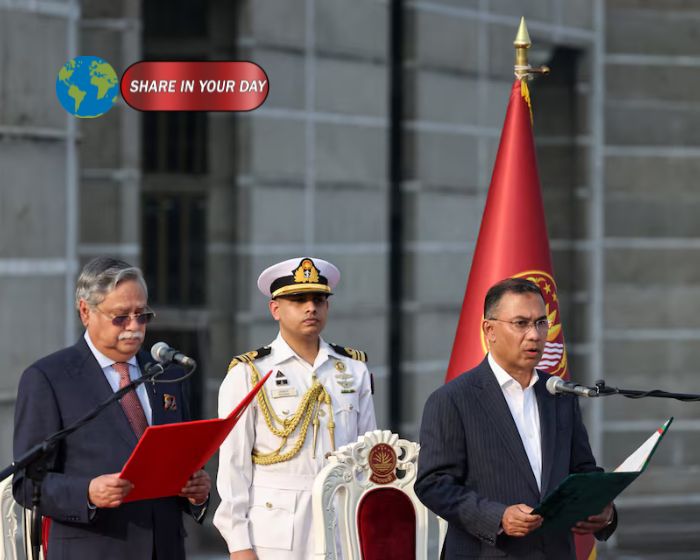
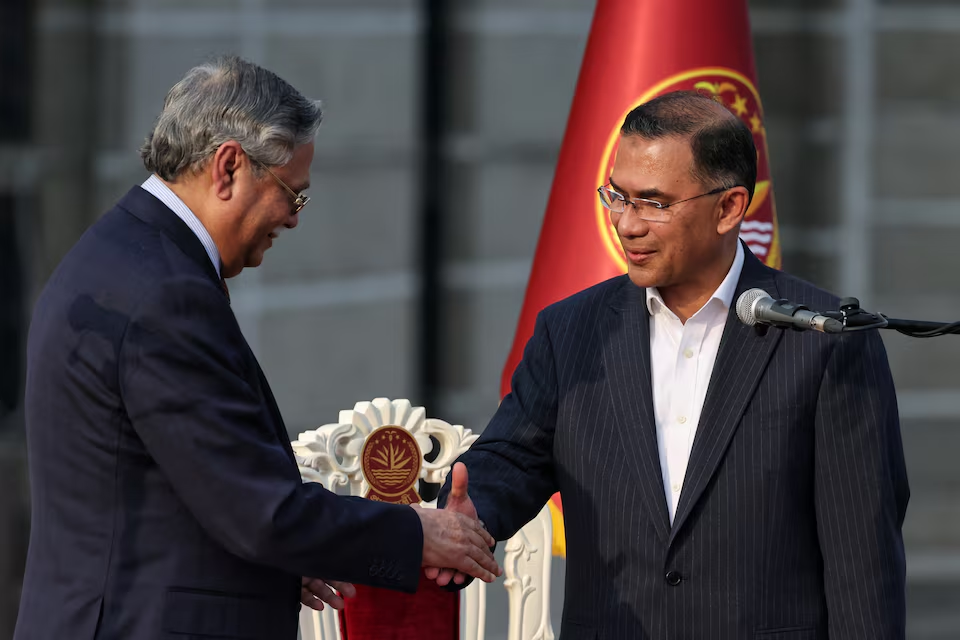
The 60-year-old leader took the oath of office at an open-air ceremony at the South Plaza of the national parliament building in Dhaka — a symbolic break from tradition that underscored the country’s shifting political landscape. The ceremony was officiated by President Mohammed Shahabuddin in the presence of diplomats, senior officials, and representatives from regional powers including China, India, and Pakistan.
Rahman assumes office after his party secured a commanding two-thirds majority in parliamentary elections, returning the BNP to power after nearly two decades in opposition.
A Return After Exile
Rahman’s rise marks the culmination of a long and turbulent political journey. The son of former prime minister Khaleda Zia and assassinated president Ziaur Rahman, he spent 17 years in self-imposed exile in London before returning to Bangladesh last year.
His comeback followed a period of extraordinary political upheaval. In 2024, mass protests led largely by younger voters toppled the government of Sheikh Hasina, ending her long and controversial tenure.
A transitional administration led by Nobel laureate Muhammad Yunus oversaw governance during the interim period and guided the country toward elections that many observers described as pivotal for restoring democratic stability.
A Government of Experience and New Faces
In forming his 49-member council of ministers, Rahman signaled an attempt to balance seasoned political operators with technocratic expertise.
Former commerce minister Amir Khasru Mahmud Chowdhury was appointed finance minister, while Khalilur Rahman, who previously served as national security adviser in the interim administration, was named foreign minister.
The composition of the cabinet reflects the scale of the challenges facing the new government: reviving economic growth, restoring law and order, and reassuring international investors wary after prolonged unrest.
Bangladesh’s garment industry — a backbone of the economy and one of the world’s largest apparel exporters — suffered significant disruption during last year’s protests. Rebuilding investor confidence will be critical as the government seeks to stabilize foreign exchange reserves and reinvigorate manufacturing output.
A Divided Opposition
The Islamist party Jamaat-e-Islami, contesting its first election since a 2013 ban was lifted following Hasina’s ouster, secured a record 68 seats. Together with its allies — including the youth-led National Citizen Party (NCP) — it will form the opposition bloc.
However, Jamaat and the NCP boycotted Tuesday’s swearing-in ceremony, protesting the BNP’s rejection of a proposal from the interim government for lawmakers to take an additional oath under a planned “Constitution Reform Council.”
The council is expected to consider amendments following a referendum held alongside the general election, a move aimed at addressing long-standing governance and electoral concerns.
Meanwhile, Hasina’s Awami League was barred from contesting the election after the Election Commission revoked its registration, further reshaping the political landscape.
Immediate Tests Ahead
Rahman inherits a nation still grappling with the aftershocks of political turmoil. While his landslide victory gives him a strong parliamentary mandate, expectations for swift reform are high.
Political analysts say restoring institutional trust will be as crucial as economic revival. The months of unrest exposed deep generational and ideological divides, particularly among urban youth who played a decisive role in last year’s uprising.
The presence of foreign diplomats at the ceremony signaled regional interest in Bangladesh’s trajectory. The country occupies a strategic position in South Asia, balancing ties with India and China while maintaining significant trade links with Western markets.
For Rahman, navigating these geopolitical currents while delivering domestic stability will define the early months of his premiership.
A Symbolic Shift
Holding the swearing-in ceremony at the parliament’s South Plaza rather than the traditional Bangabhaban presidential residence was widely seen as a gesture toward openness and institutional renewal.
Supporters of the BNP celebrated the event as a restoration of political continuity linked to the legacy of Ziaur Rahman and Khaleda Zia. Critics, however, caution that durable reform will depend less on symbolism and more on policy execution.
Rahman, in brief remarks after taking the oath, pledged to prioritize economic recovery, governance reform, and national unity.
Whether his administration can translate electoral dominance into lasting stability remains an open question. But Tuesday’s ceremony marked a decisive shift in Bangladesh’s political direction — one shaped by protest, transition, and a resounding electoral verdict.