Fed Minutes Show Split on Future Interest Rate Moves as Inflation Concerns Linger
By [Your Name] — Washington, D.C. | Business & Economy — February 18, 2026
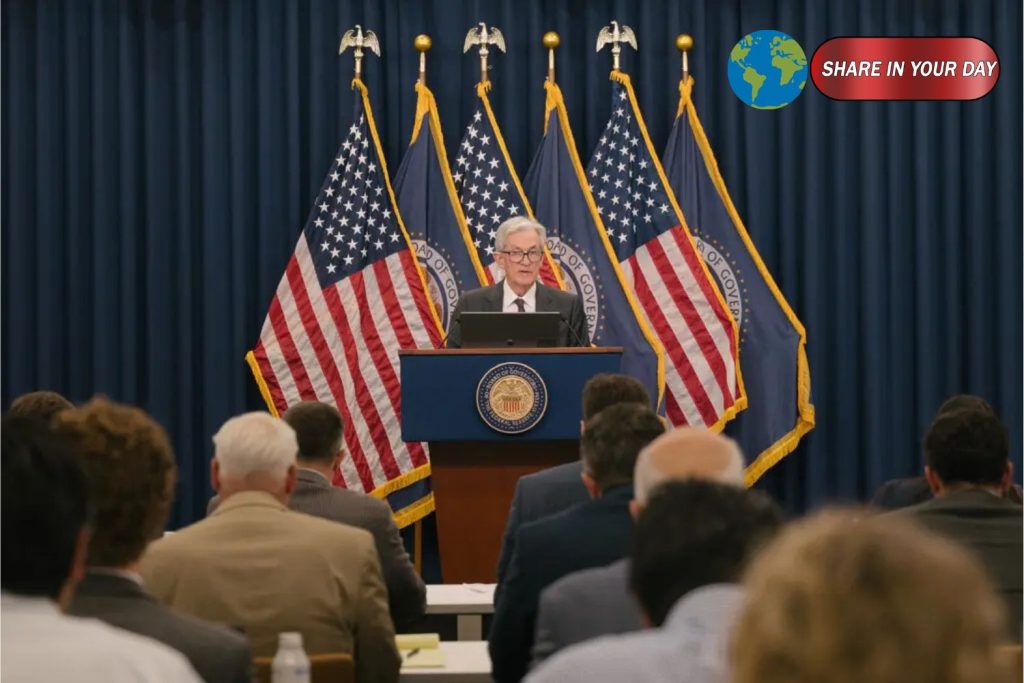
Newly released minutes from the Federal Reserve’s January 27–28 policy meeting reveal a central bank wrestling with competing visions for the U.S. economy’s future — and what to do with interest rates next. The internal debate reflects a growing tension between officials who want to cut rates further if inflation eases and others who think caution — or even tightening — may be necessary.
At the heart of the Federal Open Market Committee’s (FOMC) deliberations is how to balance continued inflation risk with signs of stabilization in labor markets and broader economic activity. Officials voted 10–2 to hold the federal funds rate steady at 3.50 %–3.75 % — a range first set after three cuts in late 2025 — but their assessments of the economy’s trajectory diverged sharply in the meeting minutes released Wednesday.
‘No Rush’ on Cuts, Inflation Still Above Target
Most policymakers emphasized that progress on inflation toward the Fed’s 2 % goal has been “slower and more uneven than generally expected,” and that further rate cuts would not be appropriate until clearer evidence of sustained disinflation emerges. Several officials argued that they would only support additional easing when inflation shows firmer downward momentum.
That caution aligns with recent inflation data: the consumer price index (CPI) rose about 2.4 % in January, a modest drop from previous months but still above the Fed’s target. Meanwhile, labor market indicators, including a modest increase in jobs and a lower unemployment rate, have suggested resilience that gives officials less urgency to ease policy immediately.
Officials Weighed Both Cuts and Hikes
One notable feature of the minutes was the discussion among several officials that future rate hikes — not just cuts — could be appropriate if inflation remains stubbornly high. Those policymakers said they would have supported language indicating that interest rate increases were a possibility if price pressures failed to subside.
That marks a subtle but significant shift in tone from previous periods when markets predominantly focused on the timing of rate cuts. The “two-sided” view — keeping both cuts and hikes on the table — signals heightened caution about inflation’s persistence and the uncertainty posed by global economic conditions and asset valuations.
Dissent and Divergent Views Within the FOMC
The minutes underscore the diversity of thought within the Fed. While most officials voted to hold rates steady, two dissenting votes favored an immediate quarter-point cut, arguing that looser policy would better support economic growth given a still-stable labor market and easing price pressures.
“This internal division highlights how sensitive members are to incoming data, with no clear consensus on the optimal path forward,” said an economist familiar with the FOMC’s discussions. The debate centered on whether the current policy stance — broadly seen as neutral, neither stimulative nor restrictive — should be maintained until inflation aligns more clearly with the 2 % target.
Market Reaction and Economic Implications
Financial markets reacted to the minute’s release with modest volatility, pricing in a higher probability that rates will remain unchanged through mid-2026, though some analysts still see the potential for cuts later in the year if inflation data continues to soften. Traders are also weighing geopolitical and fiscal factors that could influence policy decisions as the year unfolds.
Investors and businesses now face a period of greater uncertainty, as the Fed’s reluctance to commit firmly to further easing means long-term borrowing costs could stay elevated. Such an environment could temper investment and consumer spending, even as job growth remains relatively strong.
Looking Ahead: Next Fed Meeting in March
With the next FOMC policy meeting scheduled for March 17–18, 2026, all eyes will be on new inflation readings, labor market reports, and how officials interpret these signals in light of global economic pressures. Market consensus currently leans toward a continuation of the Fed’s “patient” approach, with rate cuts priced modestly later in the year, though that outlook remains fluid.
As the U.S. economy navigates competing pressures — from inflation trends to employment dynamics — the Fed’s minutes serve as a reminder that monetary policy is far from settled, with policymakers signaling both caution and flexibility in their deliberations.