Cambodia–Thailand Border Spat Draws Global Focus at Board of Peace Meeting
WASHINGTON, D.C. — The territorial dispute between Cambodia and Thailand has moved firmly into the international spotlight following high-level discussions at the inaugural session of the Board of Peace in the United States capital.
According to Royal Government spokesperson Pen Bona, the long-running border tensions were elevated to the highest levels of global discourse after Donald Trump explicitly referenced the conflict during his opening remarks on February 19.
Speaking from the Council of Ministers’ Office on Friday, Bona said Trump’s comments signaled intensified international oversight and the possibility of more active mediation in the dispute.
Trump’s Remarks Signal Shift
At the Washington summit, Trump described the situation between the two Southeast Asian neighbors as a “nasty war,” underscoring the seriousness with which the matter is now being regarded on the global stage.
His remarks were delivered during the first official meeting of the Board of Peace, an international body established following United Nations Security Council Resolution 2803 on November 17, 2025.
The session, initially centered on peacebuilding and reconstruction efforts in Gaza, broadened its scope to emphasize conflict resolution mechanisms worldwide — including Southeast Asia.
For Cambodian officials, the public mention of the border dispute by the U.S. president marks a pivotal moment.
“This reflects heightened international scrutiny,” Bona said, pointing to what he described as alleged violations of international law, including the occupation of certain Cambodian territories by Thai armed forces.
Humanitarian Concerns
Beyond territorial claims, the spokesperson highlighted the humanitarian dimension of the dispute. He stated that more than 70,000 displaced Cambodians remain unable to return to their homes due to ongoing restrictions in contested areas.
The displacement issue, long a sensitive matter domestically, now appears to be gaining international visibility as part of broader diplomatic engagement.
While Thai authorities have not publicly responded to the latest statements, analysts note that border tensions between the two countries have historically flared over disputed demarcation lines and military deployments.
Hun Manet’s Role at the Summit
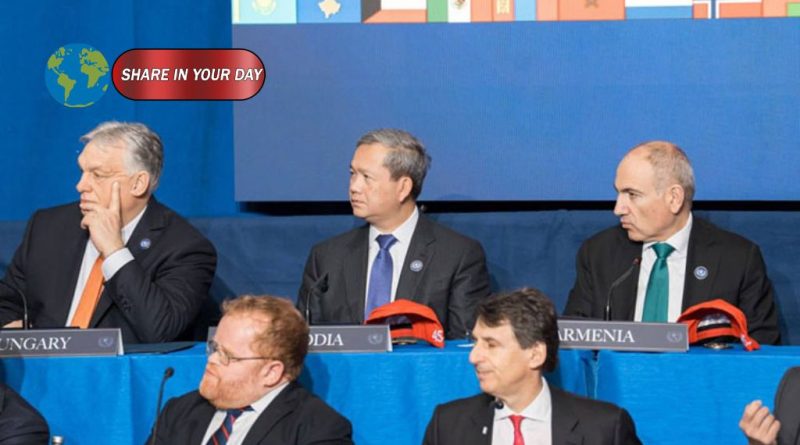
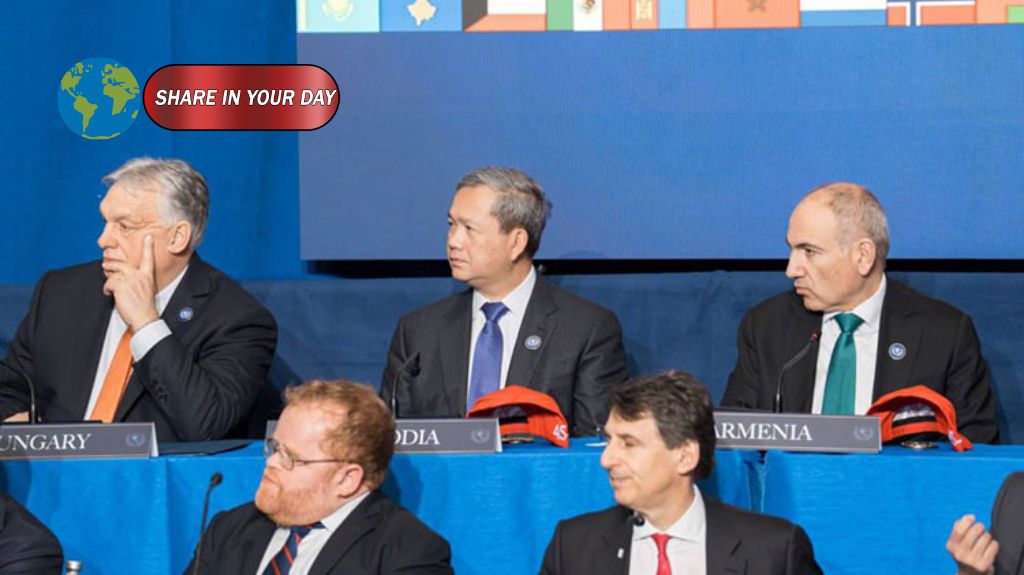
Hun Manet attended the Washington gathering as a founding member of the Board of Peace, following an invitation from Trump.
The meeting took place at the United States Institute of Peace, bringing together international representatives to discuss pathways toward global stability.
According to Bona, Hun Manet’s participation demonstrates Cambodia’s goodwill and longstanding commitment to peaceful conflict resolution grounded in international law.
Cambodia’s modern history — shaped by decades of war and reconstruction — was also cited during discussions as a reminder of the costs of prolonged conflict and the importance of diplomatic engagement.
Peace as a Development Imperative
Participants at the session emphasized that sustainable development, both regionally and globally, depends fundamentally on peace and stability.
The Board of Peace, though initially focused on Gaza’s reconstruction, was presented as a flexible platform capable of addressing broader disputes.
Bona said the meeting sent “a strong message worldwide” about ending armed conflicts, saving lives, rebuilding devastated communities, and reinforcing international cooperation.
For Cambodia, the internationalization of the border dispute could represent both an opportunity and a challenge — inviting mediation while increasing diplomatic pressure on all parties involved.
Rising Global Attention
The reference to the Cambodia–Thailand dispute at such a high-profile forum underscores shifting geopolitical dynamics in Southeast Asia, where regional security issues increasingly intersect with global diplomatic initiatives.
Observers say that international engagement may encourage renewed dialogue between Phnom Penh and Bangkok, particularly if mediation frameworks gain traction.
Whether the Board of Peace evolves into a sustained mechanism for Southeast Asian conflict resolution remains uncertain. However, the February 19 session marked a clear step toward placing the Cambodia–Thailand border issue within a broader international peace agenda.
As global institutions and national governments weigh their roles in mediation, the dispute — once largely regional — is now firmly embedded in international diplomatic discourse.