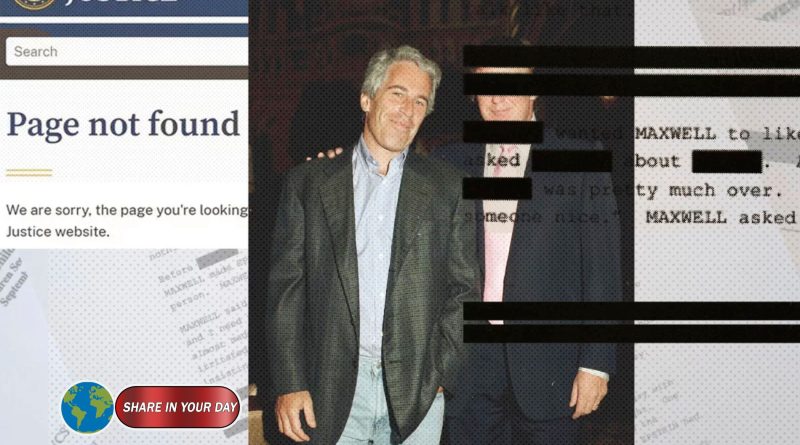
Justice Department Withheld Epstein Files Referencing Trump, Investigation Finds
An investigation has found that the U.S. Department of Justice catalogued but did not publicly release dozens of documents from the Jeffrey Epstein case that reference allegations involving President Donald Trump, raising fresh political and legal questions as lawmakers open a parallel inquiry.
The findings, first reported by NPR, suggest that more than 50 pages of FBI interview summaries and related notes appear to have been withheld from the public database established under the Epstein Files Transparency Act. Some documents were briefly removed and later restored, while others remain unavailable.
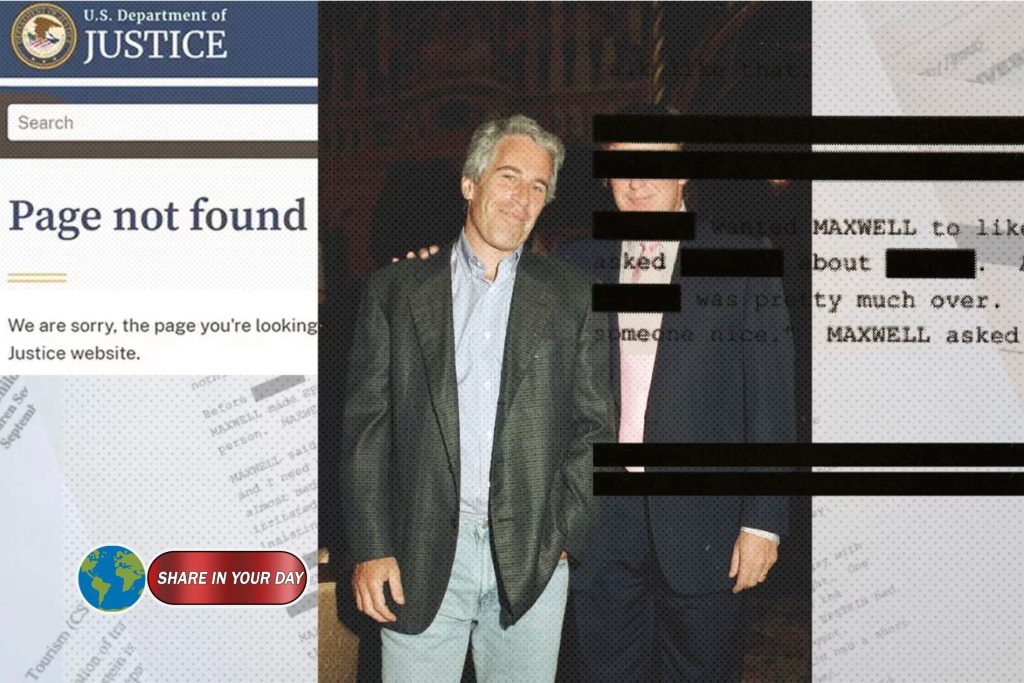
The Justice Department declined to answer detailed questions about the specific files. After publication, officials reiterated that any documents not posted publicly are either privileged, duplicative, or tied to ongoing federal investigations.
Missing Serial Numbers and Interview Records
According to NPR’s review, serial numbers stamped across the Epstein files database, FBI case logs, internal emails and discovery records in the prosecution of Ghislaine Maxwell point to gaps in what was made public.
The review identified 53 pages of FBI interview materials and notes that appear in internal catalogues but are not available in the public release.
One of the missing sets of documents relates to a woman who accused President Donald Trump of sexual abuse decades ago when she was a minor. NPR does not name alleged victims of sexual abuse.
While the Justice Department has released more than 3 million pages of Epstein-related materials in recent months, this specific allegation appears only in limited internal FBI lists and a Justice Department slide presentation summarizing “prominent names” linked to the broader investigation.
Agents reportedly marked many allegations circulating internally as unverifiable or not credible. However, one claim referencing Trump was forwarded to the FBI’s Washington Field Office for follow-up.
Allegations From the 1980s
According to internal records described in the report, the accuser claimed that around 1983, when she was approximately 13 years old, Epstein introduced her to Trump. She alleged that Trump forced her head toward his exposed genitals and struck her when she resisted.
The first FBI interview with the woman, conducted in July 2019, is publicly available but does not reference Trump. Logs from the Maxwell prosecution indicate the FBI interviewed her four times in total. Only one of those interviews appears in the public database.
Of 15 discovery documents associated with the accuser in the Maxwell case, seven are currently accessible online. The remaining materials — including notes tied to three interviews — are absent.
In a separate internal memo dated July 2025, an FBI official wrote that Trump’s name appeared in broader Epstein files and that “one identified victim claimed abuse by Trump but ultimately refused to cooperate.”
Attorneys for the accuser declined to comment.
The White House rejected the allegations. In a statement, spokesperson Abigail Jackson said Trump “has been totally exonerated on anything relating to Epstein” and argued that the administration had released thousands of pages of documents and cooperated with congressional oversight.
The White House has also cited prior Justice Department statements warning that some material in the Epstein files contains what it called “untrue and sensationalist claims.”
Second Accuser and Mar-a-Lago Reference
Another set of documents pertains to a separate woman who testified in the criminal case against Maxwell, who is serving a 20-year sentence for sex trafficking minors.
In FBI interview records released in January, the woman described meeting Trump at his Mar-a-Lago club while she was a minor being abused by Epstein. According to the interview summary, Epstein allegedly introduced her to Trump with the remark, “This is a good one, huh,” after which both men laughed.
That interview was temporarily removed from the Justice Department’s public database before being restored in February, according to metadata reviewed by NPR.
The Justice Department said files have occasionally been taken down after being flagged by victims or their legal representatives for additional review and redaction.
Another interview referencing the second woman’s mother — in which she recalled hearing that “a prince and DONALD TRUMP visited EPSTEIN’s house” — was removed and has not yet been reposted. After publication, officials said further redactions were required and the file would be restored.
Congressional Scrutiny Intensifies
The revelations have prompted renewed scrutiny on Capitol Hill.
Rep. Robert Garcia, the ranking Democrat on the House Oversight Committee, said in a statement that lawmakers reviewing unredacted evidence logs believe the Justice Department “appears to have illegally withheld FBI interviews” related to the allegations.
Democrats on the committee are already investigating the underlying claims against the president and have now announced a parallel inquiry into the department’s handling of the files.
In a Feb. 14 letter to Congress, Attorney General Pam Bondi and Deputy Attorney General Todd Blanche wrote that no records were withheld or redacted “on the basis of embarrassment, reputational harm, or political sensitivity.”
They emphasized that any omissions were tied to legal privilege, duplication, or the protection of sensitive material.
Broader Fallout From the Epstein Files
The controversy comes amid broader criticism of how the Epstein documents have been handled.
In recent weeks, the Justice Department acknowledged redaction errors that exposed some victims’ names and has removed and reuploaded thousands of pages to correct those mistakes.
Robert Glassman, an attorney representing one of the women who testified against Maxwell, sharply criticized the rollout.
“The DOJ was ordered to release information to the public to be transparent about Epstein and Maxwell’s criminal enterprise network,” he said. “Instead, they released the names of courageous victims who have fought hard for decades to remain anonymous.”
The department has said it is working “around the clock” to address privacy concerns while meeting congressional transparency requirements.
As lawmakers press for clarity and victims’ advocates demand greater care in handling sensitive records, the Epstein files continue to generate political aftershocks — years after the financier’s death and Maxwell’s conviction.
Whether the missing documents reflect administrative oversight, legal caution or something more contentious is now the subject of formal congressional review.