China Removes Nine Senior Military Officials from Legislature Ahead of ‘Two Sessions’
China’s top legislature has removed nine senior military officials from its list of deputies just days before the start of the country’s most important annual political event, raising fresh questions about leadership dynamics and internal discipline ahead of critical policy deliberations in Beijing.
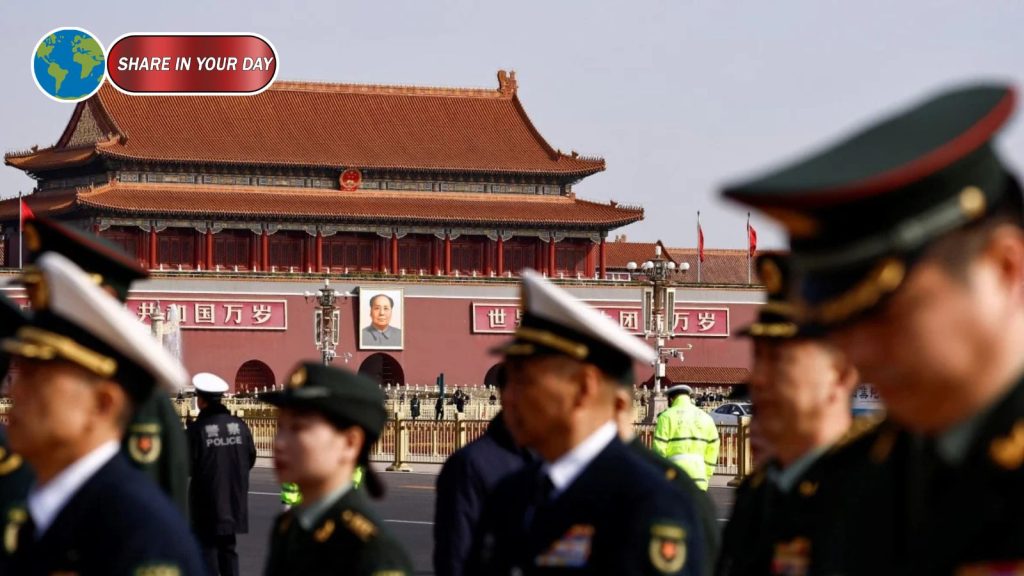
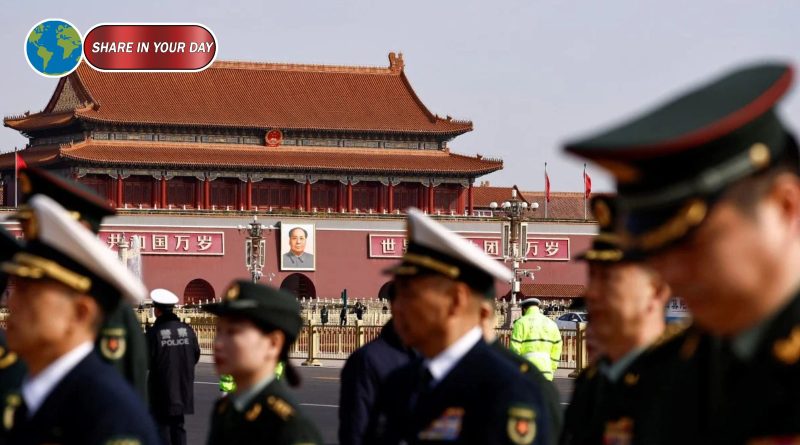
The National People’s Congress (NPC) — China’s highest legislative body — updated its list of representatives from the People’s Liberation Army (PLA) and the People’s Armed Police, reducing the delegation to 243 members after stripping the military figures of their legislative status.
High-Rank Officers Dropped from NPC List
Among those removed were five full generals, one lieutenant general and three major generals, according to the official announcement published as preparations intensify for the “Two Sessions,” the dual convening of the NPC and the Chinese People’s Political Consultative Conference (CPPCC) scheduled for early March.
The generals taken off the NPC roster included:
- Li Wei, political commissar of the Information Support Force
- Li Qiaoming, commander of the Ground Forces
- Shen Jinlong, former commander of the Navy
- Qin Shengxiang, former navy political commissar
- Yu Zhongfu, former air force political commissar
Also removed were Lt. Gen. Wang Donghai, political commissar of the Central Military Commission’s National Defence Mobilisation Department, Maj. Gen. Bian Ruifeng, Maj. Gen. Ding Laifu, and Maj. Gen. Yang Guang.
Chinese authorities have not publicly explained the reasoning behind the removals, though similar personnel changes in legislature lists typically reflect shifts in official posts, ongoing investigations, or revocations of qualifications.
Timing Ahead of Key Political Gathering
The decision to remove these military deputies comes just days before the opening of the Two Sessions, which begin with the NPC’s annual meeting and the CPPCC’s advisory conference in Beijing. The gatherings are central to China’s policymaking calendar, during which major national priorities — including economic planning, defense policy and legal reforms — are reviewed and adopted.
The NPC Standing Committee — which finalised the updated delegate list — has also confirmed other personnel changes, such as the removal of Wang Xiangxi from his role as minister of emergency management and the removal of other civilian delegates under investigation.
Broader Context: Anti-Corruption Measures and Military Shake-Ups
The recent removals are the latest in a series of high-profile personnel shifts at the intersection of China’s military and political leadership. In recent years under President Xi Jinping, Communist Party authorities have pursued expansive anti-corruption campaigns affecting both civilian and military officials, with past investigations targeting some of the PLA’s most senior officers.
Last month, the defense ministry acknowledged probes into senior figures such as Zhang Youxia, vice chairman of the powerful Central Military Commission, and Liu Zhenli, chief of staff of the CMC’s joint staff department — moves that underscore broader efforts to address perceived discipline violations within the armed forces.
Analysts say such personnel changes ahead of major political gatherings can reflect shifting power balances within the Communist Party and signal priorities as leadership prepares to articulate national policies for the year ahead.