Iran War Shakes Global Markets as Wall Street’s Safety Net Begins to Fray
The escalating war involving Iran is sending shockwaves through global financial markets, challenging long-held assumptions about how investors protect themselves during geopolitical crises.
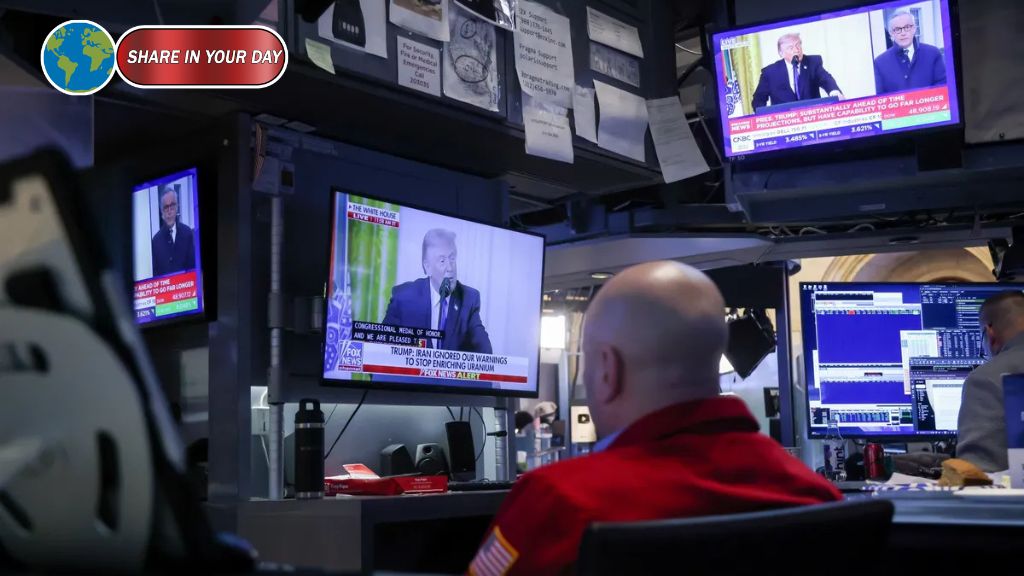
While markets have not collapsed outright, the turmoil has exposed the limits of diversification strategies that many investors rely on as a “safety net” during times of uncertainty. As tensions escalate in the Middle East, traders are discovering that traditional hedges are no longer providing the same level of protection.
The result is a volatile landscape where stocks, currencies and commodities are reacting sharply to each new headline from the conflict.
A Shock to Traditional Market Defenses
For years, investors have relied on diversification — spreading money across different assets and regions — to cushion portfolios from sudden shocks.
But the Iran war has revealed cracks in that approach.
Markets have been rattled as several assets that typically move in opposite directions have begun falling together, undermining a strategy that many large funds and institutions use to manage risk. Analysts say the situation has highlighted the limits of portfolio models designed for economic shocks rather than military conflicts.
Even as Wall Street avoided a full-scale crash, the episode has forced investors to rethink assumptions about how markets behave during geopolitical crises.
Energy Shock Drives Market Anxiety
At the center of the market turbulence is energy.
Oil prices have surged following fears that the conflict could disrupt shipments through the Strait of Hormuz — one of the world’s most critical energy chokepoints. The conflict has already pushed crude prices higher and raised concerns about a new wave of global inflation.
Rising energy costs ripple quickly through the global economy, affecting transportation, manufacturing and consumer prices.
Analysts warn that if oil supplies are significantly disrupted, prices could climb further, potentially approaching $100 per barrel in an extreme scenario.
For investors, the risk of an energy shock is particularly troubling because it complicates central banks’ efforts to control inflation while supporting economic growth.
Investors Flee to Safe Havens
In response to the uncertainty, many traders have shifted toward assets traditionally considered safe during crises.
Gold, government bonds and the US dollar have seen increased demand as investors look for stability while global tensions rise. This “risk-off” behavior is typical during geopolitical conflicts, but the scale of recent moves suggests deep anxiety in financial markets.
Currency markets have also reacted sharply.
The British pound weakened against the dollar as investors sought safer assets, reflecting broader global concerns about the economic fallout from the conflict.
Meanwhile, emerging markets have faced capital outflows as global funds reduce exposure to riskier assets.
Global Markets React
The impact of the conflict has been felt across stock markets worldwide.
Major indices in the United States, Europe and Asia have experienced sharp swings as investors assess the potential economic consequences of a prolonged conflict. In the early stages of the war, the Dow Jones Industrial Average fell more than 400 points while major indexes across Europe and Asia dropped between 1% and 2%.
In emerging markets, currencies and equities have been particularly vulnerable, as investors tend to pull money out of developing economies during periods of global uncertainty.
Central banks in some countries have already stepped in to stabilize their currencies and financial systems amid the volatility.
Trading Headline to Headline
One of the most striking features of the current market environment is how quickly sentiment shifts with each new development.
Investors are reacting almost instantly to news about military actions, diplomatic negotiations or potential supply disruptions. Analysts describe the situation as a “headline-driven market,” where prices swing rapidly based on the latest updates from the conflict.
This dynamic has made trading conditions unusually unpredictable, forcing investors to constantly reassess risks.
According to market strategists, the uncertainty surrounding the duration and intensity of the conflict makes it difficult to estimate the long-term economic impact.
Emerging Risks for the Global Economy
Beyond the immediate market volatility, economists warn that a prolonged conflict could have broader consequences for the global economy.
Higher oil prices could slow economic growth while simultaneously fueling inflation — a dangerous combination known as stagflation.
Developing economies could face particular challenges, including currency instability, capital flight and rising energy costs.
Financial markets are therefore watching closely for any signs that the conflict could expand or disrupt critical energy infrastructure.
A New Reality for Investors
Despite the turmoil, markets have so far avoided the type of collapse seen during past global crises. However, the events surrounding the Iran war have forced investors to reconsider how resilient their strategies truly are.
The episode has demonstrated that diversification alone may not always shield portfolios from geopolitical shocks — especially when conflicts threaten global energy supplies and economic stability at the same time.
As tensions in the Middle East continue to evolve, financial markets may remain trapped in a cycle of volatility, where every new development has the potential to shift investor sentiment overnight.
For now, Wall Street’s safety net is still holding — but the war has revealed just how fragile it can be.