Trump Deploys ICE Agents to U.S. Airports Amid TSA Crisis During DHS Shutdown
The Trump administration is moving forward with a controversial plan to deploy Immigration and Customs Enforcement (ICE) agents to major U.S. airports, as a prolonged Department of Homeland Security (DHS) shutdown continues to disrupt air travel and strain security operations nationwide.
The decision, announced over the weekend, comes as Transportation Security Administration (TSA) officers face mounting pressure after weeks without pay—leading to widespread absenteeism, staffing shortages, and growing delays at some of the country’s busiest travel hubs.
A System Under Strain
Airport operations across the United States have been pushed to the brink as the shutdown stretches into its fifth week. TSA officers, considered essential workers, have continued reporting for duty despite missing paychecks, but the financial strain has taken a toll.
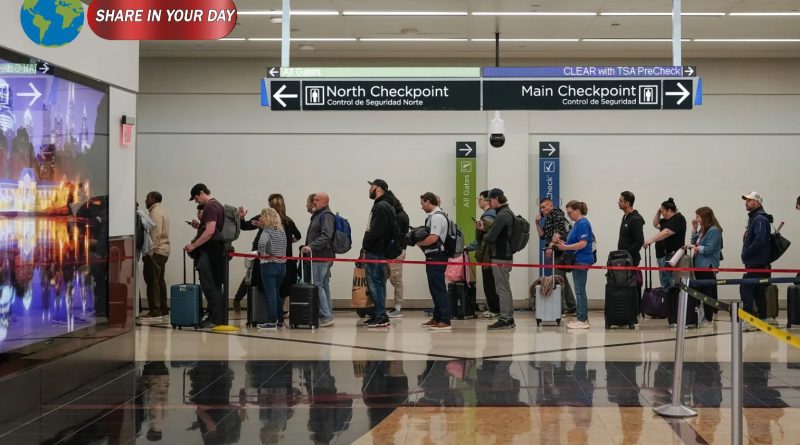
At several major airports, absentee rates have surged dramatically, with some locations reporting more than one-third of staff unavailable for duty. The result has been long security lines, missed flights, and mounting frustration among travelers.
In response, the White House has authorized the deployment of ICE agents beginning Monday, positioning them as a stopgap measure to stabilize airport operations.
Officials say the agents will assist with tasks such as crowd management, monitoring exit lanes, and checking identification—allowing TSA officers to focus on screening duties. However, ICE personnel are not expected to operate X-ray machines or conduct standard security screenings due to a lack of specialized training.
Security Concerns and Industry Backlash
The plan has sparked immediate criticism from aviation experts, labor unions, and lawmakers, who warn that introducing personnel without proper aviation security training could increase risks rather than reduce them.
Union leaders representing federal workers have described the move as “misguided,” arguing that it fails to address the root cause of the crisis—unpaid TSA staff—and instead introduces new uncertainties into an already fragile system.
Security specialists have also raised concerns that deploying ICE agents—whose primary role is immigration enforcement—into airport environments could blur operational boundaries and create confusion among both staff and passengers.
“There’s a difference between law enforcement and aviation security,” one former official noted, emphasizing that TSA training takes months to complete and is tailored specifically to detecting threats in airport environments.
Political Tensions Escalate
The airport deployment underscores the broader political deadlock in Washington, where negotiations over DHS funding remain stalled.
The shutdown itself stems from a deep divide between Republicans and Democrats over immigration policy, particularly regarding ICE operations and enforcement powers. While the administration has framed the deployment as a necessary step to maintain security, critics argue it reflects a politicization of airport operations.
Democratic lawmakers have pushed for funding measures that exclude immigration enforcement agencies, while Republicans insist on maintaining current policies—leaving TSA and other DHS functions caught in the middle.
Uncertainty for Travelers
For millions of travelers, the immediate concern is uncertainty.
Airports in cities such as New York, Atlanta, and Houston have already experienced severe congestion, with security lines stretching far beyond terminals during peak hours.
The addition of ICE agents—whose exact responsibilities remain unclear—has only added to the unpredictability. Officials have not disclosed how many agents will be deployed or which airports will be affected, leaving airlines and passengers scrambling to prepare.
There are also unanswered questions about whether ICE agents could engage in immigration enforcement activities within airports, a possibility that has heightened anxiety among some travelers.
A Temporary Fix or Deeper Problem?
While the administration insists the move is intended to ease operational pressure, many experts view it as a temporary fix that does little to resolve the underlying crisis.
The TSA staffing shortage is directly tied to the shutdown, which has left thousands of federal workers without pay and triggered resignations across the agency. Without a funding agreement, analysts warn conditions could deteriorate further—especially as peak travel seasons approach.
The situation has also exposed broader vulnerabilities in the U.S. aviation system, where disruptions in one agency can quickly ripple across the entire travel network.
Pressure Mounts on Washington
With public frustration growing and airport disruptions worsening, pressure is mounting on lawmakers to reach a resolution.
Industry groups, unions, and travel experts are calling for an immediate funding agreement to restore TSA operations and prevent further chaos. Until then, the presence of ICE agents at airports is likely to remain a flashpoint in an already heated political battle.
For now, travelers are being advised to arrive early, expect delays, and prepare for a security experience that may look very different from what they are used to.