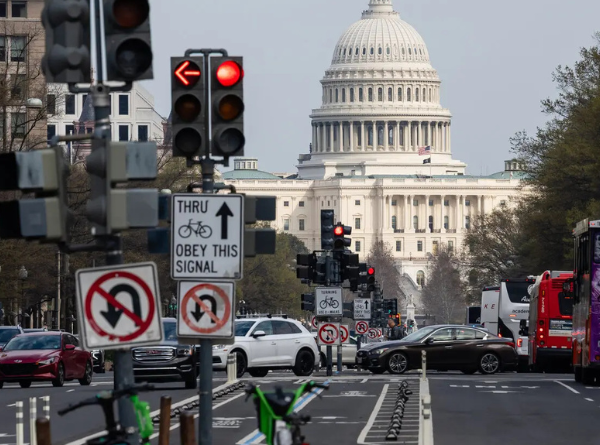
Senate DHS Funding Deal Reaches Breakthrough Amid Shutdown
The Senate DHS funding deal has finally moved forward after weeks of political deadlock, marking a major turning point in the 2026 partial government shutdown that disrupted key U.S. security agencies.
In a dramatic shift, the U.S. Senate approved legislation to fund most of the Department of Homeland Security (DHS), while excluding Immigration and Customs Enforcement (ICE)—the central issue that had stalled negotiations for over a month.
The agreement represents a fragile compromise between Democrats and Republicans, but it also sets the stage for a broader political battle over immigration enforcement in the months ahead.
What the Senate DHS Funding Deal Includes
The newly approved measure restores funding to several critical DHS components, including:
- Transportation Security Administration (TSA)
- U.S. Coast Guard
- Federal Emergency Management Agency (FEMA)
However, the most controversial element of the bill is what it leaves out.
ICE and parts of Customs and Border Protection (CBP) were deliberately excluded, reflecting ongoing disagreements about how immigration enforcement should be conducted.
This selective funding approach allowed lawmakers to move forward without resolving the deeper ideological divide.
Why ICE Funding Became the Central Issue
At the heart of the standoff was a growing controversy over immigration enforcement policies.
Senate Democrats refused to support a full DHS funding bill unless new restrictions were imposed on ICE operations. These demands included:
- Mandatory body cameras for agents
- Limits on enforcement in sensitive locations like schools and churches
- Stronger oversight and accountability measures
These proposals were driven in part by public outrage following incidents involving federal agents earlier in the year.
Republicans, however, rejected these conditions, arguing they would weaken law enforcement and national security.
As a result, ICE funding became the key obstacle—effectively triggering the shutdown.
A Shutdown That Disrupted National Security Operations
The DHS shutdown, which began in mid-February, had wide-ranging consequences across the United States.
Although many DHS employees are classified as essential and continued working, they did so without full pay, leading to:
- Staff shortages at airports
- Long security lines
- Financial hardship for workers
More than 400 TSA officers reportedly left their jobs during the shutdown, worsening delays and operational strain.
In response, emergency measures were introduced, including the temporary use of ICE agents to assist airport security—despite concerns about training and effectiveness.
The situation underscored how deeply interconnected DHS agencies are—and how political gridlock can quickly impact everyday life.
Trump Administration’s Emergency Actions
As the shutdown dragged on, President Donald Trump took unilateral action to address the growing crisis.
He authorized emergency payments to TSA workers, citing national security concerns and increasing travel disruptions.
While this move provided temporary relief, it did not resolve the broader funding issue.
The administration also pushed for additional legislation, including unrelated policy priorities, further complicating negotiations and delaying a comprehensive agreement.
Political Fallout: Who Won the Deal?
The Senate DHS funding deal has been framed differently by each political party.
Democratic Perspective
Democrats have portrayed the agreement as a victory because it:
- Forces a separation between general DHS funding and immigration enforcement
- Denies immediate funding for ICE without reforms
- Highlights accountability concerns
Republican Perspective
Republicans, meanwhile, argue that:
- The deal fails to address border security challenges
- It weakens enforcement capabilities
- It sets a precedent for politicizing essential government funding
Despite these competing narratives, analysts suggest that neither side achieved a complete victory.
Instead, the agreement reflects a temporary truce in a much larger conflict.
A Temporary Fix, Not a Final Solution
While the Senate vote represents progress, it does not fully resolve the crisis.
The bill must still pass the House of Representatives and be signed into law before the shutdown officially ends.
Even then, the exclusion of ICE funding ensures that the debate will continue.
Republicans are already exploring alternative strategies, including:
- Passing ICE funding through reconciliation
- Introducing separate enforcement-focused legislation
Meanwhile, Democrats are expected to continue pushing for reforms tied to any future funding agreements.
Broader Implications for U.S. Immigration Policy
The fight over the Senate DHS funding deal reflects a deeper transformation in U.S. immigration politics.
Traditionally, DHS funding bills were considered must-pass legislation with bipartisan support. However, recent events have shifted that dynamic.
Now, immigration enforcement policies are increasingly tied to budget negotiations, turning funding bills into battlegrounds for broader ideological debates.
This shift has several implications:
- Increased risk of future shutdowns
- Greater uncertainty for federal agencies
- Heightened political polarization
It also signals that immigration policy will remain a central issue heading into upcoming elections.
The Human Impact of the Shutdown
Beyond politics, the shutdown has had real consequences for workers and citizens.
TSA employees, Coast Guard personnel, and other DHS staff faced weeks of financial uncertainty, with some reportedly struggling to pay bills or meet basic needs.
Travelers also felt the effects, experiencing longer wait times and reduced service quality at airports.
These impacts highlight the human cost of political gridlock—an aspect often overshadowed by partisan debates.
What Happens Next?
With the Senate’s approval, attention now shifts to the House and the White House.
If the bill is passed and signed into law:
- Most DHS operations will resume normal funding
- TSA workers will receive stable pay
- Airport disruptions are expected to ease
However, the unresolved ICE funding issue means that the broader conflict is far from over.
Future negotiations could determine:
- Whether ICE receives funding
- What reforms, if any, are implemented
- How immigration enforcement evolves under current policies
Why This Moment Matters
The Senate DHS funding deal is more than just a budget agreement—it is a reflection of the current political climate in the United States.
It shows how:
- Policy disagreements can halt essential government functions
- Immigration remains one of the most divisive issues in American politics
- Compromise, while possible, often comes with significant trade-offs
Ultimately, the deal may end one chapter of the shutdown—but it opens another in the ongoing debate over the future of U.S. immigration enforcement.