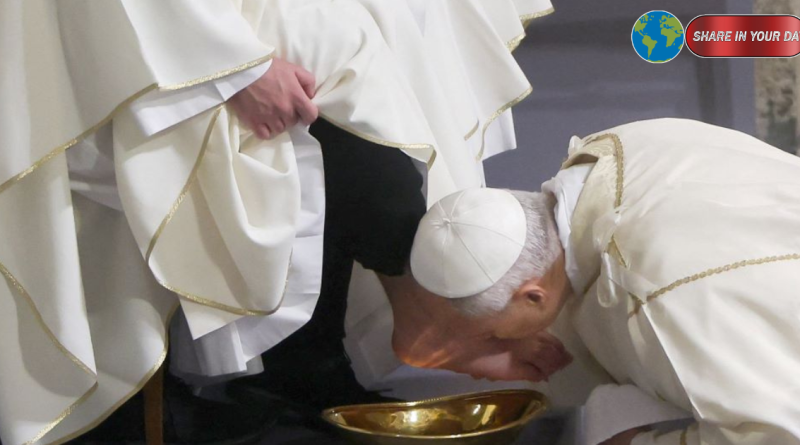
Pope Leo Holy Thursday Shift: A Return to Tradition
The Pope Leo Holy Thursday celebration has drawn global attention after the new pontiff made a decisive move that signals a shift in direction for the Catholic Church. In his first Holy Thursday as pope, Pope Leo XIV revived a more traditional form of the ritual, departing from the widely recognized practices of his predecessor, Pope Francis.
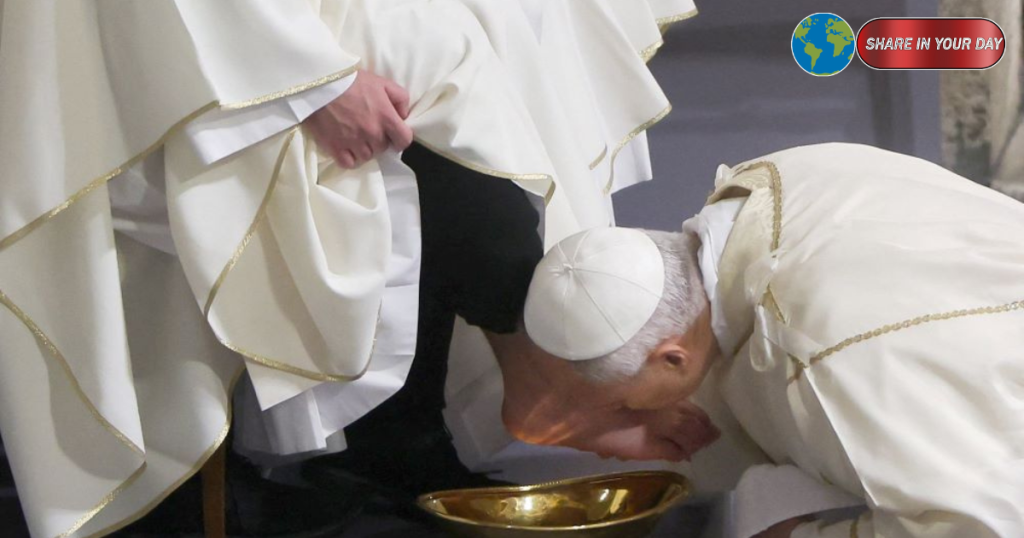
The change was immediately noticeable. Instead of visiting prisons or marginalized communities—as Francis did for over a decade—Leo chose to celebrate the Mass of the Lord’s Supper at Rome’s cathedral and wash the feet of priests.
This moment is more than symbolic. It reflects a broader shift in tone, priorities, and liturgical emphasis at the Vatican.
What Happened on Holy Thursday?
During the Pope Leo Holy Thursday Mass, the pontiff presided over the traditional liturgy at the Basilica of St. John Lateran, the official cathedral of the Bishop of Rome.
Archbasilica of St. John Lateran
There, he performed the ancient ritual of washing the feet of 12 priests—most of whom he had personally ordained.
This ritual commemorates Jesus Christ’s act of humility during the Last Supper, when he washed the feet of his apostles.
Unlike recent years, the ceremony was centered on clergy rather than a diverse group of participants. This marked a clear departure from the inclusive approach that had defined the previous papacy.
1. A Return to Pre-Francis Era Practices
The most striking element of the Pope Leo Holy Thursday celebration is its resemblance to pre-2013 traditions.
For decades, popes typically conducted the Holy Thursday liturgy in Rome’s cathedral and washed the feet of priests. That changed under Pope Francis, who intentionally moved the ritual outside the Vatican to emphasize service to marginalized groups.
Francis famously washed the feet of:
- Prison inmates
- Refugees
- Women
- Non-Christians
However, Pope Leo XIV has now restored the earlier format, focusing once again on clergy within the Church hierarchy.
This decision signals a renewed emphasis on institutional tradition and continuity.
2. A Shift Away From Symbolic Outreach
Under Pope Francis, Holy Thursday became one of the most visible examples of the Church’s outreach mission. His decision to visit prisons and shelters sent a powerful message about humility and inclusion.
By contrast, the Pope Leo Holy Thursday approach appears more inward-facing.
While Leo still emphasized compassion in his homily—urging Catholics to support the oppressed—his choice of setting and participants reflects a different pastoral priority.
Rather than highlighting marginalized communities directly, he focused on strengthening the role of priests within the Church.
This shift has sparked debate among observers:
- Some see it as a return to stability and tradition
- Others view it as a step away from Francis’ reformist vision
3. Strong Support for the Priesthood
A central theme of the Pope Leo Holy Thursday Mass was support for clergy.
By washing the feet of priests—many newly ordained—Leo underscored the importance of the priesthood in Catholic life.
He also dedicated his April prayer intention to priests, encouraging Catholics worldwide to:
- Pray for clergy
- Show understanding toward their challenges
- Support them in their ministry
This focus reflects a broader effort to reinforce the identity and mission of priests at a time when many face increasing pressures, including declining vocations and public scrutiny.
4. A Symbolic Break With Pope Francis’ Legacy
The contrast between Pope Leo XIV and Pope Francis is unavoidable.
Pope Francis reshaped Holy Thursday into a powerful symbol of inclusivity and social justice. His actions often challenged traditional norms, such as including women and non-Catholics in the foot-washing ritual.
In contrast, Pope Leo XIV has taken a more traditional approach—at least in this instance.
However, it would be overly simplistic to frame this as a complete rejection of Francis’ legacy. In other areas, Leo has shown continuity, including support for certain pastoral reforms.
Still, the Holy Thursday decision highlights a clear stylistic and symbolic divergence between the two pontificates.
5. What This Means for the Future of the Church
The Pope Leo Holy Thursday shift may offer early clues about the direction of his papacy.
A Balance Between Tradition and Modernity
Leo appears to be navigating a middle path—respecting tradition while addressing contemporary challenges.
Re-centering the Clergy
His focus on priests suggests a renewed emphasis on strengthening the Church from within.
A Different Style of Leadership
Where Francis prioritized bold, outward gestures, Leo may favor:
- Liturgical continuity
- Institutional stability
- Gradual change
These differences could shape how the Church engages with global issues in the coming years.
Global Reaction and Interpretation
The reaction to the Pope Leo Holy Thursday decision has been mixed.
Supporters argue that:
- Tradition provides stability in uncertain times
- The priesthood deserves renewed attention
- The move restores historical continuity
Critics, however, suggest that:
- The Church risks losing its emphasis on inclusivity
- Symbolic outreach to marginalized communities may decline
- The shift could signal a more conservative direction
Despite differing opinions, most observers agree that the decision is highly significant.
The Broader Context: Holy Week Under Pope Leo
This Holy Thursday Mass is part of Pope Leo XIV’s first Holy Week as pontiff—a crucial moment that sets the tone for his leadership.
Other notable developments include:
- Leading major Vatican liturgies
- Emphasizing unity and tradition
- Preparing for global Easter celebrations
Holy Week is the most sacred period in the Christian calendar, and the pope’s actions during this time carry deep symbolic weight.
Understanding the Foot-Washing Ritual
To fully grasp the significance of the Pope Leo Holy Thursday shift, it is important to understand the ritual itself.
The washing of feet:
- Originates from the Gospel account of the Last Supper
- Symbolizes humility and service
- Is traditionally performed by clergy
While the ritual has always been meaningful, recent popes have used it to convey different messages.
- Pre-Francis: Focus on clergy
- Francis: Focus on marginalized groups
- Leo XIV: Return to clergy-centered tradition
This evolution highlights how liturgical practices can reflect broader theological priorities.
Final Thoughts
The Pope Leo Holy Thursday celebration marks a defining moment early in the pontificate of Pope Leo XIV.
By returning to a more traditional format, he has:
- Reaffirmed the importance of Church tradition
- Highlighted the role of priests
- Signaled a distinct leadership style
At the same time, the decision raises important questions about the future direction of the Catholic Church and how it balances tradition with outreach.
As the world watches, one thing is clear: Pope Leo XIV’s choices—starting with Holy Thursday—are already shaping the next chapter of Catholic history.