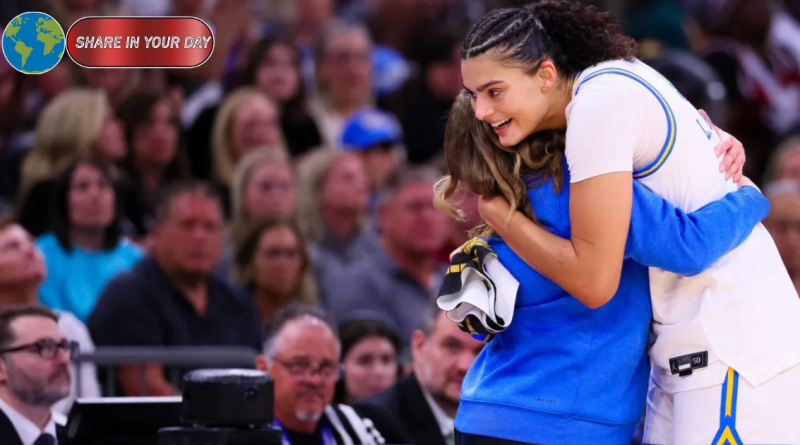
Cori Close UCLA Win: Powerful Slow Game Strategy Defines Championship
The Cori Close UCLA Win in the 2026 NCAA Women’s Basketball Championship was not just a victory—it was a statement about identity, discipline, and doing things differently in modern basketball.
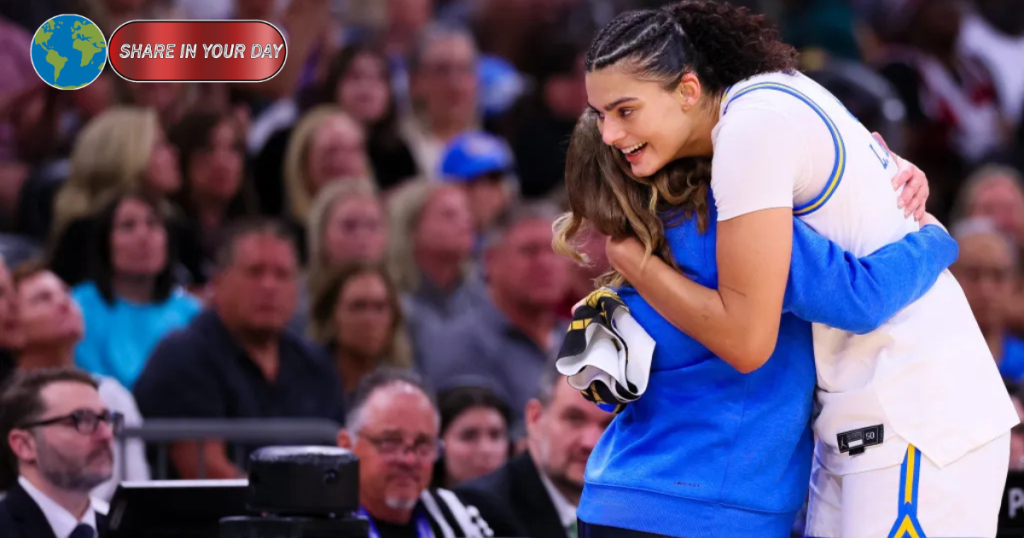
In an era dominated by speed, transition offense, and high-tempo play, UCLA chose a different path. They slowed the game down, controlled every possession, and ultimately overwhelmed South Carolina in a dominant 79-51 win to secure the program’s first NCAA title.
This was not luck. It was philosophy. And it worked perfectly.
Winning at Their Own Speed
The defining theme of the Cori Close UCLA Win was simple: UCLA refused to play anyone else’s game.
South Carolina entered the matchup with a reputation for speed and disruption. Their strategy relied on pushing tempo, forcing turnovers, and creating chaos in transition.
UCLA did the opposite.
Instead of trying to match pace, the Bruins slowed everything down. Their half-court offense revolved around precision, patience, and execution—particularly through star center Lauren Betts.
Every possession was deliberate. Every movement had purpose.
And most importantly, every moment favored UCLA.
Control Over Chaos: Tactical Brilliance
Basketball often rewards speed, but control can be even more powerful.
The Cori Close UCLA Win demonstrated how controlling tempo can dismantle even the most aggressive opponents.
Whenever South Carolina attempted to accelerate the game, UCLA responded by resetting, reorganizing, and dictating the next sequence.
A key moment highlighted this perfectly:
- South Carolina pushed in transition
- UCLA intercepted the play
- Instead of rushing, they calmly set up offense
- The result: a clean three-pointer
This sequence encapsulated the entire game. UCLA didn’t just defend—they redirected momentum.
Dominating the Fundamentals
Beyond tempo, UCLA excelled in the fundamentals—the often overlooked details that decide championships.
The Bruins:
- Outrebounded South Carolina 49-37
- Controlled the paint with a 40-28 scoring advantage
- Executed efficiently in half-court sets
These are not flashy statistics, but they are decisive ones.
South Carolina, a program known for physical dominance, was beaten at its own strengths. That’s what made the Cori Close UCLA Win so remarkable.
Lauren Betts: The System’s Centerpiece
At the heart of UCLA’s system was Lauren Betts, whose presence defined both offense and defense.
Standing 6-foot-7, Betts gave UCLA a consistent advantage in the paint. She allowed the team to slow the game without sacrificing scoring efficiency.
Her performance throughout the tournament earned her Most Outstanding Player honors, solidifying her role as the anchor of this championship team.
But Betts was more than just a scorer.
She was the foundation of UCLA’s identity:
- A focal point for half-court offense
- A defensive anchor in the paint
- A stabilizing presence under pressure
A 15-Year Vision Realized
The Cori Close UCLA Win represents the culmination of a long-term vision.
Close, who became UCLA’s head coach in 2011, spent over a decade building the program step by step.
Her journey was not immediate.
Before this championship, UCLA experienced:
- Multiple Sweet 16 appearances
- An Elite Eight run
- A Final Four breakthrough
Each season added a layer of growth. Each setback reinforced the system.
Finally, in 2026, everything aligned.
Trusting the Process Over Trends
One of the most compelling aspects of the Cori Close UCLA Win is how it challenges modern basketball trends.
Today’s game often emphasizes:
- Faster pace
- Increased three-point shooting
- Transition-heavy offense
Close rejected that blueprint.
Instead, she built a team that prioritized:
- Efficiency over speed
- Positioning over chaos
- Execution over improvisation
This approach required discipline—and trust.
Players had to believe that slowing down would not put them at a disadvantage.
The championship proved it did the opposite.
A Defensive Masterclass
While UCLA’s offense controlled tempo, their defense sealed the victory.
South Carolina struggled to find rhythm from start to finish.
The Bruins:
- Limited scoring opportunities
- Forced inefficient shots
- Controlled defensive rebounds
South Carolina’s 51-point output marked one of its lowest scoring performances of the season.
This was not just good defense—it was strategic dominance.
The Psychology of Pace
Beyond tactics, the Cori Close UCLA Win also highlighted the psychological impact of tempo.
By slowing the game:
- UCLA reduced mistakes
- Increased confidence
- Frustrated their opponent
Meanwhile, South Carolina appeared increasingly uncomfortable.
Teams built on speed often struggle when forced to play slowly. UCLA exploited this perfectly.
A Complete Team Performance
While stars like Betts played a crucial role, UCLA’s victory was ultimately a team effort.
Multiple players contributed across all areas:
- Scoring
- Defense
- Rebounding
- Ball movement
This balance made UCLA difficult to defend and nearly impossible to disrupt.
It also reflected Close’s philosophy: success is built collectively, not individually.
Redefining Championship Basketball
The Cori Close UCLA Win may influence how future teams approach the game.
Key lessons include:
- Tempo control can outweigh speed
- Fundamentals still win championships
- Identity matters more than trends
As basketball continues to evolve, UCLA’s approach offers a powerful alternative blueprint.
What This Means for UCLA’s Future
Winning a national championship changes everything.
For UCLA, the impact of the Cori Close UCLA Win includes:
- Increased national recognition
- Stronger recruiting opportunities
- Elevated program expectations
However, sustaining success will be the next challenge.
With key players potentially moving on, Close will need to rebuild while maintaining the team’s identity.
Conclusion: A Championship on Their Own Terms
The Cori Close UCLA Win is more than a title—it is a lesson in staying true to a vision.
UCLA didn’t adapt to the game.
They reshaped it.
By slowing down, focusing on fundamentals, and trusting their system, the Bruins achieved something extraordinary: they won a national championship entirely on their own terms.
And in doing so, they proved that sometimes, the best way to win is not to go faster—but to go smarter.