Parkinson’s Gut Warning: Scientists Reveal Early Clues Years Before Symptoms
A groundbreaking new study has uncovered a powerful Parkinson’s gut warning that could transform how the disease is detected and prevented. Scientists now say that subtle changes in gut bacteria may signal the risk of Parkinson’s disease years—even decades—before traditional symptoms appear.
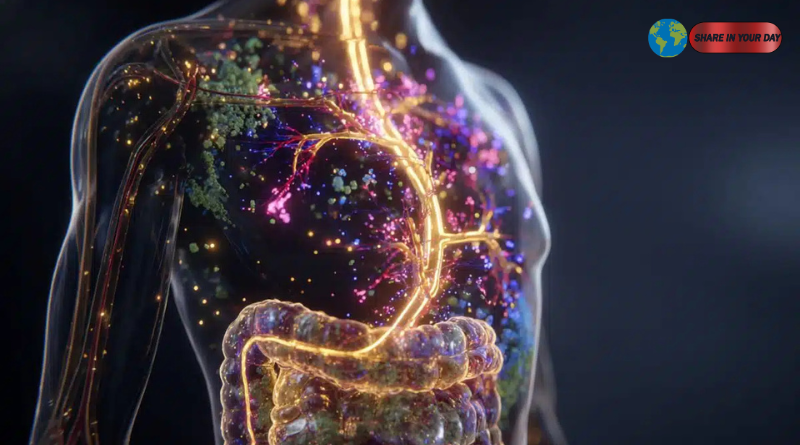
This discovery marks a major shift in understanding Parkinson’s, a progressive neurological disorder traditionally diagnosed only after visible symptoms such as tremors and stiffness begin. Instead of starting in the brain, growing evidence suggests the disease may originate in the gut.
A Hidden Warning System Inside the Gut
Researchers found that people with Parkinson’s share a distinct pattern of gut microbes—often referred to as a microbiome signature. This same pattern was also detected in individuals who carry genetic risk factors but have not yet developed symptoms.
In other words, the gut may act as an early warning system, silently revealing the disease long before it becomes clinically visible.
The study analyzed data from hundreds of participants across multiple countries and identified changes in more than 176 microbial species. These differences were consistent across populations, reinforcing the reliability of the findings.
Even more striking, a small number of otherwise healthy individuals also showed this microbial pattern—suggesting they may unknowingly be at risk.
How Parkinson’s May Start in the Gut
For decades, Parkinson’s disease has been viewed as a brain disorder. However, scientists are increasingly focused on the gut-brain axis—the communication network linking the digestive system and the brain.
The key suspect is a protein called alpha-synuclein. In Parkinson’s patients, this protein misfolds and forms toxic clumps that damage brain cells.
New evidence suggests this harmful process may begin in the gut. From there, the abnormal protein can travel to the brain through the vagus nerve, a major communication pathway between the two systems.
Researchers also found that certain gut bacteria may trigger inflammation, which in turn increases the production of this damaging protein. Over time, this chain reaction could lead to the neurological decline seen in Parkinson’s.
The Role of Genetics and Risk Factors
The study also examined individuals with a genetic mutation known as GBA1, which significantly increases the risk of Parkinson’s disease.
Interestingly, these individuals showed intermediate microbiome patterns—not fully healthy, but not yet at disease levels.
This finding strengthens the idea that gut changes occur early in the disease process, even before symptoms begin.
It also opens the door to identifying high-risk individuals and intervening sooner.
Diet: A Powerful Influence on Gut Health
One of the most practical implications of this research is the role of diet. Scientists observed clear differences in eating habits between people with healthy microbiomes and those with Parkinson’s-linked patterns.
Individuals with healthier gut bacteria tended to consume:
- More fiber-rich foods
- Fruits and vegetables
- Fish and legumes
Meanwhile, those with high-risk microbiome signatures were more likely to consume:
- Processed foods
- Saturated fats
- Low-fiber diets
These findings suggest that diet may play a crucial role in either protecting against or contributing to Parkinson’s risk.
Although diet alone may not prevent the disease, it could significantly influence how early it develops—or how severe it becomes.
Why Early Detection Changes Everything
Currently, Parkinson’s disease is usually diagnosed only after significant brain damage has already occurred. By that point, treatment options are limited to managing symptoms rather than stopping progression.
However, identifying a reliable Parkinson’s gut warning could change that entirely.
Early detection would allow doctors to:
- Monitor high-risk individuals
- Recommend lifestyle changes
- Develop preventive treatments
- Potentially delay or avoid disease onset
Researchers believe this could eventually lead to simple screening tools, such as stool tests or blood biomarkers, that detect Parkinson’s risk long before symptoms appear.
A Global Health Breakthrough
Parkinson’s disease is now the fastest-growing neurodegenerative disorder in the world, affecting more than 8.5 million people globally.
The discovery of a gut-based warning system could have enormous global impact.
Unlike expensive brain scans or invasive tests, microbiome analysis is relatively accessible and scalable. This makes it a promising tool for early diagnosis worldwide, including in lower-resource settings.
What Scientists Still Don’t Know
Despite the excitement, researchers caution that several questions remain unanswered.
For example:
- Does the gut microbiome cause Parkinson’s, or is it a result of early disease?
- Can altering gut bacteria truly prevent the condition?
- Which specific microbes play the biggest role?
While the current evidence is strong, more clinical trials are needed to confirm whether modifying the microbiome can stop or reverse disease progression.
The Future of Parkinson’s Prevention
This research represents a major step toward a future where Parkinson’s disease may be predictable—and potentially preventable.
Scientists are now exploring several promising directions:
- Probiotic or microbiome-targeted therapies
- Personalized nutrition plans
- Anti-inflammatory treatments
- Early screening programs
If successful, these approaches could shift Parkinson’s care from reactive treatment to proactive prevention.
Conclusion
The discovery of a Parkinson’s gut warning marks a turning point in neuroscience. By identifying changes in the gut microbiome years before symptoms appear, researchers have opened a new frontier in early detection and prevention.
While challenges remain, the implications are profound. The gut—once overlooked in neurological disease—may hold the key to stopping Parkinson’s before it even begins.
For millions at risk, that possibility offers something long missing in Parkinson’s research: hope.