Lyrid Meteor Shower 2026 Photos: 7 Stunning Views
The Lyrid meteor shower 2026 photos have captivated skywatchers worldwide, showcasing breathtaking celestial moments captured from both Earth and space. As one of the oldest recorded meteor showers, the Lyrids once again delivered a dazzling display, with photographers and even astronauts documenting the spectacle in remarkable detail.
Peaking in the early hours of April 22, 2026, the annual meteor shower lit up the night sky with fast-moving streaks of light—commonly known as “shooting stars.” These images not only highlight the beauty of the event but also demonstrate how far astrophotography has come in capturing fleeting cosmic phenomena.
What Makes the Lyrid Meteor Shower Special?
The Lyrid meteor shower is one of the oldest known celestial events, with observations dating back more than 2,700 years.
Each year, Earth passes through a trail of debris left behind by Comet Thatcher. When these tiny particles enter the atmosphere, they burn up due to intense heat and pressure, creating bright streaks across the sky.
In 2026, the event offered particularly favorable viewing conditions. The moon set early enough to provide darker skies, allowing observers to see up to 15–20 meteors per hour under ideal conditions.
However, beyond the numbers, it’s the rare, stunning visuals that truly define the Lyrids—especially when captured by skilled photographers.
1. A Meteor Meets the Northern Lights
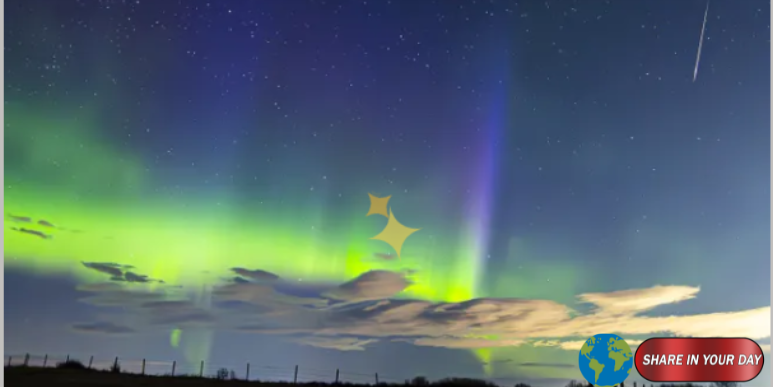
One of the most striking Lyrid meteor shower 2026 photos shows a meteor streaking across the sky alongside vibrant auroras in Alberta, Canada.
Captured by astrophotographer Harlan Thomas, the image combines two powerful natural phenomena: the green glow of auroras and the fiery trail of a meteor. The result is a surreal composition that feels almost otherworldly.
This rare alignment occurred due to heightened geomagnetic activity, which intensified the auroras at the same time the meteor shower was active.
2. Dual Light Show in the Night Sky
Another image from the same location features multiple layers of color—green and blue auroral lights illuminating the sky while a meteor cuts through the scene.
The contrast between the soft, flowing auroras and the sharp, fast-moving meteor highlights the dynamic nature of space events. It’s a reminder that the night sky is constantly changing, often in dramatic ways.
3. A Meteor Captured from Space
Perhaps the most extraordinary perspective comes from orbit.
Astronauts aboard the International Space Station managed to photograph a Lyrid meteor from space, offering a completely different viewpoint. Instead of looking up from Earth, the image shows a meteor streaking across the planet’s atmosphere from above.
From this vantage point, the curvature of Earth is visible, along with city lights glowing faintly below—adding a sense of scale and context to the fleeting meteor.
4. Long-Exposure Astrophotography Magic
Photographer Jeremy Cruz captured multiple meteors using a long-exposure technique with a mirrorless camera.
By taking repeated 10-second exposures, he was able to document several meteors over time, creating a composite view of the night sky.
This method is commonly used in astrophotography to capture events that occur too quickly for a single shot. It allows photographers to “stack” moments, revealing patterns that would otherwise go unnoticed.
5. Fireballs and Bright Streaks
While most Lyrid meteors are relatively faint, some appear as bright “fireballs.”
These larger fragments create more intense bursts of light, sometimes leaving glowing trails behind them. In 2026, several photographers managed to capture these rare moments, adding to the visual spectacle.
Fireballs are unpredictable, which makes photographing them especially rewarding—and challenging.
6. Earth-Based Perspectives from Dark Skies
Many of the best Lyrid meteor shower 2026 photos were taken far from city lights.
Dark-sky locations allow for clearer views of meteors, which can appear anywhere in the sky but originate from a point known as the radiant in the constellation Lyra.
Photographers often aim their cameras slightly away from this radiant to capture longer, more dramatic meteor trails.
7. The Perfect Timing Advantage
Timing played a crucial role in this year’s successful captures.
The meteor shower peaked in the predawn hours, when the radiant was higher in the sky and the moon had already set.
This combination created ideal conditions for both observation and photography, contributing to the abundance of stunning images shared online.
Why These Photos Matter
The Lyrid meteor shower 2026 photos are more than just beautiful images—they represent a growing intersection between science, technology, and art.
Modern cameras, combined with advanced techniques, allow both professionals and amateurs to capture events that were once nearly impossible to document.
These images also serve an educational purpose. They help scientists and enthusiasts better understand meteor behavior, atmospheric interaction, and the composition of space debris.
The Rise of Astrophotography
Astrophotography has become increasingly popular in recent years, thanks to advancements in camera technology and accessibility.
High-quality mirrorless cameras, powerful lenses, and even smartphones now enable users to capture the night sky with surprising clarity.
At the same time, social media platforms have made it easier to share these images globally, turning local observations into worldwide experiences.
Tips for Capturing Meteor Showers
Inspired by these incredible photos? Here are some tips for capturing your own meteor shots:
Choose a Dark Location
Avoid light pollution by heading to rural or remote areas.
Use a Tripod
A stable setup is essential for long-exposure photography.
Set Long Exposures
Use exposure times between 10–30 seconds to capture meteors.
Be Patient
Meteor photography often requires hours of waiting for the perfect shot.
Look Away from the Radiant
This increases your chances of capturing longer streaks.
The Science Behind the Spectacle
Meteor showers occur when Earth passes through streams of debris left by comets.
In the case of the Lyrids, the source is Comet Thatcher, which last passed near Earth in 1861 and won’t return for centuries.
As these particles enter Earth’s atmosphere, they burn up due to friction, producing the bright streaks we see as meteors.
A Global Event
The beauty of meteor showers lies in their accessibility.
Unlike eclipses or other rare events, meteor showers can be observed from many parts of the world, making them a shared global experience.
In 2026, observers from different continents contributed to the collection of stunning images, each offering a unique perspective.
Looking Ahead
While the Lyrid meteor shower occurs every year, each iteration is slightly different.
Factors such as moonlight, weather conditions, and debris density all influence visibility and intensity.
For those who missed the 2026 display, the Lyrids will return in 2027—offering another chance to witness and capture this celestial event.
Conclusion
The Lyrid meteor shower 2026 photos provide a stunning glimpse into one of nature’s most beautiful phenomena.
From aurora-lit skies in Canada to orbital views from space, these images highlight the incredible diversity of perspectives available today.
As technology continues to advance, we can expect even more breathtaking captures in the future—bringing us closer to the wonders of the universe than ever before.