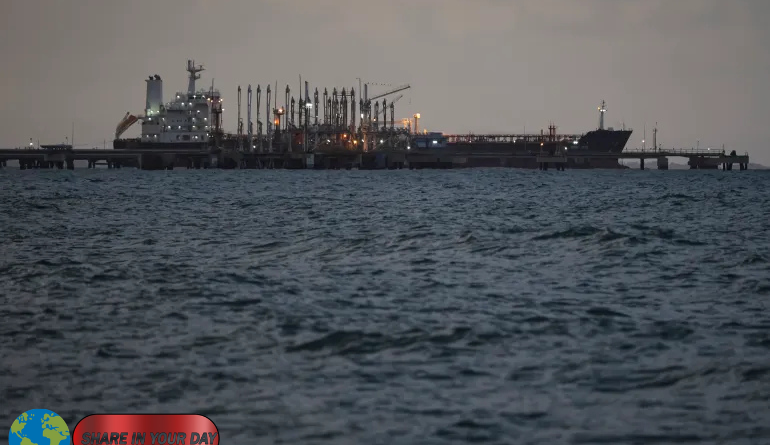
Venezuela Oil Deal Gives US Major Control of 65 Billion Barrels
The Venezuela oil deal announced by US President Donald Trump could dramatically reshape the energy relationship between Washington and Caracas. Trump says the agreement gives the United States majority control over more than 65 billion barrels of Venezuela’s proven oil reserves, calling it the “biggest oil deal in world history.”
The announcement marks a major shift in US policy toward Venezuela’s enormous petroleum industry. It also comes as Washington seeks more reliable crude supplies, lower fuel prices and greater energy security.
However, important details remain unclear.
Trump has not publicly explained exactly how the agreement will work, which oil fields are covered, which companies will participate or how the United States will exercise majority control. Reuters also reported that Venezuelan officials are preparing new agreements that could give companies exploration and production rights, particularly to US firms.
The scale of the announcement nevertheless makes the Venezuela oil deal one of the most significant energy developments of 2026.
What Is the Venezuela Oil Deal?
Trump announced the agreement on Friday, saying the United States had secured majority control of more than 65 billion barrels of proven Venezuelan oil reserves through a partnership involving private businesses.
According to Trump’s announcement, the arrangement would come at no cost to US taxpayers. Secretary of State Marco Rubio described the agreement as beneficial to both countries, saying it could provide stable, lower-cost oil to the United States while helping Venezuela attract investment and rebuild its economy.
The Venezuelan government also welcomed the agreement.
Interim President Delcy Rodríguez has argued that greater foreign investment could help revive Venezuela’s damaged oil industry, increase government revenues and create employment.
Reuters reported that Venezuelan officials expect roughly $100 billion in private investment under the broader plan. Rubio has also said the agreement could support thousands of jobs and contribute to Venezuela’s economic recovery.
Despite those claims, the exact legal and commercial structure of the deal remains one of its biggest unanswered questions.
Why 65 Billion Barrels Matters
Venezuela already possesses the world’s largest proven crude oil reserves.
The US Energy Information Administration estimates that Venezuela had approximately 303 billion barrels of proven crude oil reserves, making it the world’s largest holder of proven reserves.
That means the more than 65 billion barrels mentioned by Trump represent a substantial portion of Venezuela’s total reserves.
The figure also explains why the announcement has attracted global attention.
For Washington, access to Venezuelan crude could provide another source of heavy oil for US refiners. For Caracas, foreign capital could help repair aging infrastructure and increase production after years of economic problems, underinvestment and disruption.
But having enormous reserves does not automatically mean producing enormous amounts of oil.
Venezuela’s production capacity remains far below its historical potential. Reuters reported that the country was producing around 1.25 million barrels per day, despite its enormous reserves.
That gap is central to understanding the potential impact of the Venezuela oil deal.
Venezuela Oil Deal Could Transform the Country’s Energy Industry
Venezuela’s oil sector has suffered from years of declining investment, operational problems, political instability and infrastructure deterioration.
The country’s most important reserves are concentrated in areas such as the Orinoco Belt, where much of the crude is particularly heavy and requires specialized processing.
Increasing production therefore requires more than simply opening wells.
Oil companies need drilling equipment, pipelines, refineries, export terminals, electricity, skilled workers and substantial long-term investment.
The new agreement appears designed to encourage that investment.
Reuters reported that new exploration and production rights are expected to be granted to companies, particularly US firms. A lease-based structure has also been discussed, although legal and constitutional questions could complicate implementation.
If the investment arrives at the scale promised by officials, Venezuela could gradually increase oil production.
That process, however, is unlikely to happen overnight.
Investment Is the Key Challenge
The biggest question surrounding the Venezuela oil deal is not how much oil Venezuela has.
It is how quickly that oil can realistically be produced.
Years of underinvestment have damaged infrastructure across the Venezuelan petroleum sector. International investors have also faced concerns involving sanctions, political instability, property rights and regulatory uncertainty.
The Trump administration is betting that a new political and commercial framework can change that calculation.
American energy companies could be given stronger incentives to invest in Venezuelan fields. In return, the United States would gain greater access to Venezuelan crude.
For Venezuela, the objective is clear: turn underground reserves into economic growth.
For the United States, the goal is equally strategic: secure additional oil supplies while strengthening American influence over one of the world’s most important energy-producing countries.
Trump Says the Deal Could Lower US Gas Prices
The Venezuela oil deal also has an important domestic political dimension for Trump.
The president has repeatedly focused on energy prices and has argued that greater oil supply can eventually reduce gasoline costs for American consumers.
Rubio said the agreement would secure stable, low-cost oil for the United States and help reduce petrol prices.
The logic is straightforward.
More reliable crude supplies can potentially improve the balance between supply and demand. Greater Venezuelan production could also provide US refiners with additional access to heavy crude that is compatible with some existing refinery infrastructure.
But there is a major limitation.
Even if Venezuela increases production, building new capacity takes time.
Oil fields cannot be rapidly expanded simply because a political agreement has been signed. New drilling, equipment, pipelines and processing facilities can require years of planning and construction.
That means American consumers should not necessarily expect an immediate drop in gasoline prices because of the announcement.
The deal could become important for US energy security over the longer term, but its short-term effect remains uncertain.
US Control Does Not Mean America Owns All Venezuelan Oil
One of the most important distinctions in the announcement is the difference between control and ownership.
Trump said the United States would obtain majority control over more than 65 billion barrels of proven reserves.
That does not necessarily mean the US government will directly own those reserves.
Venezuela has historically maintained state control over its petroleum resources. The agreement appears to involve partnerships with private companies and new rights for exploration and production rather than a straightforward transfer of ownership to Washington.
The lack of details has therefore generated questions about what “majority control” actually means.
The White House and Venezuelan officials will likely need to clarify issues including ownership, revenue sharing, operating rights, taxation, investment obligations and the duration of contracts.
Until those details become public, the announcement should be understood as a major framework rather than a fully transparent blueprint for the future of Venezuela’s oil sector.
Venezuela Could Receive Billions in Investment
For Caracas, the potential economic benefits are enormous.
Rubio said the agreement could generate nearly $100 billion in private investment, support thousands of high-paying jobs and help rebuild Venezuela’s economy.
Venezuelan officials have also pointed to large potential tax revenues.
That money could be critical for a country whose economy has been deeply affected by years of political and financial turmoil.
An expanded oil industry could provide revenue for infrastructure, public services and industrial development.
It could also help Venezuela reconnect with international energy markets.
But the government faces a difficult balancing act.
It needs foreign capital and technical expertise without losing control over its strategic natural resources. At the same time, investors need sufficient legal protections to justify putting billions of dollars into a country with a long history of political and economic instability.
The success of the Venezuela oil deal will therefore depend heavily on how those competing interests are resolved.
Legal Questions Could Threaten the Deal
The announcement has already raised questions about Venezuela’s legal framework.
Reuters reported that the proposed arrangement could face legal and constitutional challenges because Venezuela’s state has historically maintained control over core activities in the oil industry.
That could become one of the most significant obstacles to implementation.
Even a politically supported agreement needs a legal mechanism that companies can rely on.
Investors will want clarity on contracts, taxation, arbitration, ownership rights and the ability to repatriate profits. They will also need assurances that future governments cannot easily cancel agreements.
Without those guarantees, promised investment could arrive more slowly than Trump and Venezuelan officials expect.
Venezuela Oil Deal Raises Geopolitical Stakes
The agreement is about more than oil.
Venezuela’s enormous petroleum reserves have long made the country strategically important to major powers.
Greater US involvement could strengthen Washington’s influence in South America and reduce the space available to rival powers seeking economic or political relationships with Caracas.
It could also change the balance of energy influence across the Western Hemisphere.
For Washington, Venezuela offers something that few other countries can match: enormous reserves located relatively close to the United States.
For Caracas, closer economic ties with Washington could provide access to capital and technology that are essential to rebuilding its petroleum industry.