All-Female Spacewalk: 6th Historic ISS Mission
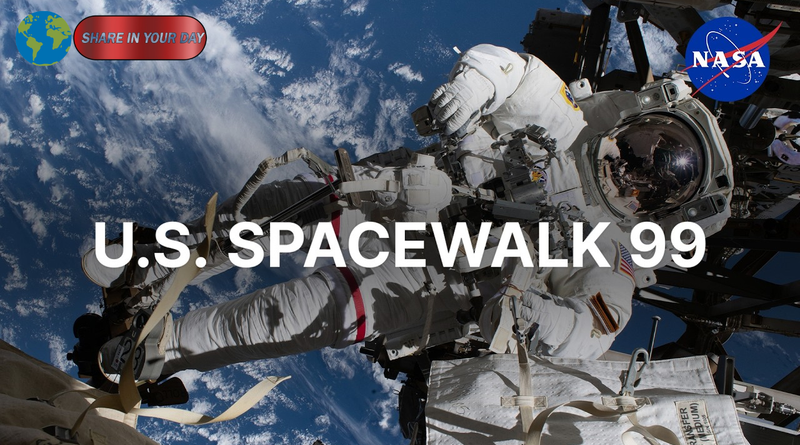
An all-female spacewalk made history on Sept. 1, 2026, when NASA astronaut Jessica Meir and European Space Agency astronaut Sophie Adenot ventured outside the International Space Station for a demanding maintenance and science mission. The historic excursion lasted 6 hours and 49 minutes and became the sixth all-female spacewalk in history.
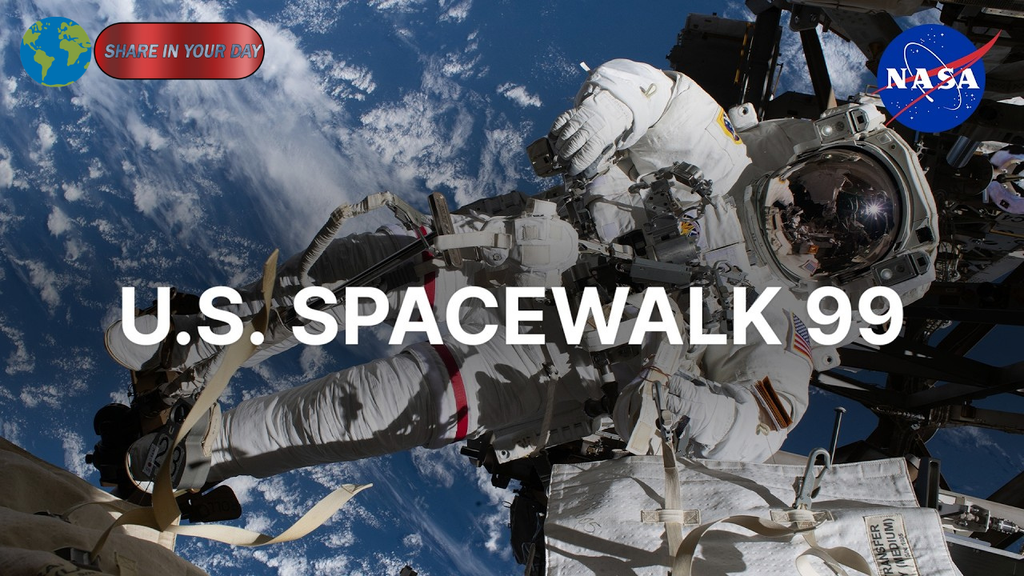
The mission combined routine station maintenance with work designed to support future spacecraft operations and scientific research. Meir and Adenot replaced a navigation aid on the station, installed and relocated hardware, replaced a high-definition camera, and prepared the Alpha Magnetic Spectrometer for future maintenance.
NASA later confirmed that the astronauts completed the spacewalk at 3:29 p.m. EDT. Although several planned tasks had to be deferred, the mission successfully accomplished several of its most important objectives. NNASA
All-Female Spacewalk Makes History
The Sept. 1 mission was the sixth spacewalk in history performed entirely by women.
Meir and Adenot began their excursion from the International Space Station’s Quest airlock at 8:40 a.m. EDT. NASA had initially expected the spacewalk to last approximately six and a half hours. Instead, the astronauts remained outside for 6 hours and 49 minutes. NNASA+1
For Meir, the mission was her seventh spacewalk. Adenot completed her third. The milestone also added another significant chapter to the growing record of women performing complex extravehicular activities in orbit.
NASA reported that Meir now ranks third among the agency’s women astronauts for total number of spacewalks. She trails Peggy Whitson and Suni Williams in the number of completed EVAs. NNASA
The mission was also the 284th spacewalk supporting the International Space Station’s assembly, maintenance and upgrades.
Jessica Meir and Sophie Adenot Lead the Mission
Jessica Meir represented NASA during the historic operation, while Sophie Adenot represented the European Space Agency.
The two astronauts had prepared extensively for the demanding mission. Before launch day, they practiced procedures, checked their spacesuits and reviewed the sequence of activities they would perform outside the orbital laboratory.
NASA had assigned the astronauts several objectives. The most important involved replacing a retroreflector on the forward port of the station’s Harmony module.
The device plays an important role in spacecraft navigation. Visiting spacecraft can use the retroreflector to support rendezvous and docking operations with the station.
The replacement was necessary because the previous reflector had accumulated residue from spacecraft thruster activity. Replacing it helps maintain the station’s navigation infrastructure for future arrivals and departures. SSpace+1
Key Work Completed During the Spacewalk
The all-female spacewalk was about much more than setting a historical record.
Meir and Adenot were responsible for several practical maintenance and science-related tasks.
Among the most important accomplishments was the replacement of the station’s navigation reflector. The astronauts also replaced Camera Port 3, a high-definition camera mounted on the station’s truss.
The camera replacement was successfully completed after Meir removed the older camera assembly and installed its replacement. The operation was met with applause from mission control at NASA’s Johnson Space Center in Houston. SSpace
The astronauts also worked with jumper cables associated with the station’s electrical and data-relay systems. Some of this work was completed, while remaining tasks were deferred for a future spacewalk.
Another major objective involved the Alpha Magnetic Spectrometer, or AMS.
The AMS is a large scientific instrument mounted outside the International Space Station. It studies cosmic particles and helps scientists investigate fundamental questions about the universe, including the nature of cosmic rays and possible evidence related to dark matter.
During the spacewalk, Meir worked near the AMS and performed preparation work for future maintenance. NASA said the astronauts also began preparing the instrument’s radiator for a later replacement operation. NNASA
A Spacewalk With a Technical Challenge
Although the mission was successful, the astronauts encountered a technical issue near the end of the EVA.
Sophie Adenot experienced reduced mobility in her left shoulder while wearing her spacesuit.
Mission Control responded cautiously. Adenot was instructed to remain in position while Meir moved toward her and examined the problem.
Meir inspected Adenot’s spacesuit after the astronauts returned toward the Quest airlock. NASA reported that the issue appeared to involve the glove heater harness becoming caught in the area around the suit’s shoulder joint.
By opening part of the suit assembly, Meir was able to free the obstruction. Adenot’s mobility improved, allowing the astronauts to continue their return into the airlock. NNASA
The incident highlights one of the major challenges of spacewalking. Astronauts are not simply working in an unusual environment. They are operating inside highly complex spacesuits that must protect them from vacuum, extreme temperatures and other hazards while still allowing enough movement to perform delicate mechanical work.
Why the ISS Navigation Reflector Matters
One of the less visible but important accomplishments of the all-female spacewalk involved the replacement of the station’s retroreflector.
The component may not look as dramatic as a solar array or robotic arm, but it plays a crucial role in spacecraft operations.
The International Space Station regularly receives visiting spacecraft. These vehicles need precise navigation systems to approach and dock safely with the orbital laboratory.
The replacement reflector supports navigation during rendezvous and docking operations.
NASA described the task as one of the primary objectives of the Sept. 1 EVA. By completing it, Meir and Adenot helped maintain infrastructure that supports the station’s continuing operations. NNASA
The Importance of the Alpha Magnetic Spectrometer
The spacewalk also supported future work on the Alpha Magnetic Spectrometer.
The AMS is a particle-physics experiment attached to the exterior of the International Space Station. It observes cosmic rays and other high-energy particles that reach the station.
Scientists use data from the instrument to study the behavior of particles in space and investigate some of the most fundamental questions in physics.
Maintaining such equipment outside the station is challenging. Astronauts must work carefully while wearing bulky spacesuits and while attached to safety systems or operating from the station’s robotic arm.
During this mission, Meir helped prepare the AMS for future maintenance. NASA said some work on the instrument’s radiator was started, although remaining tasks will require a later spacewalk. NNASA
Some Tasks Were Deferred
Not every objective on the original checklist could be completed.
As the spacewalk progressed, the astronauts fell behind the planned timeline. Mission Control therefore moved some noncritical tasks to a future EVA.
NASA said the remaining guide studs associated with the AMS radiator replacement were deferred while engineers develop a plan for completing the work. Remaining jumper-cable work and other activities were also postponed. NNASA
This is normal for complex spacewalks.
Spacewalk schedules are carefully planned, but astronauts and mission controllers must constantly balance productivity with safety. A task that takes longer than expected can affect every activity that follows.
Rather than rushing, controllers can move lower-priority work to another spacewalk.
That approach was particularly important after Adenot experienced the spacesuit mobility issue.
A Major Milestone for Women in Space
The historical significance of the all-female spacewalk goes beyond the number six.
Women have played an increasingly important role in human spaceflight, science and space-station operations. Spacewalks require advanced technical knowledge, physical preparation and extensive teamwork.
The first all-female spacewalk took place in October 2019, when NASA astronauts Christina Koch and Jessica Meir exited the International Space Station together.
Meir’s return to an all-female EVA years later adds another notable chapter to that history.
This latest mission also featured Sophie Adenot, a European astronaut who has become an increasingly experienced spacewalker. ESA noted ahead of the mission that the Sept. 1 EVA would be Adenot’s third spacewalk and her first with Meir. EEuropean Space Agency
The growing frequency of women participating in EVAs reflects the broader expansion of astronaut crews and the increasingly international nature of space operations.
International Cooperation Remains Central to the ISS
The mission also demonstrated the international character of the International Space Station.
The ISS has long served as a platform where astronauts from different nations work together on scientific research, maintenance and exploration.
In this case, a NASA astronaut and an ESA astronaut worked side by side on the exterior of the station.
That partnership is particularly significant because spacewalks require close coordination. The astronauts must share tools, communicate with mission control and maintain awareness of one another’s location throughout the EVA.
The success of the mission therefore depended on more than the skills of two astronauts. It required support from flight controllers, engineers, suit specialists, scientists and other members of the ISS team.
What the Historic Spacewalk Means for the ISS
The International Space Station continues to require regular maintenance after decades in orbit.
Its exterior is exposed to the harsh conditions of space, including extreme temperature changes, radiation and the effects of repeated spacecraft activity.
Spacewalks allow astronauts to repair equipment, replace components and prepare the station for future upgrades.
The Sept. 1 mission was another example of this continuing effort.
The astronauts repaired and replaced hardware while also preparing scientific equipment for future work. Although several activities remain unfinished, the mission completed the highest-priority objectives identified for the EVA.
NASA’s official spacewalk records show that the station continues to host a steady series of EVAs dedicated to maintenance, research and upgrades. NNASA
Jessica Meir Adds Another Record to Her Spaceflight Career
The mission further strengthened Jessica Meir’s spacewalking record.
Her seventh EVA brings her total time outside the station to 49 hours and 22 minutes, according to Space.com’s post-mission report. That places her third among NASA’s women astronauts by number of spacewalks. SSpace
Meir has now participated in both historic and highly technical spacewalking operations.
Her first all-female EVA came in 2019 with Christina Koch. Her 2026 mission with Adenot demonstrates how much the role of women in spacewalk operations has continued to develop since that earlier milestone.
Sophie Adenot Continues Her Rapid Spacewalking Progress
For Sophie Adenot, the Sept. 1 mission was her third spacewalk.
The European astronaut had already completed two EVAs in August 2026 with NASA astronaut Anil Menon. Those missions focused on replacing a failed high-speed space-to-ground antenna outside the station. NNASA+1
Her third EVA therefore came only weeks after her first experiences working outside the station.
ESA reported that Adenot’s Sept. 1 spacewalk would be her third and would contribute to the continuing maintenance and upgrade program aboard the ISS. EEuropean Space Agency
The sequence demonstrates the intense operational tempo of the current station expedition.
The Sixth All-Female Spacewalk Is Now Complete
What began as a planned six-and-a-half-hour maintenance mission ultimately became a 6-hour-49-minute milestone for human spaceflight.
Jessica Meir and Sophie Adenot successfully completed the sixth all-female spacewalk, replaced critical station hardware and advanced preparations for future scientific maintenance.
The mission was not flawless. Some work had to be postponed, and a spacesuit mobility problem briefly complicated the final phase. Yet mission controllers responded conservatively, and the astronauts returned safely to the station.
The result is another successful chapter in the long history of International Space Station operations.
More importantly, the mission demonstrates that historic moments and practical space engineering can happen at the same time. While Meir and Adenot made history by becoming the sixth all-female spacewalking team, they were also carrying out the ordinary but essential work that keeps one of humanity’s most important laboratories operating in orbit.
The all-female spacewalk is therefore both a milestone and a reminder of how far human spaceflight has progressed — from the early days of space exploration to an era in which international teams of astronauts routinely work together hundreds of kilometers above Earth.