Volkswagen Job Cuts: 100,000 Roles by 2030
The Volkswagen job cuts announced this week have placed one of the world’s largest carmakers at the center of a historic restructuring. Volkswagen’s supervisory board has approved plans for another 50,000 workforce reductions, taking the company’s total planned job cuts to around 100,000 by 2030.
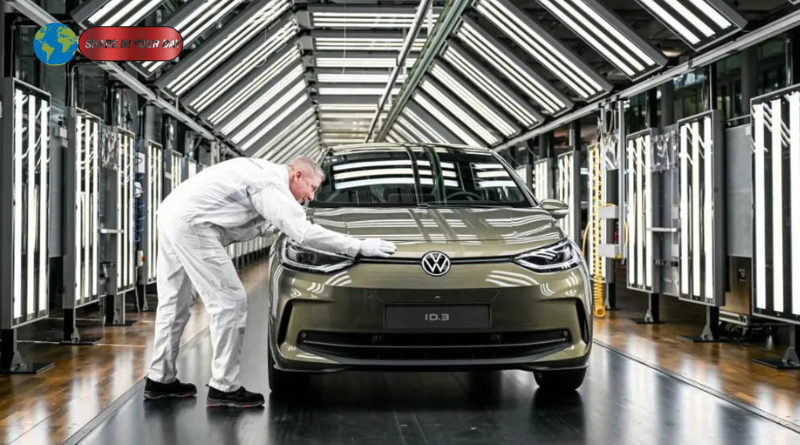
The decision marks a dramatic attempt by the German automotive giant to reduce costs and adapt to a rapidly changing global car market. Volkswagen is facing weaker demand in some major markets, pressure from Chinese manufacturers, U.S. tariffs and significant excess production capacity.
The company says its workforce must be adjusted to changing economic and technological conditions. At the same time, the restructuring is designed to make Volkswagen faster, leaner and more competitive.
The scale of the plan is enormous. Volkswagen employs more than 650,000 people worldwide, meaning the combined reduction represents roughly 15% of its global workforce.
Volkswagen Job Cuts Double the Planned Reduction
The latest announcement adds approximately 50,000 positions to cuts that had already been agreed.
Volkswagen had previously announced plans to reduce its workforce by roughly 50,000 positions by the end of the decade. The new Future Plan 2030 effectively doubles that figure.
The company has not provided a detailed breakdown showing exactly where every one of the additional positions will disappear. Management positions are included in the latest reduction plan.
Volkswagen’s board approved the broader transformation strategy unanimously, helping the company avoid an immediate confrontation with powerful employee representatives and other stakeholders.
The scale of the reduction reflects the pressure facing the group as it attempts to lower fixed costs while investing heavily in new technologies and products.
Volkswagen Chief Executive Oliver Blume has argued that significant changes are necessary to protect the company’s long-term competitiveness.
Why Is Volkswagen Cutting 100,000 Jobs?
Several forces are driving the Volkswagen job cuts.
The first is competition from China. Chinese carmakers have rapidly expanded their presence in electric vehicles and are increasingly competing with established European manufacturers on technology, pricing and speed of product development.
Volkswagen has also struggled with changing market conditions in China, historically one of its most important markets.
At the same time, demand for electric vehicles has not developed as quickly or consistently as many manufacturers expected. That has made it harder for traditional carmakers to recover the enormous costs associated with the transition from combustion engines to electric vehicles.
U.S. tariffs have added another layer of pressure.
Volkswagen is therefore trying to reduce expenses while reorganizing its global production network. Reuters described the Future Plan 2030 as an attempt to address tariffs, overproduction and increasingly aggressive Chinese competition.
Volkswagen Plans a Smaller Model Range
Jobs are not the only thing Volkswagen plans to cut.
Under its Future Plan 2030, the company intends to significantly reduce the complexity of its vehicle portfolio. Reuters reported that Volkswagen plans to reduce its model portfolio by approximately half and cut product complexity by around 75% by 2035.
That strategy is based on a relatively simple idea: build fewer versions of fewer vehicles and produce larger volumes of the models that remain.
A smaller lineup could reduce engineering, manufacturing, logistics and marketing costs.
It could also make production more efficient because factories would not have to support such a large number of different vehicle configurations.
For Volkswagen, the challenge will be deciding which models deserve continued investment.
The company operates a huge collection of brands, including Volkswagen, Audi, Porsche, Škoda and SEAT. Each brand serves different customers and markets, making the restructuring more complicated than a simple reduction in factory output.
Four German Plants Face an Uncertain Future
The restructuring also puts several Volkswagen facilities in Germany under pressure.
Four plants — Emden, Zwickau, Hanover and Audi’s Neckarsulm facility — face an uncertain production future as Volkswagen evaluates where vehicles should be built during the next decade.
However, it is important to distinguish between an uncertain future and an immediate factory closure.
Volkswagen has indicated that production allocations for some facilities could run out between 2031 and 2034. The company says it needs to develop competitive future production concepts for those sites.
The uncertainty highlights one of the biggest problems facing European automakers: excess manufacturing capacity.
Reuters reported that Volkswagen estimates European overcapacity at more than 500,000 vehicles.
If factories are operating below their potential, maintaining the same number of facilities and employees becomes increasingly expensive.
Volkswagen’s restructuring therefore aims not only to reduce workers but also to match manufacturing capacity more closely with future demand.
The Challenge From Chinese Carmakers
The Volkswagen job cuts cannot be separated from the broader transformation of the global automotive industry.
Chinese automakers have become increasingly competitive in electric vehicles. Companies from China have invested heavily in battery technology, software, manufacturing efficiency and affordable electric cars.
That creates a difficult situation for European manufacturers.
Traditional companies such as Volkswagen have decades of experience, huge factories and established dealer networks. But those advantages can also become expensive burdens when market conditions change quickly.
Chinese competitors have generally been able to move rapidly in areas such as electric vehicle development and software integration.
Volkswagen is attempting to respond by simplifying its organization and concentrating resources on products that can generate higher volumes and stronger returns.
Volkswagen Wants Higher Sales and Profitability
The restructuring is not simply about cutting costs.
Volkswagen has set ambitious targets for the end of the decade. Under its broader transformation strategy, the company wants to increase annual vehicle sales to around 9 million and achieve an operating margin of 9% by 2030.
Those goals illustrate the balancing act facing management.
Volkswagen needs to spend money on new vehicles, batteries, software, research and development. But it also needs to reduce the expenses associated with its existing structure.
The company has outlined plans for approximately €135 billion in capital expenditure and research and development between 2027 and 2031.
That means the company is not simply shrinking.
Instead, Volkswagen is attempting to redirect money and workers toward areas it believes will generate stronger returns.
What the Volkswagen Job Cuts Mean for Workers
For employees, however, the strategy carries enormous consequences.
A reduction of up to 100,000 positions represents thousands of families affected by changes in employment, production and investment decisions.
Volkswagen’s labor representatives have historically played an important role in the company’s governance. That makes major workforce reductions particularly sensitive.
The latest agreement helps avoid an immediate escalation between management and workers, but questions remain about how the reductions will be implemented.
Not every job cut necessarily means a traditional dismissal. Large industrial companies can reduce their workforce through retirement, voluntary departures, buyouts, transfers and the elimination of vacant positions.
Nevertheless, the overall direction is clear: Volkswagen expects to operate with significantly fewer employees by 2030.
A Major Turning Point for Germany’s Auto Industry
The scale of the Volkswagen job cuts also has implications beyond the company itself.
Volkswagen is deeply connected to Germany’s industrial economy. Its factories support large networks of suppliers, logistics companies, engineering firms and local businesses.
A reduction of tens of thousands of jobs could therefore have effects throughout the automotive supply chain.
Germany’s auto industry is already dealing with the transition from combustion engines to electric vehicles.
That transition changes the structure of manufacturing. Electric vehicles generally require different components and production processes than conventional cars.
Some traditional suppliers therefore face pressure to reinvent themselves while automakers reconsider where and how vehicles should be produced.
Volkswagen’s restructuring could become an important example of how Europe’s established manufacturers respond to those changes.
Volkswagen’s Global Strategy Is Also Changing
The company’s transformation extends beyond Germany.
Volkswagen is reassessing its strategy in North America and China while looking for opportunities in other international markets. Reuters reported that the company intends to focus on profitable segments in North America and adjust its approach to China.
That could lead to a more regional approach to vehicle development and production.
Instead of attempting to build the same products everywhere, Volkswagen could increasingly tailor vehicles and production strategies to specific markets.
Such a shift would represent a significant change for a company that has spent decades building a highly integrated global manufacturing system.
What Happens Next?
The next stage will be implementation.
Approving the Future Plan 2030 is only the beginning. Volkswagen must determine where the 50,000 additional positions will be removed, which models will disappear and how production will be redistributed.
The future of the four German plants will also require further decisions.
According to reports, Volkswagen is expected to develop more specific production plans for affected European factories in the coming years.
The company must also prove that reducing its workforce and model range will actually improve profitability.
That is not guaranteed.
Cost cutting can improve financial performance, but automakers also need attractive vehicles, competitive prices and successful technology strategies.
If Volkswagen cuts too aggressively without creating products customers want, the savings may not solve the underlying problem.
A New Era for Volkswagen
The Volkswagen job cuts are more than a workforce story. They represent a major strategic shift for one of the world’s most important automotive companies.
By planning to eliminate around 100,000 positions by 2030, Volkswagen is acknowledging that its traditional structure is no longer suited to the market it expects to face in the coming decade.
The company is responding to several challenges at once: Chinese competition, weak demand in key markets, tariffs, excess capacity, rising technology costs and the transition toward electric vehicles.
Its answer is a combination of fewer employees, fewer models, simpler operations and major investment in future technologies.
The strategy could make Volkswagen more competitive if management successfully directs its resources toward the right products and markets.
But the road ahead will not be easy.
For workers, communities and suppliers connected to Volkswagen, the restructuring will bring uncertainty. For the company itself, the next four years will determine whether the sweeping changes become a successful turnaround or simply another round of painful cost cutting.
One thing is already clear: Volkswagen’s decision to pursue 100,000 job reductions by 2030 signals one of the most dramatic transformations in the history of the global automotive industry.