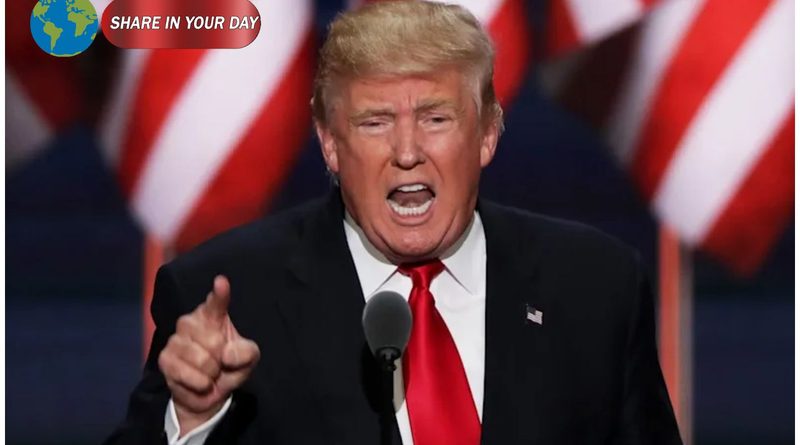
President Donald Trump has dramatically intensified pressure on the Federal Reserve, calling for a Trump Fed rate cut while threatening to stop trading with countries where the United States runs a trade deficit. The unusual warning comes just as new U.S. employment data showed the labor market was stronger than expected, potentially giving the Fed another reason to remain cautious about lowering borrowing costs.
Trump’s latest comments connect two areas of economic policy that are normally kept separate: monetary policy and international trade. The president argues that lower interest rates would strengthen the U.S. economy and improve the country’s competitive position.
However, economists and investors face a more complicated picture.
A trade halt could disrupt supply chains, increase prices and create additional inflationary pressure. At the same time, stronger employment can reduce the urgency for the Federal Reserve to cut rates.
That combination creates a potentially difficult policy dilemma for financial markets.
Trump Fed Rate Cut Demand Comes After Strong Jobs Report
Trump renewed his demand for lower interest rates after the release of the August employment report.
According to the U.S. Bureau of Labor Statistics, nonfarm payroll employment increased by 162,000 in August, while the unemployment rate remained unchanged at 4.1%. The monthly job gain was considerably higher than the average increase recorded during the previous 12 months. Bureau of Labor Statistics
Employment gains were particularly strong in food services and drinking places, which added 59,000 jobs. Local government education employment also increased by 42,000.
The report therefore provided evidence that the U.S. labor market retains significant momentum.
Read the official August 2026 jobs report from the U.S. Bureau of Labor Statistics
Normally, stronger employment would not be an obvious argument for immediately cutting interest rates.
The Federal Reserve has a dual mandate involving maximum employment and stable prices. When the economy is generating jobs at a healthy pace, policymakers have more room to concentrate on inflation rather than urgently supporting employment.
That is one reason Trump’s demand has attracted attention.
Why Trump Wants Lower Interest Rates
Trump has repeatedly argued that U.S. interest rates should be lower.
His basic argument is that expensive borrowing puts American companies and consumers at a disadvantage. Lower rates could reduce financing costs, encourage investment and potentially support economic growth.
The president has also argued that the United States should have among the world’s lowest interest rates.
But the Federal Reserve does not normally set monetary policy according to a president’s preferred economic strategy.
Instead, policymakers examine inflation, employment, economic growth, financial conditions and other indicators before deciding whether to raise, lower or maintain the federal funds rate.
The Fed’s most recent scheduled meeting is set for September 15-16, 2026. FFederal Reserve+1
That meeting will therefore be closely watched by investors.
Trump’s Trade Threat Raises the Stakes
The most dramatic element of Trump’s latest statement is his threat to stop trading with countries where the United States has a trade deficit unless the Fed lowers interest rates.
In his social-media post, Trump framed the measure as an alternative to tariffs, suggesting that stopping trade could potentially be more effective than imposing additional import duties. MMarketWatch
The threat is significant because the United States has trade deficits with numerous countries.
A policy that attempted to halt trade with every country where the U.S. runs a deficit would have consequences far beyond individual bilateral trade relationships.
American companies rely heavily on imported goods, components, raw materials and technology. Consumers also depend on global supply chains for everything from electronics and automobiles to clothing and household products.
A broad disruption could therefore create immediate economic uncertainty.
Internal Link Suggestion
Add an internal link here to your site’s article about U.S. tariffs and Trump’s trade policy.
The Inflation Problem Could Become Bigger
There is an important contradiction at the center of the Trump Fed rate cut debate.
Trump wants lower interest rates.
Yet a major disruption to international trade could increase prices.
When imported products become more expensive or unavailable, companies may have to find alternative suppliers. Those suppliers could have higher production costs.
Businesses may then pass some of those costs to consumers.
That could push inflation higher.
Higher inflation would make it more difficult for the Federal Reserve to justify aggressive rate cuts.
In other words, the policy sequence could potentially look like this:
Trade restrictions → supply disruption → higher prices → stronger inflation pressure → less room for Fed rate cuts.
That is precisely the kind of economic tension investors will be watching.
Strong Employment Gives the Fed Another Reason to Wait
The August employment data also complicates Trump’s argument.
The unemployment rate stayed at 4.1%, while payroll employment increased by 162,000. The BLS said the August increase was well above the average monthly gain of 31,000 during the previous year. BBureau of Labor Statistics
This does not automatically mean the Fed should raise interest rates.
However, it does suggest that the labor market is not showing the kind of sudden deterioration that would normally create an overwhelming case for emergency monetary easing.
Financial markets had already been reassessing the possibility of higher rates after recent economic developments.
That means Trump’s political pressure arrives at a particularly sensitive moment.
Kevin Warsh Faces a Critical Test
The Federal Reserve’s leadership adds another layer to the story.
Kevin Warsh is now chairing the central bank, having previously served as a Federal Reserve governor. His approach to monetary policy will be closely scrutinized as investors assess whether the Fed can maintain its independence while facing pressure from the White House.
Warsh has previously expressed support for the principle of Federal Reserve independence. During his confirmation process, he said monetary policymakers should act in the nation’s interest and emphasized the importance of independence in setting monetary policy.
That makes the current situation particularly significant.
If the Fed cuts rates, critics could argue that political pressure influenced the decision.
If the Fed refuses to cut, Trump could increase his criticism of the central bank.
Either outcome could produce questions about the relationship between the White House and the Federal Reserve.
See the Federal Reserve’s official monetary-policy information
What a Rate Cut Could Mean for Financial Markets
A genuine Trump Fed rate cut could initially be welcomed by parts of the financial markets.
Lower interest rates can reduce borrowing costs and make cash and short-term bonds relatively less attractive compared with risk assets.
Stocks, particularly companies that depend heavily on financing and future growth expectations, could benefit.
Real estate could also receive support because lower borrowing costs can improve affordability and encourage activity.
However, the market reaction would depend heavily on why the Fed cuts rates.
If investors believe the Fed is cutting because inflation is under control and economic growth remains healthy, markets could interpret the move positively.
But if investors believe the Fed is cutting because of political pressure, the response could be very different.
Investors might demand greater compensation for holding U.S. assets if they become concerned that monetary policy is losing independence.
That could put upward pressure on longer-term Treasury yields even while the central bank lowers short-term rates.
The Dollar Could Face a Complicated Reaction
The U.S. dollar could also become a major market indicator.
Normally, lower interest rates can reduce the attractiveness of dollar-denominated assets because investors may receive lower yields.
But a trade confrontation could generate conflicting forces.
Investors might seek the dollar as a safe-haven asset during periods of global uncertainty. At the same time, concerns about U.S. economic policy could weaken confidence in the currency.
Therefore, the dollar’s reaction would depend on how markets interpret the broader policy package.
A rate cut by itself could pressure the dollar.
A rate cut combined with aggressive trade restrictions could produce a much more unpredictable outcome.
Five Major Risks Investors Should Watch
The latest developments create at least five important risks.
1. Higher Inflation
Trade restrictions could raise import costs and create supply shortages. That could make it harder for the Fed to achieve its inflation objective.
2. Market Volatility
Uncertainty surrounding monetary policy and trade policy can increase volatility across stocks, bonds and currencies.
3. Damage to Fed Independence
If investors believe interest-rate decisions are being influenced by political demands, confidence in the central bank could suffer.
4. Global Trade Disruption
The United States is deeply integrated into the global economy. A broad trade halt could affect American companies as well as foreign exporters.
5. Higher Long-Term Borrowing Costs
Ironically, a short-term rate cut would not necessarily guarantee lower borrowing costs across the economy.
If investors become concerned about inflation, government debt or central-bank independence, longer-term Treasury yields could rise.
That would keep mortgages and other long-term borrowing costs elevated.
Why the Trade Deficit Is More Complicated Than It Looks
Another important point is that a trade deficit is not necessarily equivalent to an economic loss.
A country can import more goods and services than it exports while simultaneously receiving capital inflows and benefiting from access to lower-cost products.
For American consumers and businesses, imports can provide cheaper goods, specialized components and products that may not be efficiently produced domestically.
Therefore, simply eliminating a trade deficit does not automatically guarantee stronger economic growth.
The composition of trade matters.
So does productivity, investment, consumer demand and the flow of capital across borders.
That makes the president’s proposal considerably more complicated than a simple effort to reduce a single number.
What Happens Next?
The next major focus will be the Federal Reserve’s September meeting.
The FOMC is scheduled to meet on September 15 and 16. Investors will examine the committee’s decision, economic projections and communication for clues about the future path of interest rates. FFederal Reserve
Meanwhile, markets will continue monitoring inflation, employment and Treasury yields.
The political debate is unlikely to disappear.
Trump has made lower interest rates a recurring demand, while the Federal Reserve must balance economic growth against price stability.
The latest trade threat raises the stakes because it introduces another possible source of economic disruption.
Bottom Line
The Trump Fed rate cut debate is becoming much bigger than a disagreement over borrowing costs.
It now involves the independence of the Federal Reserve, the future direction of U.S. monetary policy, international trade and the credibility of American economic policy.
The strongest complication is that the president’s proposed trade response could potentially make the Fed’s job harder. Restricting trade may increase prices, while stronger employment could already reduce the urgency for lower rates.
For investors, the most important question may therefore not be simply whether the Fed cuts rates.
It is why the Fed cuts—and what markets believe the decision says about U.S. economic policy.
With the September FOMC meeting approaching, investors will be watching every signal from Washington and the Federal Reserve.
And if trade restrictions actually become part of the administration’s response to monetary policy, the consequences could extend well beyond interest rates, potentially reshaping expectations for inflation, the dollar, Treasury bonds and U.S. stocks.