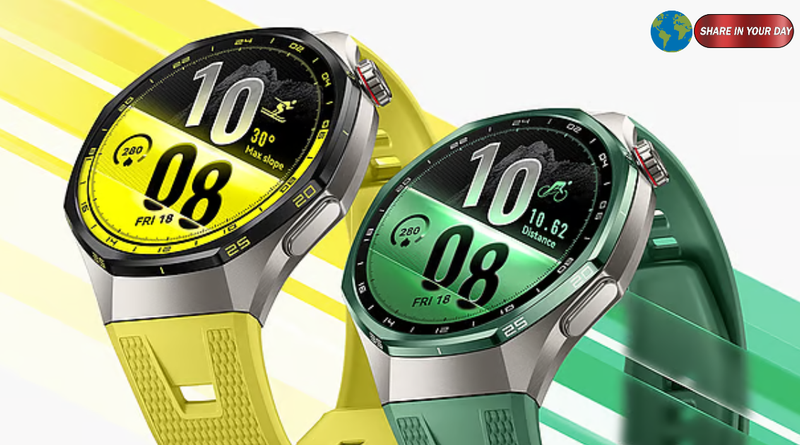
Huawei Watch GT 7 Puts Health Monitoring Front and Centre
The Huawei Watch GT 7 series is taking a major step into health-focused wearable technology, with Huawei highlighting new capabilities designed to help users identify potential risks associated with coronary heart disease and diabetes.
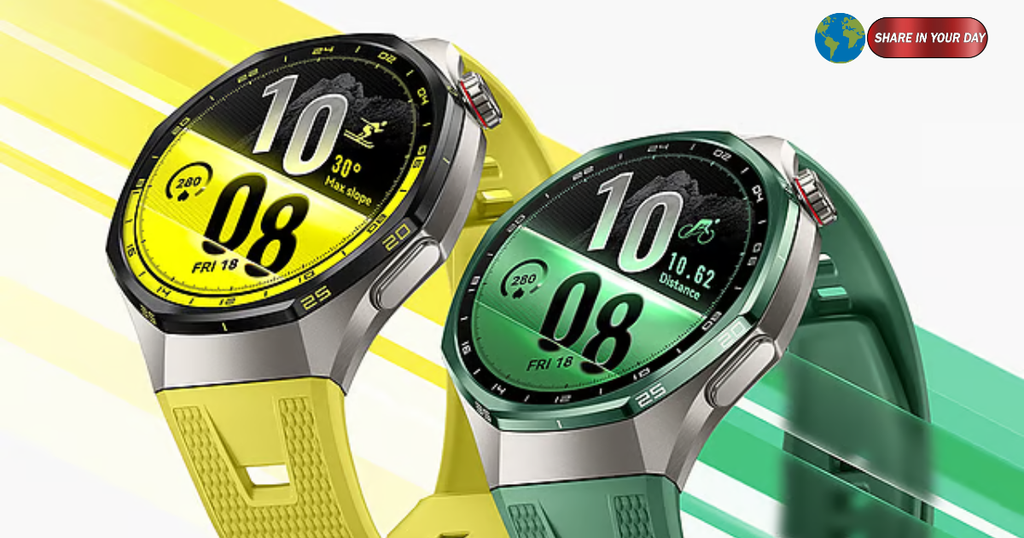
Huawei unveiled the new smartwatch range at its global “Chase the Wild” product launch in Munich, Germany. The event introduced a wider collection of devices, but the Watch GT 7 series stood out because of its combination of health monitoring, fitness tools, outdoor features and long battery life. GGulf News+1
The new health features reflect a broader shift in the smartwatch industry.
Modern wearables are no longer limited to counting steps or measuring heart rate during workouts. Companies are increasingly using sensors, algorithms and long-term health data to identify patterns that could encourage users to seek professional medical advice.
Huawei is pushing that concept further with its health research features.
However, there is an important distinction. The Huawei Watch GT 7 is not a medical device, and its health-risk assessments are not intended to replace professional diagnosis or treatment. Huawei explicitly describes the relevant studies as reference tools rather than definitive medical assessments. HHuawei Consumer
Huawei Watch GT 7 Adds Heart Disease Risk Assessment
One of the most notable additions to the Huawei Watch GT 7 is its focus on coronary heart disease risk.
Huawei says its wearable ecosystem can provide evaluation results through its Coronary Heart Disease Study. The feature is designed to help users become more aware of potential risk patterns rather than provide a clinical diagnosis. HHuawei Consumer
This is significant because cardiovascular disease remains one of the biggest areas of interest for wearable technology.
Traditional health assessments often depend on clinical appointments, laboratory testing and medical imaging. Smartwatches cannot replace those procedures, but they can collect health information regularly during everyday life.
That continuous stream of information may make it easier for users to notice changes.
Heart-rate measurements, activity levels, sleep patterns and other physiological signals can provide a broader picture of a person’s general health. Huawei is attempting to use that information to make health awareness more accessible through the wrist.
The company has already expanded similar health features across its wearable portfolio, including its Watch 6 and Watch 6 Pro. Huawei says those devices can provide evaluation results related to coronary heart disease, diabetes and hypertension risk in supported markets. HHuawei Consumer+1
Huawei Watch GT 7 Brings Diabetes Risk Research to the Wrist
Diabetes is another major focus of Huawei’s wearable health strategy.
The Huawei Watch GT 7 supports the Diabetes Risk Study in certain markets, with Huawei explaining that users need to participate through the HUAWEI Research platform. HHuawei Consumer+1
The idea is not that the smartwatch directly diagnoses diabetes.
Instead, Huawei’s research approach uses data collected from wearable sensors to help assess potential risk patterns. The company says its research can help users understand hyperglycemia risk, monitor relevant health trends and adopt healthier lifestyle habits. HHuawei Consumer
Huawei has previously discussed the relationship between physiological signals captured by photoplethysmography, or PPG, and diabetes-related changes in the body.
PPG is the optical sensing technology widely used by smartwatches to monitor signals such as heart rate. Huawei has said research into these signals has helped inform its approach to diabetes-risk assessment. GGulf Business
That makes the GT 7 part of a much larger research program rather than an isolated product feature.
The Technology Behind Huawei’s Health Features
The health capabilities of the Huawei Watch GT 7 depend heavily on data collection and analysis.
Smartwatches contain multiple sensors that can continuously gather information about the wearer. Depending on the model and market, Huawei’s ecosystem can monitor metrics such as heart rate, blood oxygen, sleep, skin temperature and other physiological indicators.
Huawei then combines those measurements with software analysis.
The goal is to identify patterns that may be relevant to broader health and wellness.
This approach is different from simply displaying a heart-rate number.
Instead of asking users to interpret dozens of separate measurements, Huawei is increasingly attempting to turn those measurements into broader insights.
That philosophy is reflected in the company’s Health Glance system, which Huawei describes as analysing multiple bodily systems and numerous health metrics. The company’s newer watches can provide health evaluations covering areas such as coronary heart disease, diabetes and hypertension risk in supported markets. HHuawei Consumer
The technology therefore represents an important evolution in consumer wearables.
Huawei Watch GT 7 Is Not a Medical Diagnosis Tool
Despite the health-focused marketing, users should not mistake the Huawei Watch GT 7 for a hospital diagnostic device.
Huawei’s own documentation makes this limitation clear.
The company’s Diabetes Risk Study is not intended to diagnose diabetes, monitor the effectiveness of diabetes treatment or function as a diabetes monitoring method. Similarly, the Coronary Heart Disease Study does not replace traditional coronary heart disease diagnosis or evaluate treatment effects. HHuawei Consumer
That distinction matters.
A smartwatch can potentially identify patterns that deserve attention. A doctor can then use clinical history, physical examination, blood tests, imaging and other diagnostic methods to determine what those patterns actually mean.
For consumers, the safest way to view the feature is as an early-awareness tool.
If a wearable repeatedly reports an unusual trend or risk indicator, that may be a reason to discuss the issue with a healthcare professional.
It should not be interpreted as confirmation that someone has a particular disease.
Huawei Watch GT 7 Expands Fitness and Outdoor Features
Health monitoring is only one part of the new smartwatch.
Huawei has also positioned the Huawei Watch GT 7 as a device for outdoor enthusiasts and athletes.
The series adds features for activities such as cycling and winter sports. Huawei’s broader GT 7 lineup includes advanced navigation capabilities, route planning and specialised sports information.
Reports on the launch also highlight ski-related tools, including maps covering thousands of ski resorts, while cycling users receive additional route and performance features. DDiario AS
This combination is strategically important.
Huawei is not presenting the GT 7 simply as a health-monitoring gadget. Instead, the company is attempting to create a smartwatch that can follow users throughout the day.
A typical owner might use it to track sleep overnight, monitor daily activity, record a workout in the morning and navigate an outdoor adventure later in the day.
That broad functionality helps explain Huawei’s emphasis on battery life.
Huawei Watch GT 7 Offers Long Battery Life
Battery life remains one of the strongest selling points of Huawei’s GT smartwatch family.
Depending on the model and usage conditions, the new series can deliver extended battery performance. Reports from the European launch indicate that some versions can reach up to 21 days under lighter usage conditions, while smaller models offer shorter but still substantial endurance. DDiario AS+1
Long battery life is especially useful for health monitoring.
A smartwatch that needs to be charged every day may struggle to build a continuous picture of sleep and other long-term patterns.
A device that can remain on the wrist for days at a time has a practical advantage.
Users can wear it overnight without worrying about immediately charging it in the morning. They can also maintain longer periods of health and fitness tracking before needing to place the watch on a charger.
For Huawei, this makes endurance more than a convenience feature.
It supports the company’s broader health-monitoring strategy.
Huawei Watch GT 7 Pro Pushes the Premium Experience
Alongside the standard GT 7 models, Huawei has introduced the Watch GT 7 Pro as a more premium option.
The Pro version combines the company’s health and fitness features with higher-end materials and a more premium design. Reports have highlighted materials including titanium and ceramic, as well as sapphire crystal elements on selected configurations. DDiario AS
The GT 7 Pro is aimed at users who want the health and fitness functionality of the GT family without sacrificing premium styling.
Huawei is therefore competing on two fronts.
The company wants its watches to appeal to people who care about health data, while also attracting consumers who see a smartwatch as a fashion accessory and everyday premium device.
That positioning puts Huawei in direct competition with established smartwatch brands.
Huawei Watch GT 7 Supports Android and iPhone Users
Another important detail is compatibility.
Huawei says the Watch GT 7 Series supports Android and iOS smartphones, although some functions vary depending on the platform and market. Huawei’s compatibility documentation lists Android 9.0 or later and iOS 13.0 or later as supported requirements. HHuawei Consumer
However, users should pay attention to feature restrictions.
Some health-research functions are available only in certain countries, while Huawei notes that the Diabetes Risk Study is supported in some markets through an OTA update. Its compatibility information also indicates that some functions differ between Android and iOS. HHuawei Consumer
That means the full experience can vary considerably depending on where the user lives and which phone they own.
For consumers considering the watch primarily for health features, checking local availability is particularly important.
Huawei Is Building a Larger Health Research Ecosystem
The GT 7 launch is part of Huawei’s larger investment in wearable health research.
The company’s HUAWEI Research platform includes studies focused on areas such as blood glucose, with Huawei describing its research as a way to help users understand hyperglycemia risk and develop healthier habits. HHuawei Consumer
This is a significant strategic direction.
The smartwatch itself is only one part of the system.
The other part is the research infrastructure behind it, where large quantities of physiological data can potentially be studied to improve algorithms and identify meaningful health patterns.
Huawei’s approach suggests that future wearables could become increasingly focused on prevention and awareness rather than simply fitness tracking.
That could change how consumers think about smartwatches.
Instead of viewing the device as a digital accessory, users may increasingly regard it as a personal health-information platform.
What the Huawei Watch GT 7 Means for Wearable Technology
The biggest story behind the Huawei Watch GT 7 is arguably not the watch itself.
It is the direction of the wearable industry.
Apple, Samsung, Google and other technology companies have increasingly introduced health-related features into their watches. Huawei is competing by focusing heavily on long-term health insights, research and physiological monitoring.
The challenge is balancing innovation with medical responsibility.
Health information can be extremely useful, but it can also cause unnecessary anxiety if consumers interpret preliminary risk assessments as diagnoses.
Huawei’s explicit disclaimers are therefore important.
The company is positioning the technology as a way to increase awareness, not replace doctors.
That distinction will become even more important as wearable algorithms become more sophisticated.
The Future of Huawei’s Health Smartwatches
The Huawei Watch GT 7 shows how quickly smartwatches are evolving.
The modern wearable is no longer just a step counter with notifications. It can track sleep, exercise, heart activity, blood oxygen and other measurements while also providing navigation, communication and lifestyle features.
Huawei now wants to add another layer: risk awareness.
The ability to analyse long-term physiological patterns could eventually become one of the most important differentiators between competing wearable platforms.
For now, however, consumers should keep expectations realistic.
A smartwatch can provide useful information. It can encourage healthier habits. It can potentially flag patterns that deserve further attention.
But it cannot replace a qualified medical professional.
Final Verdict
The Huawei Watch GT 7 represents a major expansion of Huawei’s health-focused wearable strategy.
Its support for coronary heart disease and diabetes risk studies gives the smartwatch a more ambitious role than traditional fitness trackers. Huawei is also combining those capabilities with advanced sports tracking, outdoor navigation, long battery life and premium hardware. GGulf News+1
The most important point is that these features are designed for risk awareness and reference, not medical diagnosis.
Huawei’s own documentation says the relevant studies do not replace conventional diagnosis or treatment. HHuawei Consumer
That makes the GT 7 an interesting example of where wearable technology is heading.
The smartwatch on the wrist is becoming a gateway to a much larger health-data ecosystem.
And if Huawei continues investing in sensor technology, research and health algorithms, future watches could become even more capable of identifying subtle patterns long before users would otherwise think to investigate them.