Elizabeth Holmes Documentary: 5 Shocking Reveals
The new Elizabeth Holmes documentary You Can See Everything is taking the Theranos story into deeply unfamiliar territory. Directed by Nathan Fielder and Lance Oppenheim, the A24 film gives viewers unprecedented access to Holmes during the final weeks before she reported to prison in 2023.
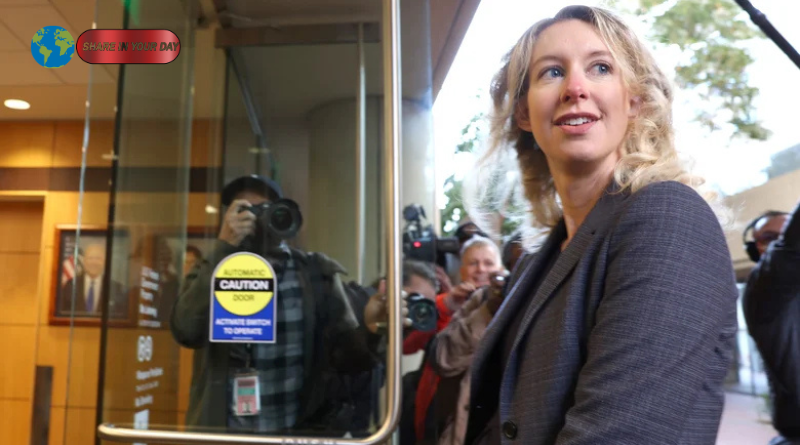
The project was kept largely secret before its surprise premiere at the Telluride Film Festival. Rather than offering another conventional retrospective about Theranos, You Can See Everything appears to turn its attention toward Holmes herself, her relationship with her husband Billy Evans, and the strange atmosphere surrounding her final days outside prison.
A24 has described the film as beginning 34 days before Holmes was due to enter prison. What starts as an intimate portrait reportedly develops into a much larger and more unsettling three-year filmmaking project.
The documentary is scheduled for a theatrical release in October 2026.
1. The Elizabeth Holmes Documentary Was Filmed Before Prison
One of the most significant aspects of the new Elizabeth Holmes documentary is its timing.
Holmes invited the filmmakers into her life shortly before she began serving her sentence following her conviction for fraud connected to Theranos. The initial filming took place in 2023, when Holmes was preparing to leave her family and report to federal prison.
That timing gives the film a very different perspective from earlier documentaries about the Theranos scandal.
Instead of examining Holmes only through interviews with former employees, journalists, investors and investigators, Fielder and Oppenheim were able to observe her directly during an unusually personal period.
The filmmakers reportedly spent extensive time around Holmes and Evans. That access became central to the movie and helped transform what could have been a straightforward documentary into something much more experimental.
A24’s official synopsis says the project ultimately became a “mind-bending three-year journey,” suggesting that production continued well beyond the original period surrounding Holmes’ incarceration.
2. Nathan Fielder Brings an Unusual Approach
Nathan Fielder is not the obvious filmmaker for a conventional true-crime documentary.
He is best known for projects that deliberately blur the boundaries between reality, comedy and performance, including Nathan for You and The Rehearsal. His approach often involves putting himself into situations where the distinction between genuine behavior and constructed reality becomes increasingly difficult to determine.
That makes his involvement in an Elizabeth Holmes documentary particularly intriguing.
Fielder appears prominently in the film’s teaser. In the footage, he questions Holmes directly about whether she is being truthful with him. Holmes responds with intense confidence, creating an uncomfortable exchange that immediately became one of the most discussed moments from the trailer.
The exchange is brief, but it establishes the central tension of the documentary.
Can the audience trust what Holmes is saying?
And perhaps more importantly, can Fielder?
Those questions have surrounded Holmes since the Theranos scandal first exploded into public view. By placing himself inside that relationship, Fielder appears to make trust and perception part of the documentary’s subject rather than merely background issues.
3. Lance Oppenheim Helps Push the Film Beyond Traditional True Crime
The second major creative force behind You Can See Everything is Lance Oppenheim.
Oppenheim has built a reputation for documentaries that focus on unusual characters and communities. His previous work includes Some Kind of Heaven and the documentary series Ren Faire, while A24 has also positioned him alongside Fielder on the upcoming project Primetime.
His partnership with Fielder creates an unusual combination.
Fielder brings an instinct for awkward encounters and psychological tension. Oppenheim brings a documentary background rooted in intimate observation.
Together, they appear to have created something that does not fit neatly into the standard celebrity documentary or corporate scandal format.
That distinction is important because the Theranos story has already been extensively covered.
There have been documentaries, books, podcasts, news investigations and scripted adaptations about Holmes. Hulu’s The Dropout, for example, dramatized her rise and fall for television audiences.
The new movie therefore needs something different to justify its existence.
Its answer appears to be access.
4. The Documentary Reportedly Goes in Unexpected Directions
The first teaser does not reveal much, which is probably intentional.
A24’s official description says Holmes initially invites a skeptical film crew to document her every move. The project then evolves into something much larger and stranger.
Engadget reports that the documentary runs for roughly three hours and includes unusual recreations alongside direct conversations involving Holmes. The film also reportedly captures Holmes and Evans discussing the possibility of launching a “new and improved Theranos.”
That detail alone makes the project considerably more provocative.
Theranos became one of Silicon Valley’s most infamous corporate scandals after the company’s claims about revolutionary blood-testing technology collapsed under scrutiny. Holmes was eventually convicted of defrauding investors.
Yet You Can See Everything appears less interested in simply repeating that history.
Instead, it asks what Holmes’ world looked like after the collapse.
That can be a much stranger question.
What does someone do when their public identity has been destroyed but they continue to see themselves differently? What happens when a person facing prison allows filmmakers into their home while attempting to control how the story is told?
Those tensions appear to be at the heart of the movie.
5. The Film Secretly Premiered at Telluride
Perhaps the biggest surprise surrounding the Elizabeth Holmes documentary was the way A24 introduced it.
You Can See Everything premiered as a secret screening at the 2026 Telluride Film Festival. Audiences reportedly did not know beforehand which film they were going to see, and restrictions were used to prevent details from leaking.
The strategy generated immediate attention.
Rather than announcing the project months in advance, A24 effectively turned the film itself into a mystery.
That approach fits the documentary’s subject and Fielder’s filmmaking style. The less viewers know going in, the more powerful the movie’s unexpected moments can potentially become.
Early reactions from Telluride were strongly positive. Variety described the film as a highly unusual mixture of reality, performance and psychological drama, while other critics highlighted the unusual level of access to Holmes.
The secrecy also helped protect the film’s surprises.
For a documentary about a story that has already been dissected repeatedly, that is a significant advantage.
Why Elizabeth Holmes Remains Such a Fascinating Subject
More than a decade after Theranos became one of Silicon Valley’s biggest cautionary tales, public fascination with Holmes has not disappeared.
Her story contains many of the ingredients that have traditionally attracted audiences to business scandals: enormous ambition, celebrity investors, billions of dollars in claimed value, secretive technology and a dramatic collapse.
But Holmes herself remains the central mystery.
She has continued to dispute aspects of the public narrative surrounding her. That makes any documentary offering direct access to her particularly compelling.
The filmmakers are not simply asking other people to explain Holmes.
They are putting cameras in front of Holmes and allowing viewers to watch her explain herself.
That creates a complicated dynamic.
A documentary subject can be revealing while simultaneously attempting to control the narrative. In Holmes’ case, that tension is especially significant because questions about persuasion and credibility are already inseparable from the Theranos story.
How You Can See Everything Differs From Earlier Theranos Films
The biggest difference may be its proximity to Holmes.
Earlier documentaries largely focused on how Theranos operated, how its claims were challenged and how the company ultimately collapsed.
You Can See Everything appears to be more personal.
According to A24, Holmes invites the filmmakers into her life just before prison.
That means the documentary is less about explaining what Theranos was and more about examining the person at the center of the controversy.
It also gives Fielder and Oppenheim an opportunity to investigate the psychology of the situation.
The filmmakers reportedly found themselves struggling to interpret what they were witnessing. That uncertainty seems to have become part of the film itself rather than something edited away.
In a conventional documentary, filmmakers often try to establish a clear argument.
Here, ambiguity appears to be the point.
When Is the Elizabeth Holmes Documentary Coming Out?
A24 currently lists You Can See Everything as a 2026 release, with the theatrical date officially listed as TBD on its film page.
Recent reporting, however, says the film is expected to arrive in theaters in October 2026 following its Telluride premiere.
That means audiences will soon have an opportunity to see the documentary beyond the festival circuit.
For viewers who have followed the Theranos saga for years, the theatrical release could provide one of the most unusual additions to the Holmes story yet.
Why This A24 Documentary Could Become a Major 2026 Film
A24 has developed a reputation for taking unconventional approaches to familiar subjects. You Can See Everything appears to fit that strategy perfectly.
The company is not simply releasing another documentary about a famous business scandal.
It is releasing a film made by two filmmakers with very different but complementary approaches to reality, built around unprecedented access to one of the most controversial figures in modern business history.
That combination gives the film considerable potential.
The question is whether audiences will see Holmes differently after watching it.
Perhaps they will come away with a clearer understanding of her.
Perhaps they will become even more skeptical.
Or perhaps the documentary’s biggest achievement will be making viewers question whether anyone can ever fully understand what happened inside the Theranos story.
That uncertainty may be exactly what Fielder and Oppenheim wanted.
Final Takeaway
The new Elizabeth Holmes documentary You Can See Everything is shaping up to be far more than another retelling of the Theranos scandal.
Directed by Nathan Fielder and Lance Oppenheim, the A24 production follows Holmes during an extraordinary period of her life, beginning shortly before she entered prison and eventually expanding into a three-year filmmaking project.
Its secret Telluride premiere, unusual access and deliberately unsettling teaser have already separated it from previous Holmes documentaries.
Most importantly, the film does not seem interested in giving audiences an easy answer.
Instead, You Can See Everything appears ready to ask a much more uncomfortable question: what happens when the person at the center of a massive deception gets to tell her own story directly to the camera?
That alone makes the film one of the more intriguing documentary releases of 2026.