Cambodia Condemns Thai Military Strikes that Completely Destroy Ta Krabey Temple
Cambodia’s Ministry of Culture and Fine Arts has issued a fierce condemnation following a renewed attack by the Thai military on Ta Krabey Temple, a historic and sacred Cambodian site. The temple, which had already sustained significant damage in previous strikes earlier this week, was further devastated in the latest round of shelling, resulting in its total destruction.
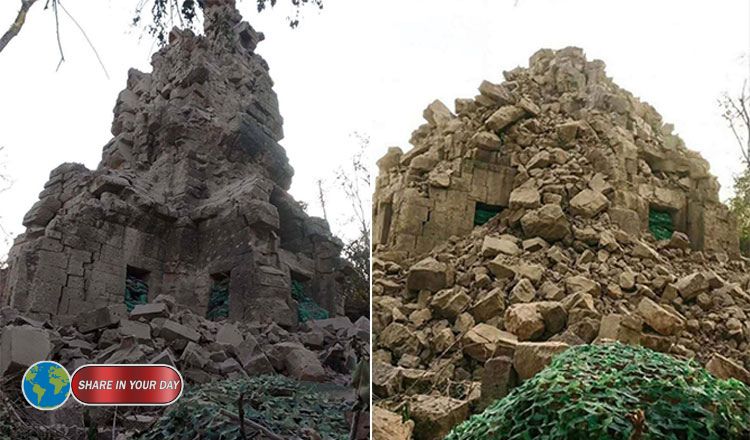
The renewed assault, which occurred just one day after an earlier military strike on Tuesday, has left the once-majestic Ta Krabey Temple in ruins. According to the Ministry of Culture, the attack represents not only the loss of a priceless cultural monument but also a deliberate act of cultural vandalism.
A Historic Cultural Loss
Ta Krabey Temple, an 11th-century relic, was constructed during the reigns of Khmer kings Suryavarman I and Udayadityavarman II. Located in the Phum Senmonorom 1 area of Kouk Khpous commune, within Banteay Ampil district in Oddar Meanchey province, the temple had long stood as a symbol of Cambodia’s rich Khmer heritage. For generations, the site was carefully preserved by Cambodian cultural institutions and held in high regard by local communities as an emblem of the nation’s past glory.
The temple had been situated in a tranquil forested area, serving as a quiet testament to the sophistication and grandeur of ancient Khmer architecture. However, it has now become a tragic symbol of the destruction wrought by ongoing conflict along the Thai–Cambodian border.
International Outrage and Calls for Accountability
In an official statement, the Ministry of Culture denounced the destruction of Ta Krabey Temple as “immoral,” “barbaric,” and a “grave crime against heritage.” The ministry emphasized that the attack constitutes a direct violation of international cultural protection laws, including the 1954 Hague Convention for the Protection of Cultural Property in the Event of Armed Conflict and the 1972 World Heritage Convention, both of which seek to safeguard cultural sites from the ravages of war.
“The total destruction of Ta Krabey Temple is an affront to the global community and a flagrant disregard for the principles of cultural preservation that we hold dear,” the statement read. “This attack is not only a loss for Cambodia but for the entire world, as it undermines efforts to protect humanity’s shared cultural heritage.”
A Call to the International Community
The Ministry of Culture has called on the international community, partner nations, and global cultural organizations to join Cambodia in condemning the attack and to put pressure on the Thai military to cease all actions targeting cultural sites. The Cambodian government is seeking immediate international intervention to prevent further destruction and to hold those responsible accountable for their actions.
The ministry also urged a renewed commitment to peace and dialogue, invoking the spirit of the Kuala Lumpur Joint Declaration, which advocates for peaceful resolutions and the protection of cultural heritage amid conflict. “The international community must come together to protect our shared cultural treasures from the ravages of war,” the statement added.
Legacy and Resilience
Despite the loss of the temple’s visible structure, Cambodia’s Ministry of Culture stressed that the legacy of Ta Krabey Temple endures. The Ministry reaffirmed its commitment to documenting the destruction as part of the historical record and vowed to continue efforts to preserve Cambodia’s cultural heritage for future generations.
“While Ta Krabey Temple may no longer stand in its original form, its spirit remains alive in the hearts of the Cambodian people,” the statement concluded. “This is a stark reminder of the importance of protecting our cultural identity from the devastation of conflict. We will not let this loss go unnoticed, and we will continue to safeguard our heritage for those who come after us.”
The Human Cost of Cultural Destruction
The destruction of Ta Krabey Temple has sparked outrage across Cambodia, where many view the temple as not only a cultural monument but also an integral part of national identity. As the conflict between Thailand and Cambodia continues to unfold, the attack on such an iconic site raises profound concerns about the preservation of cultural heritage in regions affected by conflict.
The international community will undoubtedly be watching closely, as the ongoing damage to cultural sites in conflict zones raises broader questions about how to safeguard humanity’s collective history during times of war.