Cambodia-Thailand Border Talks Enter Second Day as Fighting Continues
Diplomatic efforts between Cambodia and Thailand reached a critical juncture as the General Border Committee (GBC) Secretariat entered the second day of talks, even as Thai air strikes continued to target Cambodian territories, escalating tensions along the shared border.
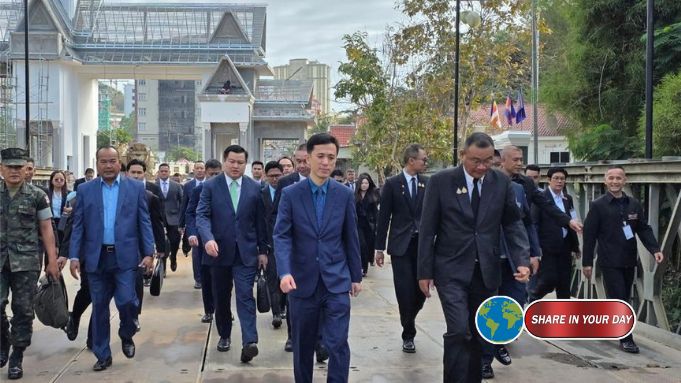
The meeting, which commenced on December 25 at the Prom-Pak Kard Permanent Border Checkpoint—a strategic location between Cambodia’s Pailin province and Thailand’s Chanthaburi province—is aimed at de-escalating the conflict that has raged for several days. Cambodian and Thai officials are working toward ensuring a cessation of hostilities and restoring normalcy along the border.
A Focus on Ceasefire and Stability
The GBC Secretariat’s discussions have revolved around facilitating an immediate end to the hostilities and setting the stage for the third Special Cambodia-Thailand GBC meeting scheduled for December 27. Cambodian officials have made clear that these diplomatic talks are essential for stabilizing the region and ensuring that such violence does not spiral further out of control.
However, despite these efforts, the situation on the ground remains volatile. Thai military actions, including airstrikes, have continued throughout the week, pushing deeper into Cambodian territory.
Continued Thai Attacks on Cambodian Soil
On December 24, the Thai Royal Air Force reportedly launched airstrikes that penetrated far beyond the border zone, reaching Battambang province, located significantly deeper into Cambodian territory. The attacks, part of a broader military campaign, have resulted in widespread devastation, with civilian casualties mounting and the safety of thousands in jeopardy.
Cambodian authorities are now facing an uphill battle to maintain order and protect their citizens in the face of foreign aggression. Neth Pheaktra, Cambodia’s Minister of Information, condemned the attacks, calling them “an act of aggression by Thailand” that has caused severe distress among local populations.
The Humanitarian Impact
Minister Neth Pheaktra painted a grim picture of the situation in the affected areas. According to his statements, many Cambodian civilians, including children and the elderly, have borne the brunt of the violence. “Small children were separated from their parents. Young schoolchildren fled from their schools. Elderly people abandoned their homes, workplaces, and shops,” he said, describing the scenes as “horrifying and heart-wrenching.”
These images of chaos are a reminder of the human cost of border disputes, with ordinary people paying the heaviest price.
Diplomatic Engagement Amid Military Conflict
Although the air attacks continue to wreak havoc, the Cambodian government remains committed to seeking a peaceful resolution. Officials have emphasized that the primary focus of the ongoing talks is the restoration of stability and the safe return of displaced civilians to their homes.
The Cambodian Ministry of National Defence remains hopeful that continued dialogue will pave the way for a ceasefire agreement that can be ratified at the upcoming Special GBC session on December 27. However, the success of these talks will largely depend on the willingness of both sides to make meaningful compromises amid the military escalation.
A Broader Context
The current tensions between Cambodia and Thailand are part of a broader regional pattern of border disputes, with occasional flare-ups over territorial claims. While both countries share a long history of diplomatic relations, recent military actions have strained those ties. The continuing violence raises questions about the role of international mediation and whether both governments can prioritize peace over aggression.
The international community will likely keep a close eye on the situation in the coming days, especially as the Special GBC meeting approaches. There is hope that diplomatic engagement, though difficult, can prevent further violence and lead to a resolution that respects the sovereignty and security of both nations.