Conflicting Accounts Follow Landmine Blast that Injures Chinese National at Cambodian-Thai Border
Banteay Meanchey, Cambodia – A Chinese man sustained severe injuries after stepping on a landmine early Saturday morning along the Cambodian-Thai border. The incident has prompted conflicting accounts from both Cambodian and Thai authorities, who disagree on the location, cause, and circumstances surrounding the blast.
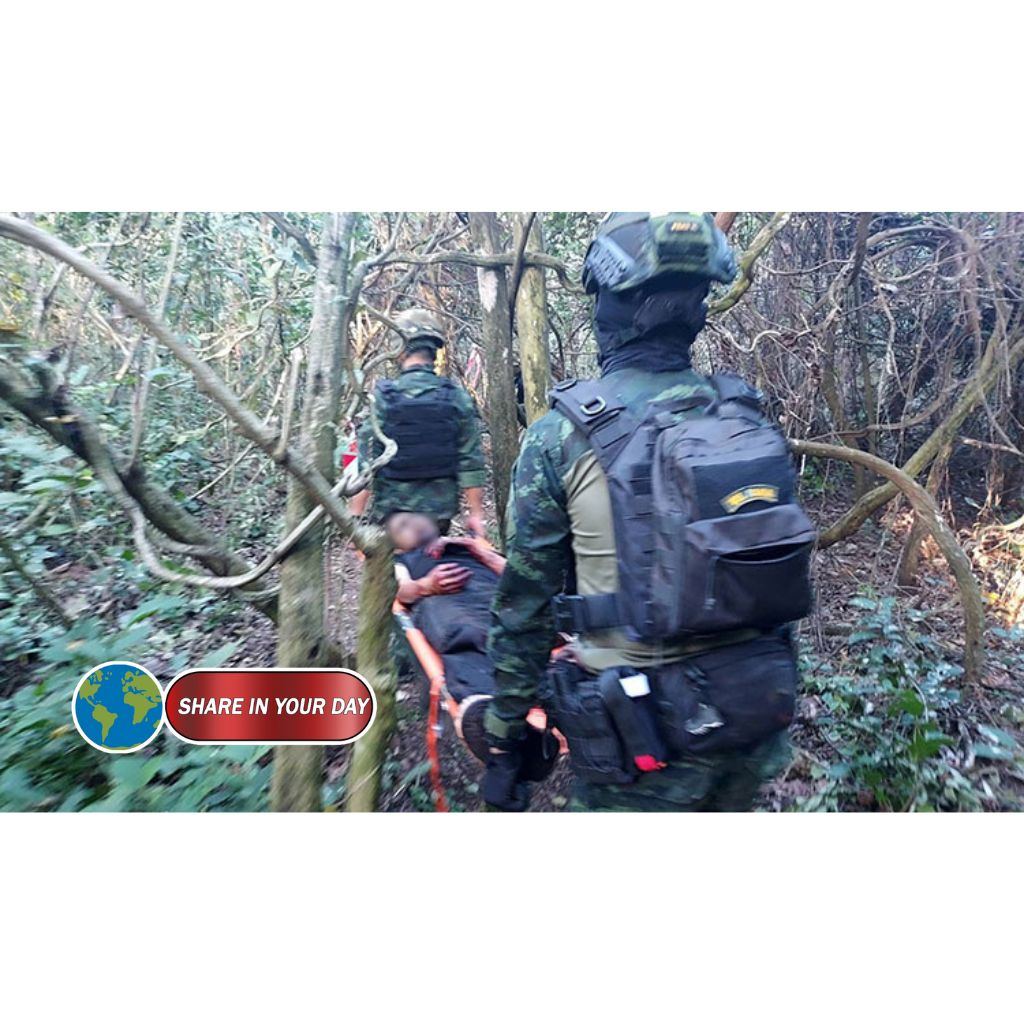
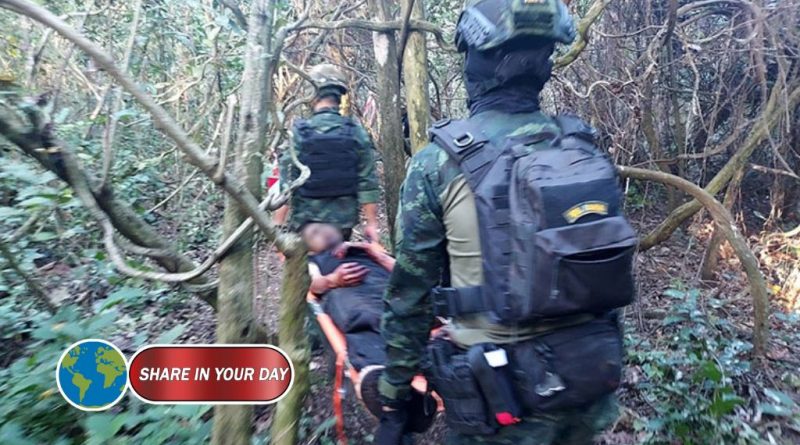
According to Cambodian officials, the blast occurred around 3:20 AM on December 1, 2025, between Border Markers 48 and 49 in Chork Chey village, O’Beichoan commune, Banteay Meanchey province. The victim, later identified as Shi Jingui, was seriously injured after triggering an anti-personnel mine left over from past conflicts. The explosion resulted in the loss of his left foot.
Cambodian and Thai Authorities Disagree on Incident Details
Both Cambodian and Thai military forces responded to the incident, but their accounts differ sharply.
Cambodian officials maintain that the landmine blast occurred on Cambodian territory, within a well-known minefield contaminated by remnants of past conflicts. The Royal Cambodian Armed Forces (RCAF), stationed nearby, attempted to reach the injured man, but their efforts were delayed as they needed to clear around 200 meters of dangerous minefield to safely access the site.
However, Thai soldiers were the first to arrive and evacuated the injured man, according to a report by Khmer Times. Cambodian immigration records show no trace of the victim entering Cambodia, suggesting he may have crossed over from Thailand. Authorities noted that the man was carrying Thai currency and was close to a Thai asphalt road, which further indicated his possible point of origin.
In contrast, Thai military officials assert that the incident took place on their side of the border. The Royal Thai Army claimed the victim had illegally crossed from Cambodia into Thailand, near Ban Nong Chan in Sa Kaeo province, before stepping on a landmine. The Thai military pointed out that the area where the blast occurred has been a known minefield, with several devices recovered during previous clearance operations.
International Mine Clearance Efforts and Disputed Claims
The incident occurred in an area where both Cambodia and Thailand have been involved in joint mine clearance operations. Teams from the Cambodian Mine Action Centre (CMAC) and the Thailand Mine Action Centre (TMAC) conducted surveys of the area as part of a joint humanitarian demining program. However, this effort was put on hold in November 2025 after Thailand suspended the Kuala Lumpur Joint Declaration (KLJD) and froze all related bilateral mechanisms, including the Joint Coordinating Task Force (JCTF).
Despite these setbacks, Cambodian officials stress that the minefield in question had been surveyed and was a known hazard from previous conflicts, not a newly laid minefield. The Cambodian Ministry of National Defence rejected Thai claims that Cambodia had deployed new mines in the area, calling such accusations “politically motivated and inaccurate.”
Lieutenant General Maly Socheata, a spokesperson for Cambodia’s Ministry of National Defence, emphasized that Cambodia has not laid any new mines for decades and is fully committed to fulfilling its obligations under the Ottawa Convention, an international treaty banning the use of landmines.
The Cambodian Mine Action and Victim Assistance Authority (CMAA) also responded to the allegations, condemning the suggestion that Cambodian forces were responsible for laying new mines. The CMAA stressed that Cambodia has been active in demining efforts, cooperating with international organizations, and working to create a mine-free border.
Cambodian Response and Calls for Independent Investigation
Cambodia’s Ministry of National Defence reiterated the country’s commitment to peaceful, stable relations with its neighbors, calling for a professional, independent investigation into the incident. Cambodia also expressed regret over the victim’s injury and emphasized the need for evidence-based investigations, rather than public statements or social media claims.
“We urge Thailand to provide verified evidence through official channels, not through public statements, which can fuel unnecessary tensions,” the CMAA stated. “We remain open to cooperation and seek to address this issue collaboratively, in accordance with international law.”
The Victim’s Condition and Diplomatic Responses
Meanwhile, the Chinese Embassy in Thailand has been actively involved in the aftermath of the incident, working with Thai authorities to ensure the victim receives the best possible medical care. Embassy officials confirmed that Shi Jingui is in stable condition after receiving treatment for his injuries.
The embassy also expressed concern over the conflicting reports and emphasized the need for a thorough and impartial investigation to clarify the circumstances surrounding the blast. Both Cambodian and Thai officials have been urged to cooperate with international bodies to ensure that the case is resolved in a transparent and fact-based manner.
A Continued Humanitarian Concern
This incident highlights the ongoing humanitarian issues along the Cambodian-Thai border, which remains one of the most mine-contaminated regions in Southeast Asia. While both countries have made significant strides in demining efforts, legacy mines continue to pose a threat to civilians and border personnel alike.
In 2023 alone, Cambodia reported a rise in mine-related accidents, with many incidents occurring in areas once controlled by opposing forces during the Cambodian Civil War. The explosion that injured the Chinese national underscores the continuing risk posed by landmines in the region, despite years of international demining operations and treaties aimed at removing these deadly remnants of past conflicts.
Conclusion: A Complex Situation
As the investigation into this landmine blast continues, the conflicting narratives from Cambodian and Thai authorities reflect the complexities of managing a shared border marked by decades of conflict and ongoing political tensions. The Rise for Khmer demining initiative, alongside other joint efforts, will need to overcome significant obstacles, including the resumption of bilateral cooperation, to ensure that such incidents do not occur in the future.
Both Cambodia and Thailand have committed to the safe, sustainable management of their shared border. However, for now, questions surrounding the landmine blast—and the identities of those responsible for its placement—remain unanswered, further complicating relations between the two neighboring countries.