China EV Exports Surge as Oil Shock Reshapes Global Demand
The China EV exports surge has reached unprecedented levels in 2026, driven by a dramatic shift in global energy markets following the Iran-related oil shock. As fuel prices spike and supply chains face disruption, consumers and governments worldwide are accelerating their transition toward electric vehicles (EVs), turning China into a key beneficiary of the crisis.
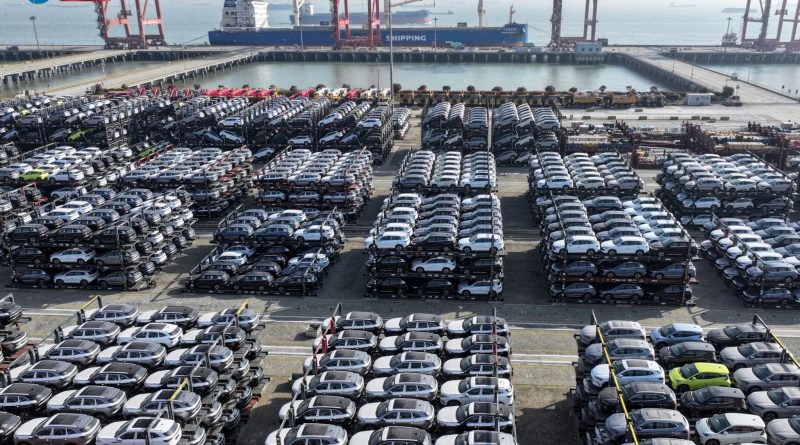
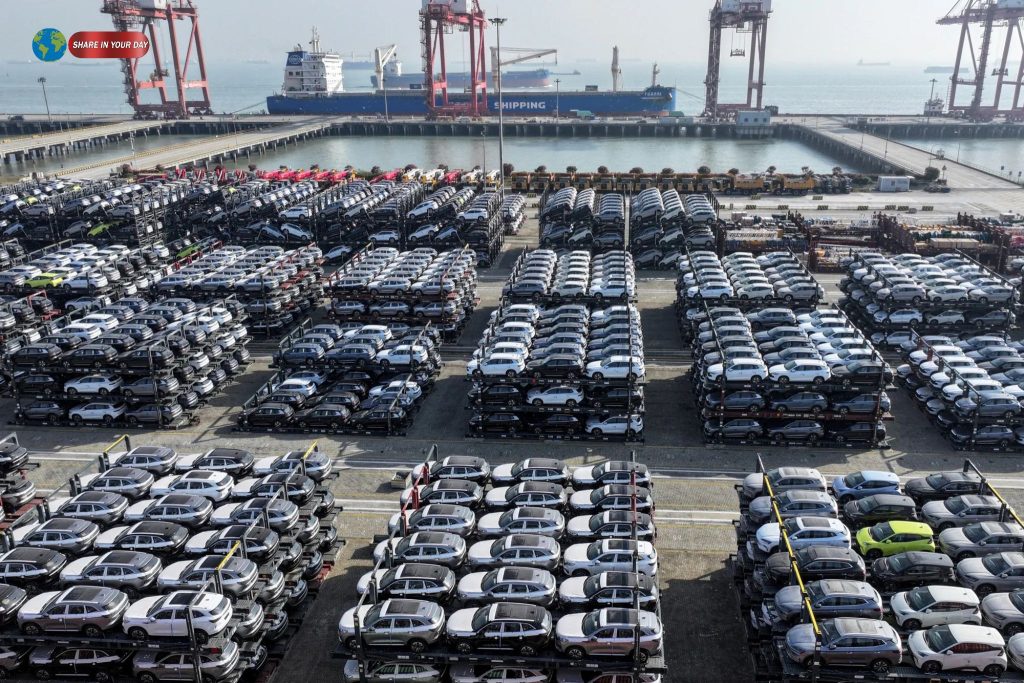
According to recent reports, China’s exports of electric vehicles and hybrids more than doubled in March to a record high, reflecting a surge in international demand triggered by rising oil prices and geopolitical uncertainty.
This sudden momentum highlights a broader transformation underway in the global automotive industry—one where energy security concerns are rapidly reshaping consumer behavior and policy decisions.
Record-Breaking Export Growth
China’s EV export boom is not a gradual trend—it is an explosive acceleration.
Data shows that shipments of EVs and hybrid vehicles reached approximately 349,000 units in March, marking a 140% year-on-year increase.
This surge comes despite weakening domestic demand within China, where car sales have slowed due to economic pressures and reduced subsidies. Instead, international markets—particularly in Asia and Europe—are driving growth.
The contrast is striking: while Chinese consumers hesitate, overseas buyers are rapidly adopting EVs as a hedge against volatile fuel costs.
The Iran Oil Shock: A Catalyst for Change
At the heart of the China EV exports surge lies the global energy disruption caused by the Iran conflict.
The closure and restriction of key oil routes, including the Strait of Hormuz, has significantly reduced supply, affecting roughly 20% of global oil flows.
As a result, oil prices have surged, with some benchmarks exceeding $100 per barrel and even reaching higher levels during peak volatility.
This has created a powerful incentive for consumers and governments to reduce dependence on fossil fuels. Electric vehicles, once considered a long-term transition, are now viewed as an immediate solution to rising energy costs.
In simple terms: the more expensive gasoline becomes, the more attractive EVs appear.
Why Buyers Are Turning to Electric Vehicles
The surge in demand for Chinese EVs is being driven by several key factors:
1. Rising Fuel Costs
The most immediate driver is the spike in gasoline and diesel prices. As fuel becomes more expensive, the total cost of ownership for traditional vehicles increases significantly.
EVs, by contrast, offer lower operating costs, making them a financially attractive alternative.
2. Energy Security Concerns
Countries heavily dependent on imported oil are reassessing their vulnerabilities. The crisis has exposed how geopolitical tensions can disrupt supply overnight.
As a result, governments are promoting EV adoption as part of broader energy security strategies.
3. Improved EV Technology
Chinese automakers have made significant advances in battery efficiency, range, and affordability. Today’s EVs are no longer niche products—they are competitive with, and often superior to, internal combustion vehicles.
China dominates global EV production, accounting for the majority of manufacturing capacity and innovation.
4. Competitive Pricing
One of China’s biggest advantages is cost. Chinese EVs are often significantly cheaper than their Western counterparts, making them highly attractive in emerging markets.
This price advantage is particularly important during periods of economic uncertainty.
5. Government Incentives Worldwide
Many countries are accelerating EV subsidies, tax breaks, and infrastructure investments in response to the energy crisis.
This policy support is further boosting demand for Chinese exports.
China’s Strategic Advantage in the EV Market
China is uniquely positioned to benefit from the global shift toward electric vehicles.
The country has spent years building a comprehensive EV ecosystem, including:
- Battery manufacturing dominance
- Advanced supply chains
- Massive production capacity
- Strong domestic competition driving innovation
As a result, China is now the world’s largest EV producer and exporter, supplying vehicles to more than 150 countries.
Companies like BYD, SAIC, and Geely are expanding aggressively into international markets, capitalizing on the surge in demand.
Domestic Weakness, Global Strength
Interestingly, the China EV exports surge comes at a time when domestic demand is weakening.
Sales within China have declined, with some major automakers reporting significant drops in local deliveries.
However, this slowdown has pushed manufacturers to focus more on overseas markets, where demand is stronger and margins are often higher.
This shift is transforming China’s automotive industry from a domestically driven market into a global export powerhouse.
Global Ripple Effects
The rapid rise in Chinese EV exports is having far-reaching implications:
1. Increased Competition
Western automakers are facing intensified competition from Chinese brands, which offer lower prices and increasingly advanced technology.
2. Trade Tensions
The surge in exports is likely to fuel trade disputes, particularly in Europe and North America, where concerns about subsidies and market dominance persist.
3. Acceleration of Green Transition
The oil shock is speeding up the global transition to clean energy, with EVs playing a central role.
Countries are now treating EV adoption not just as an environmental goal, but as an economic necessity.
4. Shift in Global Power Dynamics
China’s dominance in EV production and exports is strengthening its position in the global economy, particularly as countries seek alternatives to fossil fuels.
A Turning Point for the Auto Industry
Many analysts believe the current crisis could mark a turning point for the global automotive industry.
The oil shock has exposed the vulnerabilities of fossil fuel dependence, prompting a rapid reassessment of transportation systems worldwide.
Electric vehicles are no longer a future trend—they are becoming a present-day solution.
As one analysis suggests, the crisis could act as a tipping point for EV adoption, accelerating trends that might otherwise have taken years to unfold.
Challenges Ahead
Despite the strong growth, several challenges remain:
- Supply chain disruptions affecting battery materials
- Infrastructure gaps in charging networks
- Political resistance in some markets
- Rising competition among EV manufacturers
Additionally, higher energy prices could increase production costs, potentially impacting profitability.
However, most experts agree that the long-term trajectory remains strongly positive.
Conclusion
The China EV exports surge represents one of the most significant economic shifts of 2026, driven by the intersection of geopolitical conflict and technological transformation.
As the Iran oil shock disrupts global energy markets, electric vehicles have emerged as a practical and increasingly necessary alternative to traditional transportation.
China, with its dominant position in EV production, is leading this transformation—exporting not just vehicles, but a new model for the future of mobility.
While uncertainties remain, one thing is clear: the global automotive industry is entering a new era, and China is at the center of it.