Artemis 2 Launch: 5 Historic Moon Mission Facts
The highly anticipated Artemis 2 launch has taken a major step forward as NASA astronauts arrived at Kennedy Space Center in Florida, marking the final phase before humanity’s return to deep space exploration around the Moon.
This mission represents the first crewed lunar journey in more than 50 years, signaling a new era in space exploration. With global attention focused on the launch, Artemis 2 is not just another mission—it is a historic milestone that could shape the future of human spaceflight.
Astronauts Arrive for Final Preparations
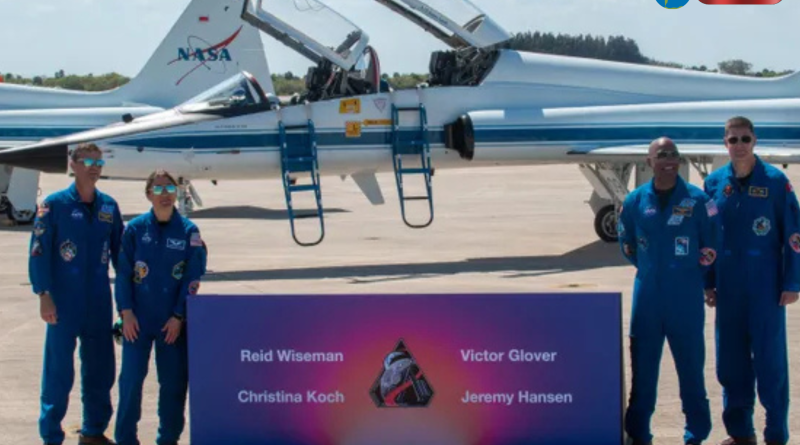
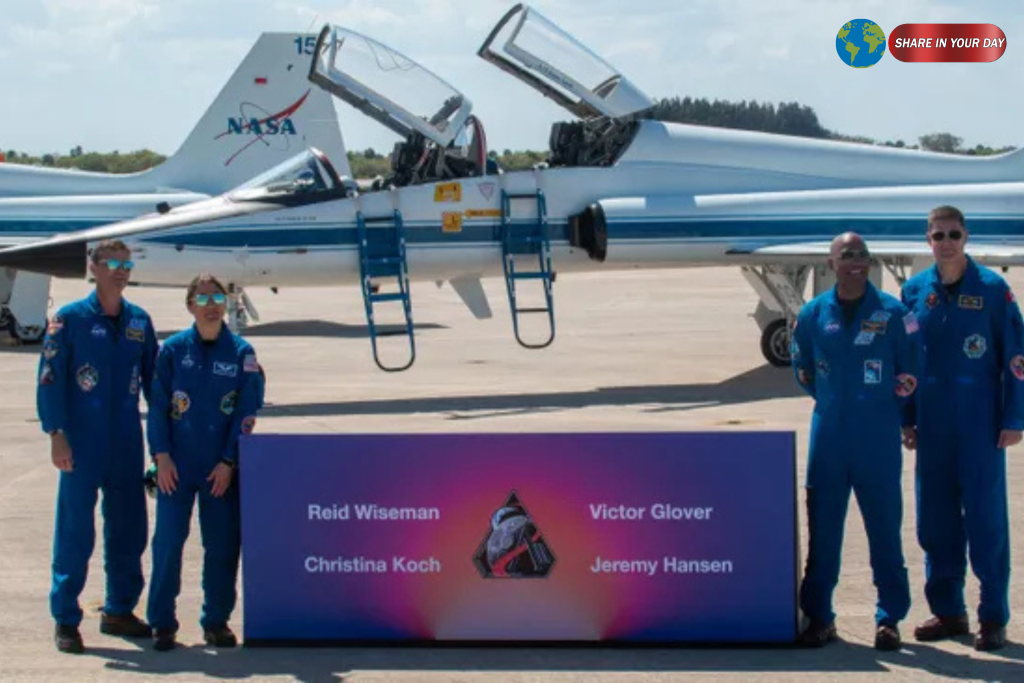
The four-member crew—Reid Wiseman, Victor Glover, Christina Koch, and Jeremy Hansen—arrived at Kennedy Space Center after years of intense training.
Their arrival signals that the mission has entered its final countdown phase. The astronauts are expected to undergo final checks, simulations, and quarantine procedures before launch.
The team represents a diverse and historic lineup. Glover is set to become the first Black astronaut to travel to lunar space, Koch the first woman, and Hansen the first non-American to journey beyond low Earth orbit.
This diversity reflects NASA’s broader vision of inclusive exploration.
What Is Artemis 2 Mission?
The Artemis 2 mission is NASA’s first crewed flight under the Artemis program, designed to return humans to the Moon and eventually prepare for missions to Mars.
Unlike the Apollo missions, Artemis 2 will not land on the Moon. Instead, it will perform a 10-day journey orbiting the Moon, testing critical systems needed for future landings.
The mission will use:
- The Space Launch System (SLS) rocket
- The Orion spacecraft
These systems are being tested for long-duration deep space missions.
1. First Crewed Moon Mission in Over 50 Years
One of the most significant aspects of the Artemis 2 launch is its historical importance.
The last time humans traveled to the Moon was during the Apollo 17 mission in 1972. Artemis 2 marks the first return of astronauts to lunar space since then.
This long gap highlights how ambitious and technically challenging such missions are.
2. A Powerful Rocket Leading the Mission
The Space Launch System (SLS) rocket powering Artemis 2 is the most powerful rocket ever built by NASA.
It generates more thrust than the Saturn V rocket used during the Apollo era, enabling it to carry astronauts farther into space than ever before.
The rocket and Orion capsule have undergone multiple tests and repairs in preparation for launch, including fixes to technical issues like hydrogen leaks and helium system problems.
3. Launch Timeline and Possible Delays
NASA is targeting early April 2026 for the Artemis 2 launch, with April 1 being the earliest possible date.
However, backup launch windows extend through early April and even later in the month if needed.
Like all space missions, Artemis 2 is highly dependent on weather conditions and technical readiness.
Previous delays have already pushed the mission timeline back, demonstrating NASA’s commitment to safety over speed.
4. A Mission That Will Test Deep Space Systems
The Artemis 2 mission is not just symbolic—it is a critical test flight.
NASA will evaluate:
- Life-support systems
- Navigation and communication technologies
- Heat shield performance during re-entry
These tests are essential before sending astronauts to land on the Moon in future missions.
The data collected will directly influence the design and execution of upcoming Artemis missions.
5. The Foundation for Future Moon Landings
Artemis 2 is part of a larger long-term strategy.
Future missions include:
- Artemis 3 (planned lunar landing)
- Artemis 4 and beyond (sustained Moon presence)
NASA aims to establish a permanent human presence on the Moon, including potential lunar bases and scientific research stations.
Ultimately, these efforts are seen as stepping stones toward human missions to Mars.
Why This Mission Matters Globally
The Artemis 2 launch is not just a U.S. project—it is an international effort involving multiple space agencies.
Canada, for example, is playing a key role through astronaut Jeremy Hansen and contributions to future space infrastructure.
This global collaboration highlights how space exploration is becoming a shared human endeavor rather than a competition.
Challenges and Risks Ahead
Despite the excitement, Artemis 2 faces significant challenges.
Technical issues have already delayed the mission, including problems with the rocket’s propulsion systems.
Additionally, deep space missions carry inherent risks, including exposure to radiation and the complexities of operating far beyond Earth’s orbit.
NASA has emphasized that safety remains its top priority.
Public Interest and Global Attention
Interest in the Artemis 2 launch is at an all-time high.
Thousands of spectators are expected to gather near Kennedy Space Center, while millions more will watch the event online.
The mission is being widely viewed as a defining moment for a new generation of space exploration.
What Happens After Launch?
Once launched, the Artemis 2 spacecraft will follow a trajectory that takes it around the Moon and back to Earth.
The mission will last approximately 10 days, ending with a splashdown in the Pacific Ocean.
This journey will push human spaceflight farther than it has gone in decades.
Conclusion
The Artemis 2 launch marks a turning point in human space exploration.
With astronauts now at Kennedy Space Center and final preparations underway, the world stands on the brink of a historic return to lunar space.
More than just a mission, Artemis 2 represents the beginning of a new chapter—one that could ultimately lead humanity beyond the Moon and toward Mars.
As the countdown continues, all eyes are on NASA and its international partners to deliver one of the most important space missions of the 21st century.