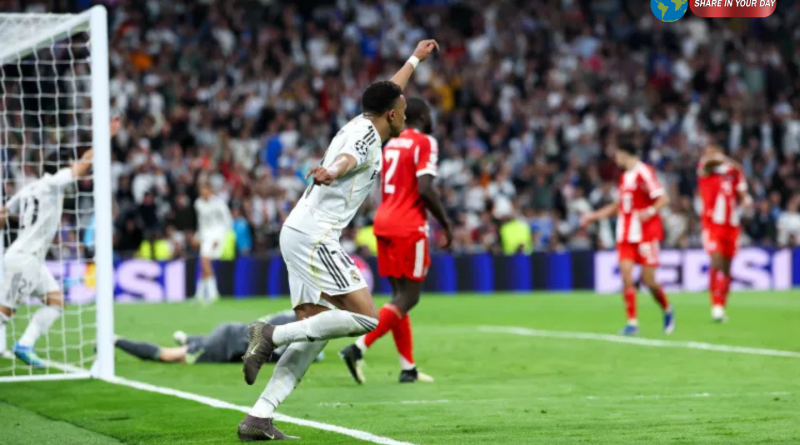
Real Madrid vs Bayern Analysis: 3 Key Answers From Shock Defeat
The Real Madrid vs Bayern analysis following the dramatic 1-2 defeat at the Santiago Bernabéu has raised serious tactical questions for the Spanish giants. In a high-stakes UEFA Champions League quarterfinal clash, Real Madrid fell short against a more composed Bayern Munich side, leaving the tie finely balanced ahead of the second leg.
Despite a late goal from Kylian Mbappé, Madrid struggled with structure, chemistry, and defensive discipline—issues that could define their European campaign.
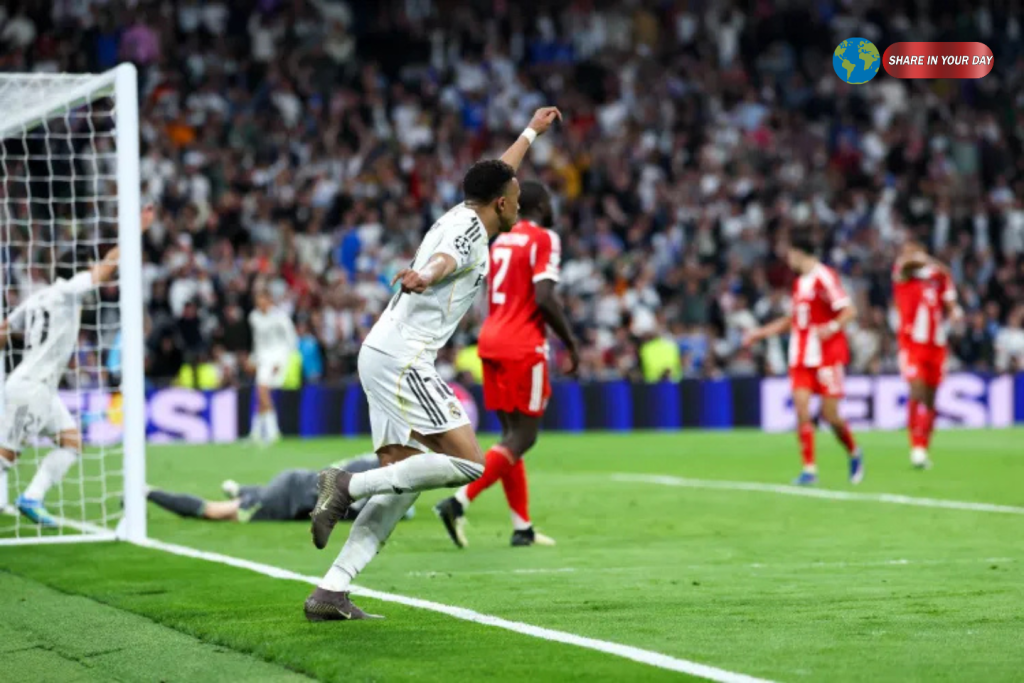
This article breaks down the three biggest questions—and answers—that emerged from the match.
1. Why Did Real Madrid Lose Control of the Game?
One of the most glaring takeaways from this Real Madrid vs Bayern analysis is how quickly Madrid lost control after a promising start.
Initially, Madrid pressed aggressively and dominated second balls, showing intensity and urgency. However, this early momentum faded rapidly. The team became disorganized defensively and overly reliant on chaotic counterattacks rather than structured buildup play.
Bayern, on the other hand, remained calm and methodical. Under the guidance of Vincent Kompany, they controlled possession and dictated tempo for large stretches of the match.
The turning point came from defensive lapses. Mistakes in key moments directly led to goals—something even Madrid’s coaching staff later acknowledged. Bayern capitalized efficiently, scoring through Luis Díaz and Harry Kane on either side of halftime.
In elite competitions like the Champions League, such errors are often decisive—and Madrid paid the price.
2. Does the Vinícius–Mbappé Partnership Actually Work?
Another major talking point in this Real Madrid vs Bayern analysis is the lack of chemistry between Vinícius Júnior and Kylian Mbappé.
On paper, the duo represents one of the most dangerous attacking combinations in world football. However, reality has been far less convincing.
Against Bayern, both players naturally drifted toward the left flank, creating positional overlap rather than synergy. As a result, Madrid’s attack became predictable and unbalanced.
Even more telling: the two forwards exchanged only a handful of passes throughout the match, highlighting a clear disconnect in their link-up play.
This lack of coordination limited Madrid’s offensive fluidity and reduced their ability to break down Bayern’s disciplined defensive structure. Meanwhile, players like Federico Valverde were forced into deeper roles, further weakening Madrid’s attacking options.
Unless this partnership improves quickly, it could remain a major tactical flaw heading into the second leg.
3. Did Team Selection Cost Real Madrid the Match?
Team selection decisions also played a crucial role in this defeat.
One of the most debated choices was leaving Jude Bellingham on the bench at kickoff. When he eventually came on, Madrid immediately looked more composed and structured in midfield.
Additionally, defensive decisions proved costly. Errors from players in key positions directly contributed to Bayern’s goals, exposing vulnerabilities in Madrid’s backline.
There is also the goalkeeper debate. While Andriy Lunin started, some analysts questioned whether Thibaut Courtois could have made a difference. On the opposite end, Manuel Neuer delivered a world-class performance, making crucial saves that preserved Bayern’s lead.
In high-level matches, small decisions often lead to big consequences—and this game was no exception.
Bayern’s Tactical Superiority
Beyond Madrid’s struggles, Bayern Munich deserves significant credit.
The German side executed a clear and effective game plan, combining structured pressing with rapid transitions. Players like Michael Olise caused constant problems on the flanks, while midfield control ensured Bayern maintained dominance for much of the match.
Statistically, the game was close—both teams created similar chances—but Bayern were more clinical and tactically disciplined.
This balance between efficiency and control ultimately gave them the edge.
Mbappé’s Goal Keeps the Tie Alive
Despite the defeat, there is still hope for Real Madrid.
Mbappé’s late goal—his 39th of the season—was a crucial moment that keeps the tie within reach.
The goal, assisted by Trent Alexander-Arnold, showcased Madrid’s attacking potential when everything clicks. It also shifts psychological momentum slightly, reminding Bayern that the tie is far from over.
With only a one-goal deficit, Madrid still has a realistic chance of turning things around in the second leg in Munich.
What Must Real Madrid Fix Before the Second Leg?
Looking ahead, this Real Madrid vs Bayern analysis highlights several urgent areas for improvement:
1. Defensive Organization
Madrid must eliminate costly errors and maintain structure under pressure.
2. Midfield Control
Starting players like Bellingham could provide better balance and composure.
3. Attacking Chemistry
The Vinícius–Mbappé partnership needs clearer roles and better coordination.
4. Tactical Discipline
Madrid must avoid chaotic transitions and focus on controlled buildup play.
What This Result Means for the Champions League
The 2-1 result gives Bayern Munich a slight advantage, but the tie remains wide open.
Historically, Real Madrid has built its reputation on dramatic European comebacks. However, this time they face a Bayern side that appears tactically superior and mentally composed.
The second leg at the Allianz Arena will be decisive—and potentially season-defining for both clubs.
Conclusion: A Warning Sign for Real Madrid
This Real Madrid vs Bayern analysis reveals more than just a narrow defeat—it exposes deeper tactical and structural concerns within the Madrid squad.
While individual brilliance from players like Mbappé offers hope, football at this level demands cohesion, discipline, and strategy. Bayern Munich demonstrated all three.
If Madrid fails to address these issues, their Champions League journey could end sooner than expected. But if they adapt, history suggests they are more than capable of producing another unforgettable comeback.