
Cambodia Reviews Progress in Fight Against Online Scam Networks
Cambodia has reaffirmed its determination to dismantle online scam operations operating within its borders, with Prime Minister Hun Manet convening a high-level review of the government’s ongoing crackdown on cyber fraud.
Senior officials, provincial leaders and law enforcement chiefs gathered this week at the Council of Ministers for a meeting of the Commission for Combating Online Scams (CCOS), a special task force established to coordinate efforts against technology-based criminal networks.
According to a statement issued by the prime minister, the meeting focused on assessing progress made so far and setting new directions aimed at fully eradicating online scam activities. While detailed outcomes were not disclosed, officials described the discussion as a critical step in reinforcing nationwide enforcement.

The meeting was attended by Deputy Prime Minister Neth Savoeun, Interior Minister Sar Sokha, Justice Minister Koeut Rith, Post and Telecommunications Minister Chea Vandeth, provincial governors and the national police chief, underscoring the scale of the government’s response.
A coordinated national effort
The CCOS operates as a specialised body under the Council of Ministers, supported by a dedicated budget. Its mandate includes prevention, suppression and investigation of online scams, as well as monitoring the performance of ministries and law enforcement agencies involved in countering cybercrime.
The commission also works closely with foreign governments and international partners to tackle transnational fraud networks, many of which rely on cross-border operations, money laundering and human trafficking.
Authorities have repeatedly stated that online scams have caused significant reputational damage to Cambodia in recent years, making their elimination a top political priority for the current administration.
That focus has translated into a series of legal and administrative measures, including the formation of the CCOS and the issuance of a sub-decree tightening controls on foreign residents living in collective housing and high-risk areas.
Under the new rules, property owners and businesses face strict penalties if they are found to be harbouring or facilitating online scam operations. Officials have warned that there will be no exceptions for those who knowingly shield criminal groups or provide false information to authorities.
Enforcement reaches the provinces
The government’s message has been echoed at the provincial level, particularly in areas considered vulnerable to technology-related crime.
In Kampong Thom province, Provincial Police Chief Major General Heng Sophal recently instructed officers to align all future operations with the Interior Ministry’s “Safe Village-Commune-Sangkat” policy. Speaking at a monthly review attended by hundreds of officers, he emphasised the need for tighter inspections, improved public services and stronger oversight of residency documentation.
Police have also been ordered to streamline the issuance of identity cards and residency papers, a move aimed at closing loopholes often exploited by criminal syndicates.
Arrests, deportations and inspections
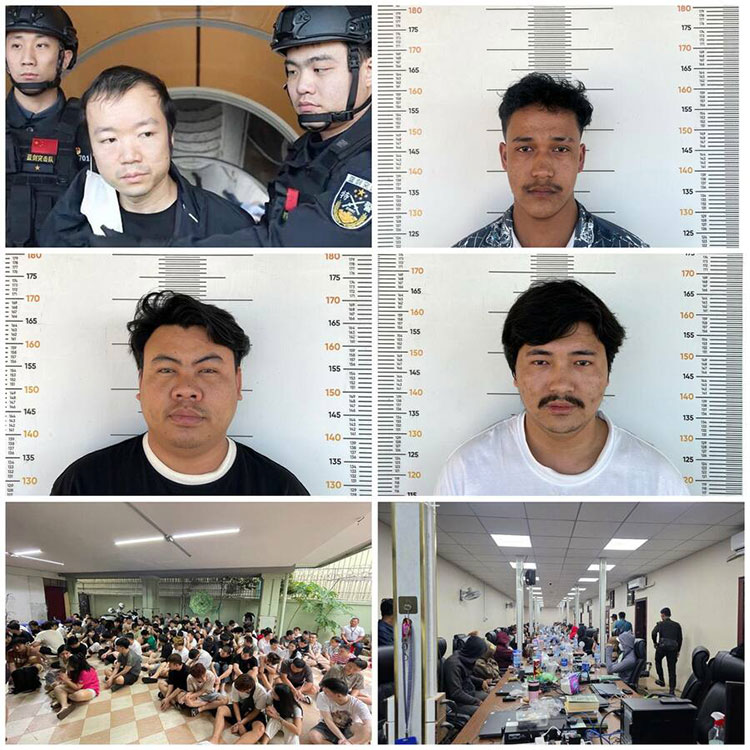
Cambodia’s crackdown has resulted in a surge of arrests and deportations. In recent years, thousands of foreign nationals linked to online scams have been detained and expelled, including several high-profile figures accused of orchestrating large-scale fraud and money-laundering schemes.
Last week, Phnom Penh authorities announced a sweeping inspection plan targeting condominiums and densely populated residential areas suspected of hosting illegal activities. The operation involves systematic searches across all districts, with officials instructed to inspect every condominium and clustered housing complex deemed high risk.
At the border, enforcement has also intensified. Cambodian authorities recently deported nearly 400 Vietnamese nationals through the Prek Chak International Border Gate in Kampot after determining they were residing and working illegally without valid documentation.
According to the General Department of Immigration, more than 13,000 foreign nationals from 66 countries were deported in 2025 alone. Chinese nationals accounted for the largest number, followed by Vietnamese and Indonesian citizens.
International cooperation deepens
Cambodia’s efforts have drawn strong backing from key regional partners, particularly China. Earlier this week, Chinese Ambassador Wang Wenbin reaffirmed Beijing’s commitment to supporting Phnom Penh in dismantling sophisticated scam networks and prosecuting ringleaders.
Chinese officials have praised Cambodian authorities for their cooperation in arresting and extraditing Chinese nationals accused of masterminding large-scale cyber fraud operations.
In response, Chhay Sinarith, Senior Minister in charge of Special Missions and head of the CCOS secretariat, highlighted the results already achieved through joint operations. He stressed that Cambodia would maintain a “firm and specific” stance against criminal hubs and would pursue prosecutions without compromise.
As enforcement expands from city centres to border provinces and residential areas, officials say the government’s message is clear: online scam operations have no future in Cambodia.