‘A Nightmare’ – Hollywood’s Battle Over Warner Bros is Turning the Industry Upside Down
Hollywood is in turmoil as the decline of Warner Bros and its impending sale threaten to reshape the entertainment landscape. Described by many in the industry as a “disaster” or even a “nightmare,” the struggle to control the legendary studio has sent shockwaves through Tinseltown, with tech giant Netflix and entertainment moguls Paramount Skydance battling for ownership.
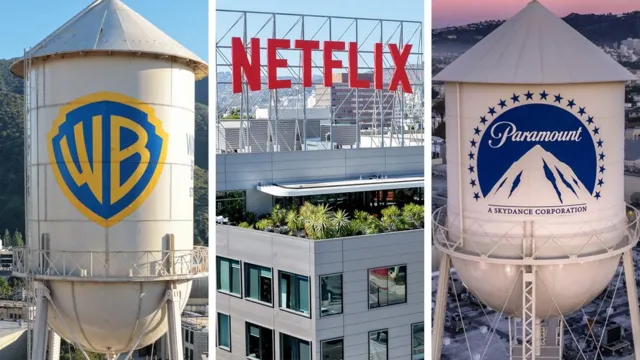
Once an iconic powerhouse that produced cinematic masterpieces like Casablanca, Goodfellas, Harry Potter, and Batman, Warner Bros has seen its fortunes plummet in recent years. The studio’s decline, which has been exacerbated by the ongoing challenges facing Hollywood, could soon lead to more job cuts and even fewer buyers of film and TV projects.
The Decline of Warner Bros and the Threat of Job Losses
Interviews with dozens of actors, producers, and crew members reveal an industry grappling with uncertainty and fear. For many, the question is whether it’s better to fall under the control of Netflix, a streaming giant blamed for the decline of movie theaters, or under the leadership of billionaires like Paramount’s David Ellison, whose ties to former President Donald Trump have sparked concerns.
The potential sale of Warner Bros would see its prized assets — including HBO, its vast film and TV archives — purchased by Netflix, leaving behind legacy TV networks like CNN and Discovery for another buyer. Meanwhile, Paramount Skydance’s $108 billion hostile bid for the studio has raised eyebrows, especially with its financial backing from Saudi Arabia, Abu Dhabi, Qatar, and even a fund connected to Jared Kushner, Trump’s son-in-law.
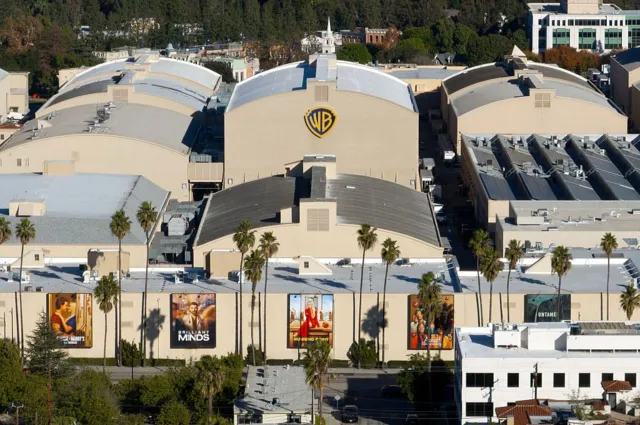
For Hollywood insiders, the prospect of a tech giant or foreign investors taking control is deeply unsettling. “Netflix is going to buy the crown jewels,” said one camera assistant. “But Paramount, with all its right-wing connections, doesn’t give me much comfort either.”
Concerns Over Censorship and Political Influence
The looming possibility of a sale has fueled concerns about censorship and political influence in Hollywood. President Trump added fuel to the fire when he stated that it was “imperative that CNN be sold,” intensifying speculation about what a change in ownership might mean for one of America’s most prominent news outlets.
As the sale of Warner Bros becomes a highly contested affair, Hollywood is left to face the aftermath of a seismic shift in the industry. The pandemic already dealt a blow to film and TV production, and the simultaneous actor and writer strikes in 2023 further stymied any hopes for a recovery. When the strikes ended, the anticipated production boom failed to materialize, resulting in a shrinking industry and mass layoffs.
A Hostile Takeover and Hollywood’s Dwindling Hope
The saga of Warner Bros mirrors the broader consolidation trend in Hollywood, where studios have been merging, and job cuts have become commonplace. Paramount’s Skydance Media recently acquired the legendary Paramount studio, leading to thousands of job losses. When Warner Bros put itself up for sale, Paramount quickly launched a campaign to secure the studio, only to be thwarted by Netflix’s reported deal with Warner’s parent company, Warner Bros Discovery.
With Paramount’s bid now turned hostile, the two companies are locked in a battle for control of one of the entertainment industry’s oldest and most storied institutions. However, Hollywood workers have made it clear that the real issue isn’t just who owns the studio — it’s the looming uncertainty about what the sale will mean for their livelihoods.
Many Hollywood insiders, who spoke on the condition of anonymity, expressed their frustrations with Warner Bros Discovery CEO David Zaslav, who has been widely criticized for mismanaging the company. Under Zaslav’s leadership, Warner Bros has experienced massive layoffs, rising debts, and a decline in creative output.
“I watched Warner Bros struggle since David Zaslav became the CEO and ran it into the ground,” said one actor who lost their home due to the industry’s downturn. Others have compared Zaslav to Gordon Gekko, the infamous fictional character from Wall Street, whose motto — “greed is good” — has become a symbol of corporate excess.
The Debate: Netflix vs. Paramount
Hollywood’s workers remain divided over which potential buyer would be the lesser evil. Many fear that a Netflix acquisition would signal the end of traditional movie theaters, with the company’s streaming-first model already leading to a refusal from theaters to screen Netflix films. The idea of a tech giant controlling Warner Bros raises alarms about the future of theatrical releases.
“I think it’s a disaster,” said one film exhibitor. “Netflix is openly, proudly saying theaters aren’t necessary anymore. That’s scary. It’s a nightmare.”
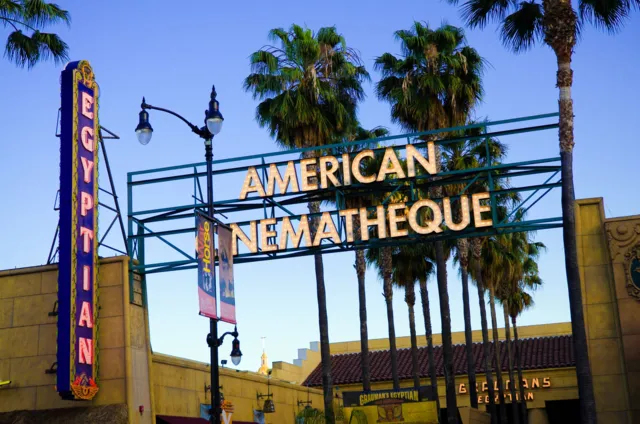
But others are hopeful that Netflix will preserve Warner Bros’ legacy of big-screen releases. Netflix has assured Hollywood that, if it acquires the studio, it will maintain Warner Bros’ current operations, including its theatrical releases. For some, Netflix’s efforts to restore iconic theaters like The Egyptian Theatre, a landmark on Hollywood Boulevard, is seen as a sign of good faith.
“I think it’s a good sign,” said John Evans, a sound technician and occasional actor. “Streaming is how many film workers consume movies these days, just like everyone else.”
An Industry in Flux
For many Hollywood workers, the struggle for Warner Bros feels almost secondary to their broader fight for survival in an industry undergoing profound changes. With AI technologies gaining ground in film production, and with fewer studios left to buy projects, workers are facing a harsh new reality.
“Every morning, I wake up feeling like I’ve failed in every direction,” said an actor, who is now homeless and relying on friends and food banks to get by. “I’d rather see Netflix buy Warner Bros than some foreign money coming in and taking over. At least Netflix has a history of respecting creativity.”
Others, however, argue that the shift to streaming could ultimately benefit Hollywood workers. Some producers, like one who has worked for Netflix, Paramount, and Warner Bros, believe that the key to success is making “good stuff,” regardless of who owns the studio.
In the end, it may not matter who buys Warner Bros — for many in Hollywood, the real challenge is how to adapt in an increasingly fractured and uncertain entertainment landscape.