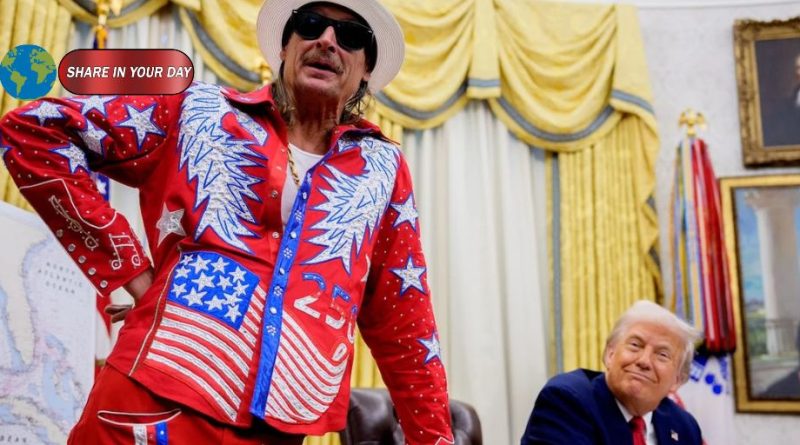
Kid Rock Lyrics Resurface as He Prepares to Headline TPUSA Super Bowl Event
Kid Rock is facing renewed scrutiny online after a controversial lyric from his past resurfaced just days after he was announced as the headline performer for Turning Point USA’s Super Bowl LX halftime show.
The rapper-turned-rock artist, whose real name is Bob Ritchie, was confirmed as the top act for the conservative youth organization’s Super Bowl–adjacent event. The announcement quickly drew attention — not only for the politically charged nature of the lineup, but also for comments Kid Rock made while promoting the show.
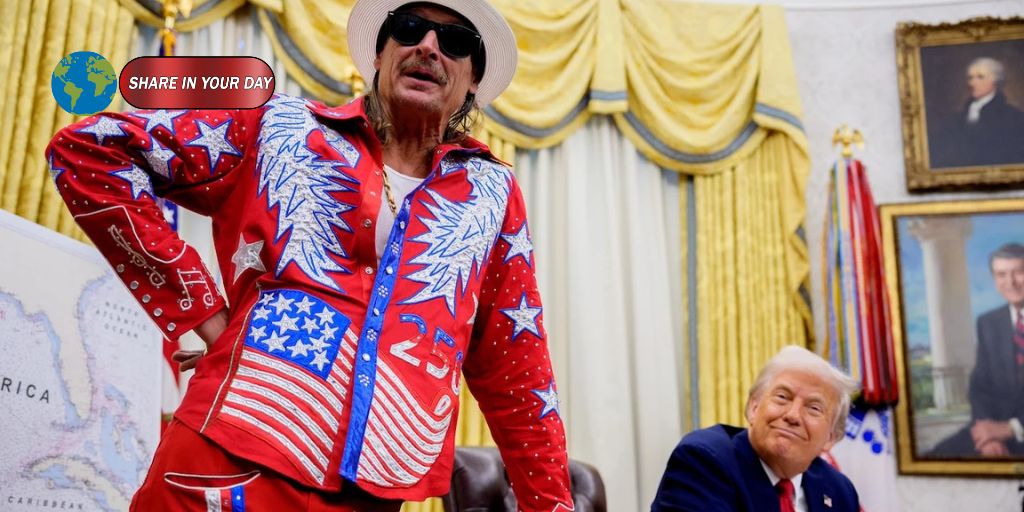
In a social media post reacting to reports that Bad Bunny would host a separate Super Bowl-related event, Kid Rock took a jab at the global pop star’s style and performance.
“He’s said he’s having a dance party, wearing a dress, and singing in Spanish,” Kid Rock said. “We plan to play great songs for folks who love America.”
The remarks circulated widely, amplified further after Sen. JD Vance shared Turning Point USA’s announcement on X, praising the lineup and referring to Kid Rock as “the great Bob Ritchie AKA KID ROCK.”
A Lineup That Sparked Online Backlash
Turning Point USA’s halftime show will also feature Brantley Gilbert, Lee Brice, and Gabby Barrett, a roster that has been widely mocked outside conservative circles. Critics online questioned both the cultural relevance of the lineup and the organization’s attempt to position the event as an alternative to the NFL’s official halftime spectacle.
But the criticism took a sharper turn when social media users began resurfacing lyrics from “Cool, Daddy Cool,” a Kid Rock song released in 2001 as part of the Osmosis Jones movie soundtrack.
The renewed attention came amid heightened public discussion around sexual misconduct and power, following the recent release of Epstein-related court files, creating what many online described as particularly uncomfortable timing.
Lyrics From a 2001 Song Draw Renewed Attention
“Cool, Daddy Cool” includes a third verse that many listeners now describe as deeply troubling. In the song, Kid Rock raps:
“Young ladies, young ladies, I like ’em underage.
See some say that’s statutory.”
The line is followed by a response from Kid Rock’s former collaborator Joe-C, who adds:
“But I say it’s mandatory.”
The lyrics, which have circulated online for years, were largely ignored in mainstream coverage at the time of the song’s release. However, their resurfacing has prompted renewed criticism as Kid Rock prepares to headline a politically prominent event tied to one of the most-watched sports weekends of the year.
Social Media Reaction Intensifies
Journalist and commentator Parker Molloy reshared JD Vance’s post on X and reposted the lyrics, adding a sarcastic caption suggesting Kid Rock might include the song in his TPUSA performance.
The post quickly spread, reigniting debate about why the lyrics were ever released, how they were received at the time, and why they have not featured more prominently in discussions about the artist’s career.
Many critics questioned how such lyrics were able to pass into a major studio-backed movie soundtrack in the early 2000s — a reflection, they argue, of a different cultural moment and a music industry less inclined to confront problematic content.
Kid Rock’s History of Provocation
Kid Rock has long built his public persona around provocation, blending shock value with political defiance. Over the past decade, he has increasingly aligned himself with conservative causes, becoming a fixture at right-wing events and a vocal supporter of Republican politicians.
While his defenders argue that “Cool, Daddy Cool” should be viewed as outdated shock rap rather than a reflection of real beliefs, critics say the lyrics remain indefensible regardless of context — particularly when paired with Kid Rock’s present-day positioning as a cultural spokesman for “traditional values.”
As of publication, Kid Rock has not commented on the resurfaced lyrics, nor has Turning Point USA addressed questions about whether the controversy could affect the Super Bowl event.
A Broader Cultural Reckoning
The episode highlights a recurring tension in American pop culture: how past artistic work is reevaluated as public standards evolve. Lyrics that once passed without sustained backlash are increasingly revisited through a modern lens — especially when artists step into politically influential roles.
With Super Bowl weekend approaching and political polarization at a peak, the controversy surrounding Kid Rock’s song adds another layer of scrutiny to an event already designed to provoke strong reactions.
Whether the backlash will have any tangible impact on the TPUSA show remains unclear. But online, the resurfaced lyrics have ensured that the conversation around Kid Rock is no longer just about music — or politics — but about accountability, context, and the boundaries of cultural tolerance