
Nipah Virus Cases in India Prompt Airport Screenings Across Parts of Asia
Health authorities in several Asian countries have tightened airport screening measures following the confirmation of two Nipah virus cases in India’s eastern state of West Bengal, raising regional concerns over the spread of one of the world’s deadliest zoonotic diseases.
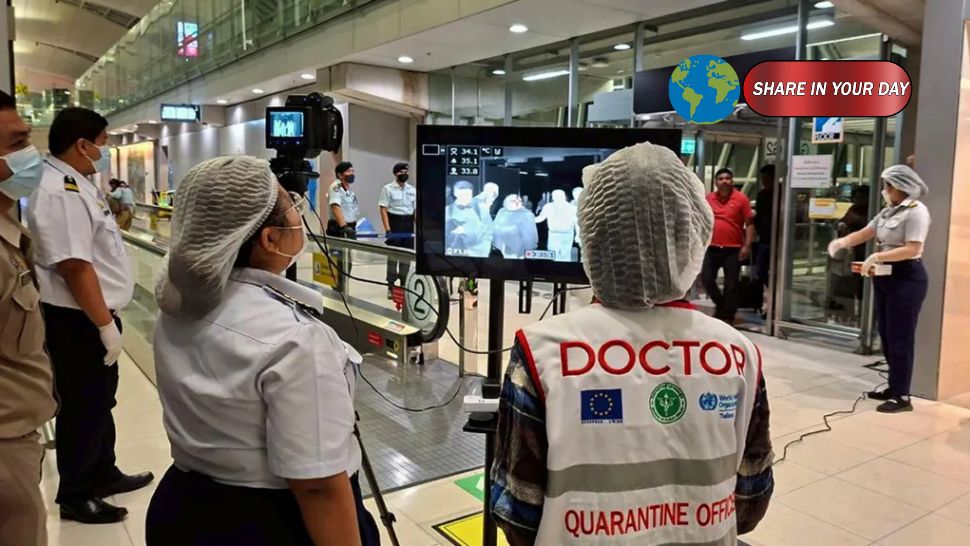
Thailand and Nepal have both begun screening travelers arriving from affected areas in India, while Taiwan is considering classifying the virus under its highest alert category for emerging infectious diseases.
India’s health ministry said the two confirmed cases, reported since December, involved healthcare workers in West Bengal. Officials have traced 196 close contacts, all of whom have tested negative and remain asymptomatic.
“The situation is under constant monitoring, and all necessary public health measures are in place,” the ministry said in a statement.
Asia Steps Up Border Precautions
Although no cases have been reported outside India, neighboring countries have moved quickly to limit potential cross-border transmission.
Thailand began screening passengers at three international airports in Bangkok and Phuket that receive flights from West Bengal. Travelers arriving on those flights are being asked to submit health declarations, according to Thai health authorities.
In addition, Thailand’s parks and wildlife department has introduced enhanced monitoring measures at popular natural tourist destinations, reflecting concerns over animal-to-human transmission pathways.
Jurai Wongswasdi, a spokeswoman for Thailand’s Department for Disease Control, said authorities were “fairly confident” that current measures would prevent an outbreak.
Nepal has also started screening travelers arriving at Kathmandu’s international airport, as well as at key land border crossings with India.
Meanwhile, Taiwan’s health authorities have proposed adding the Nipah virus to its Category 5 disease list, reserved for rare or emerging infections that pose serious public health risks and require immediate reporting and control measures.
What Is the Nipah Virus?
The Nipah virus is a zoonotic disease that can spread from animals to humans, most commonly through fruit bats or pigs, and can also be transmitted between people through close contact or contaminated food.
The World Health Organization has listed Nipah among its top priority diseases, alongside Covid-19 and Zika, due to its epidemic potential and the absence of approved treatments or vaccines.
The virus has an incubation period of four to 14 days, though longer delays have been observed in some cases.
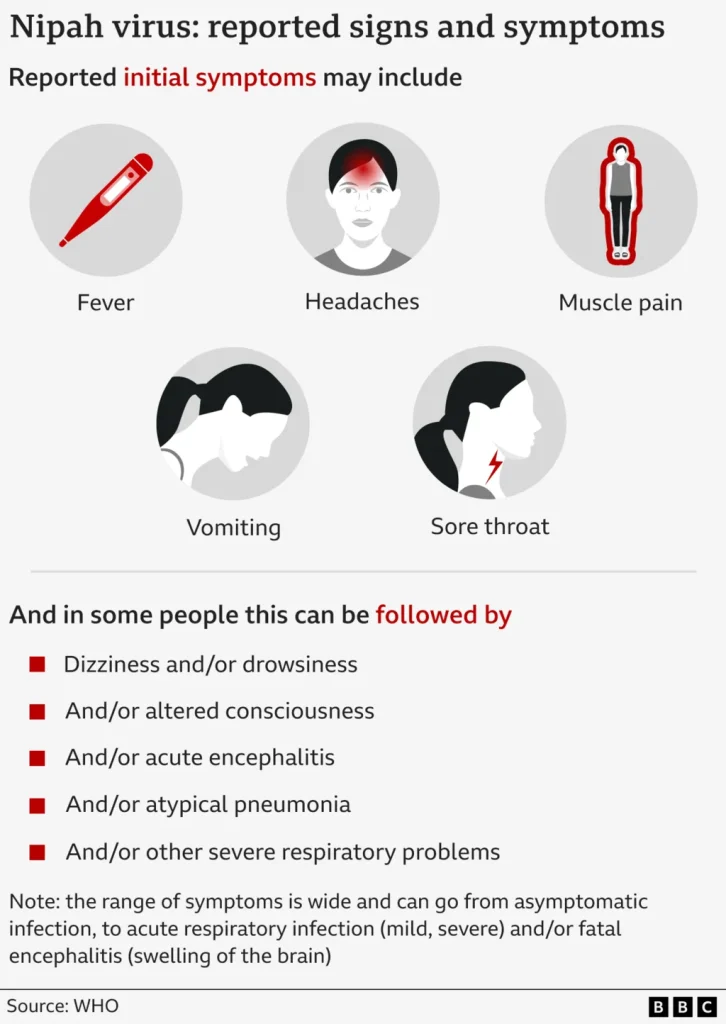
Symptoms vary widely. Early signs often include fever, headache, muscle pain, vomiting, and sore throat. In severe cases, patients may develop pneumonia, altered consciousness, or encephalitis, an inflammation of the brain that can be fatal.
The disease is particularly dangerous, with reported fatality rates ranging from 40% to 75%, depending on the outbreak and healthcare response.
History of Past Outbreaks
The Nipah virus was first identified in 1998 during an outbreak among pig farmers in Malaysia. More than 100 people died, and over a million pigs were culled to contain the spread, causing widespread economic losses. The virus takes its name from Sungai Nipah, the village where it was first detected.
In the years since, Bangladesh has experienced repeated outbreaks, with more than 100 deaths recorded since 2001.
India has also seen multiple outbreaks. West Bengal reported cases in 2001 and 2007, while the southern state of Kerala has emerged as a recent hotspot. In 2018, 17 of 19 infected patients in Kerala died, and in 2023, two deaths were reported among six confirmed cases.
Current Situation in India
Indian health officials say swift containment efforts are underway in West Bengal. All known contacts of the infected healthcare workers have been identified, tested, and placed under monitoring.
Authorities have emphasized that there is currently no evidence of wider community transmission, and no cases have been detected outside India.
Despite that reassurance, regional vigilance remains high due to the virus’s history, high fatality rate, and lack of medical countermeasures.
As global travel continues to rebound, public health experts warn that early detection and rapid response remain critical to preventing localized outbreaks from becoming broader regional threats.